Fabrika Film Studio

Memória do projeto
Architecture for gathering
Architecture of Gathering
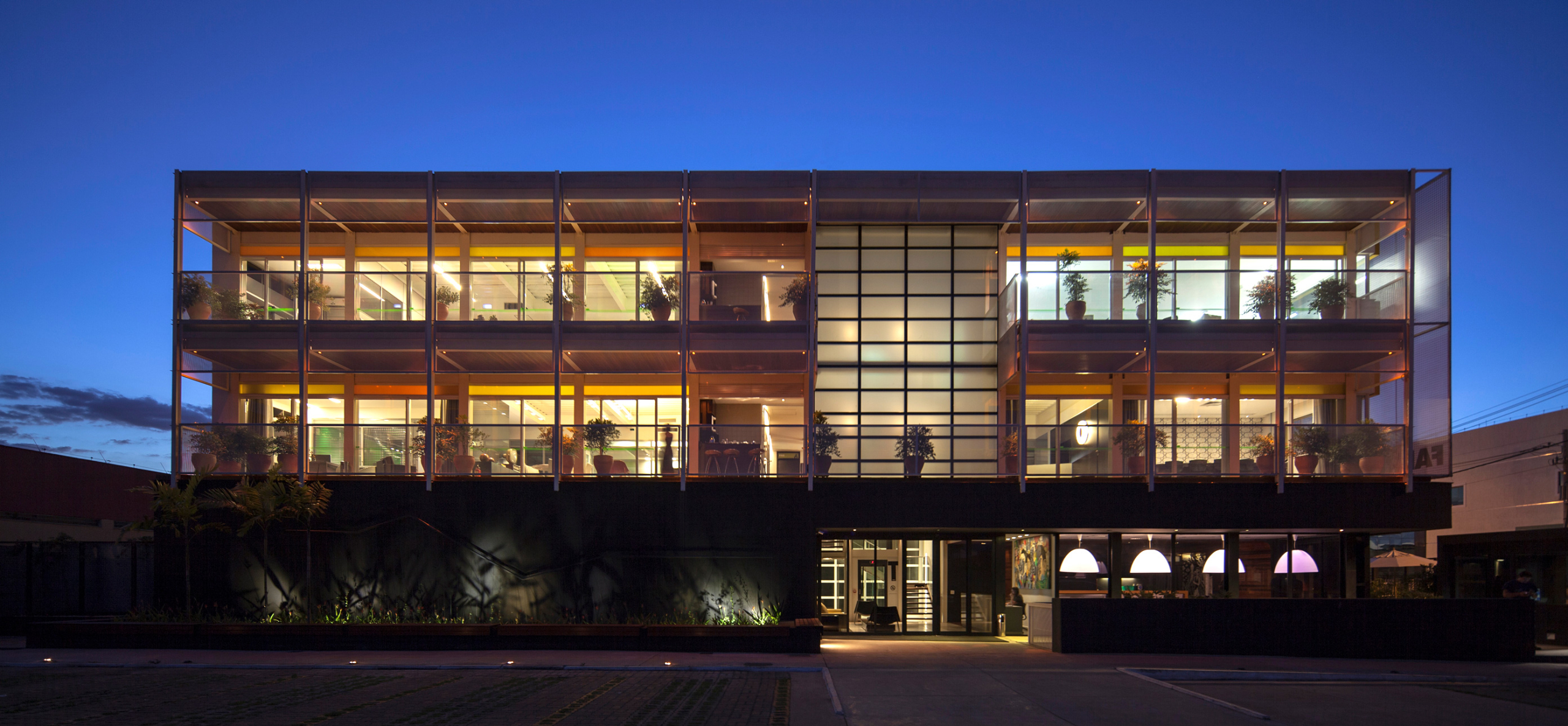
The project for the new headquarters of Fabrika Filmes emerged from a central challenge: creating a concise and flexible building, adapted to the needs of a video production company and its partner businesses. In this context, a careful analysis of the company’s previous headquarters was crucial to developing a program that could accommodate both the relocation of the company and its future expansion. To achieve this, not only were the functions and distribution of departments considered, but also the company’s dynamic workflow and its strong culture of social interaction. The new building needed to respond to the mobility of a company in constant transformation, where intense coexistence in shared spaces stands out, even within a clearly defined organizational hierarchy.
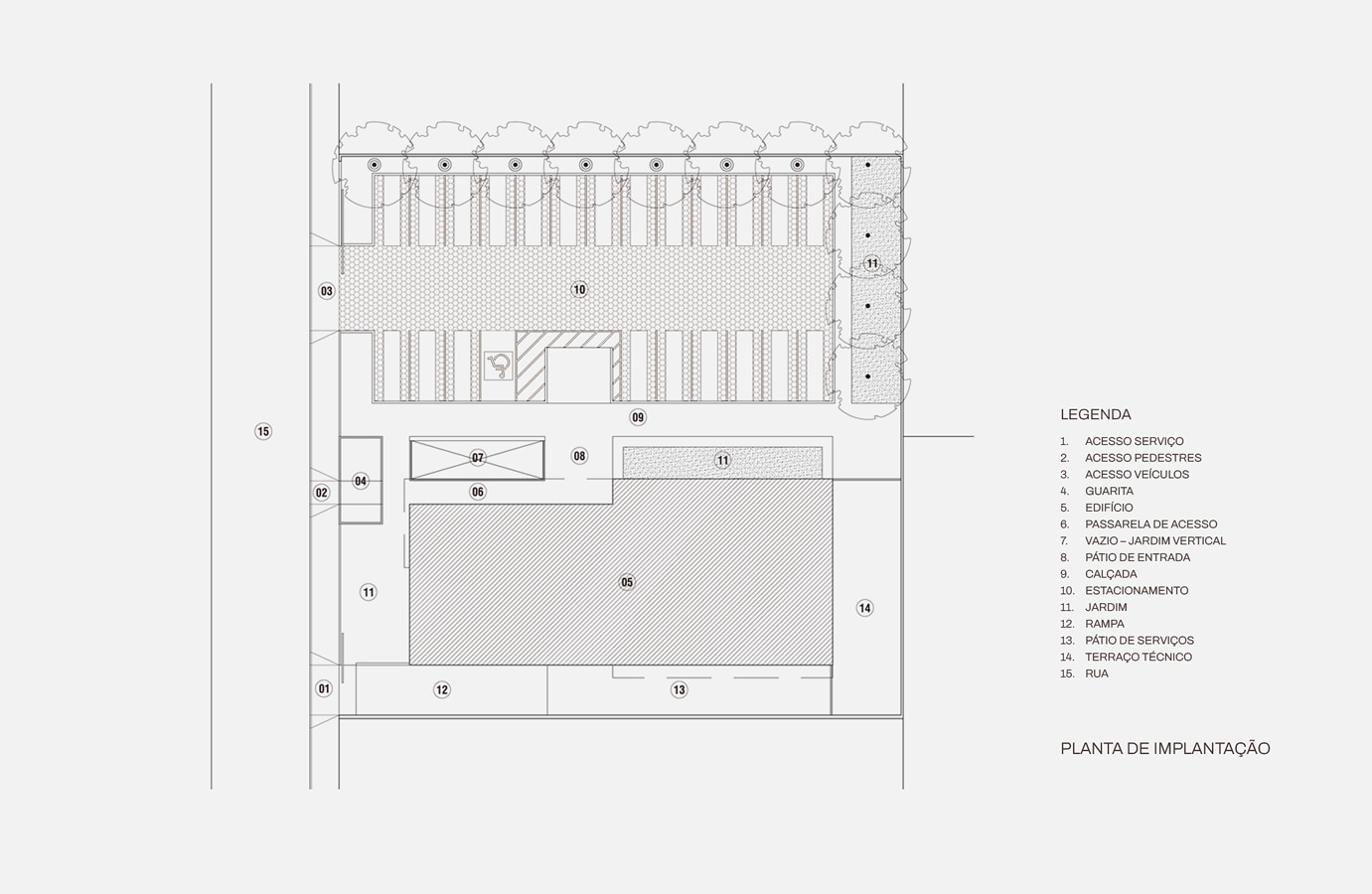
The site, located in the newly developed Sector 17 of Brasília’s SIA (Industrial and Supply Sector), also posed its own challenge. While urban context is often understood as a source of dialogue and motivation for the first architectural decisions, what does one do when the urban context does not yet exist? This was precisely the case of Sector 17, an area created through a district government incentive program, where urban infrastructure was developed simultaneously with the construction of most of the buildings. As a result, the initial context of the site considered only the few existing elements: orientation, prevailing winds, and the distant presence of Estrutural Avenue, one of the city’s main expressways.
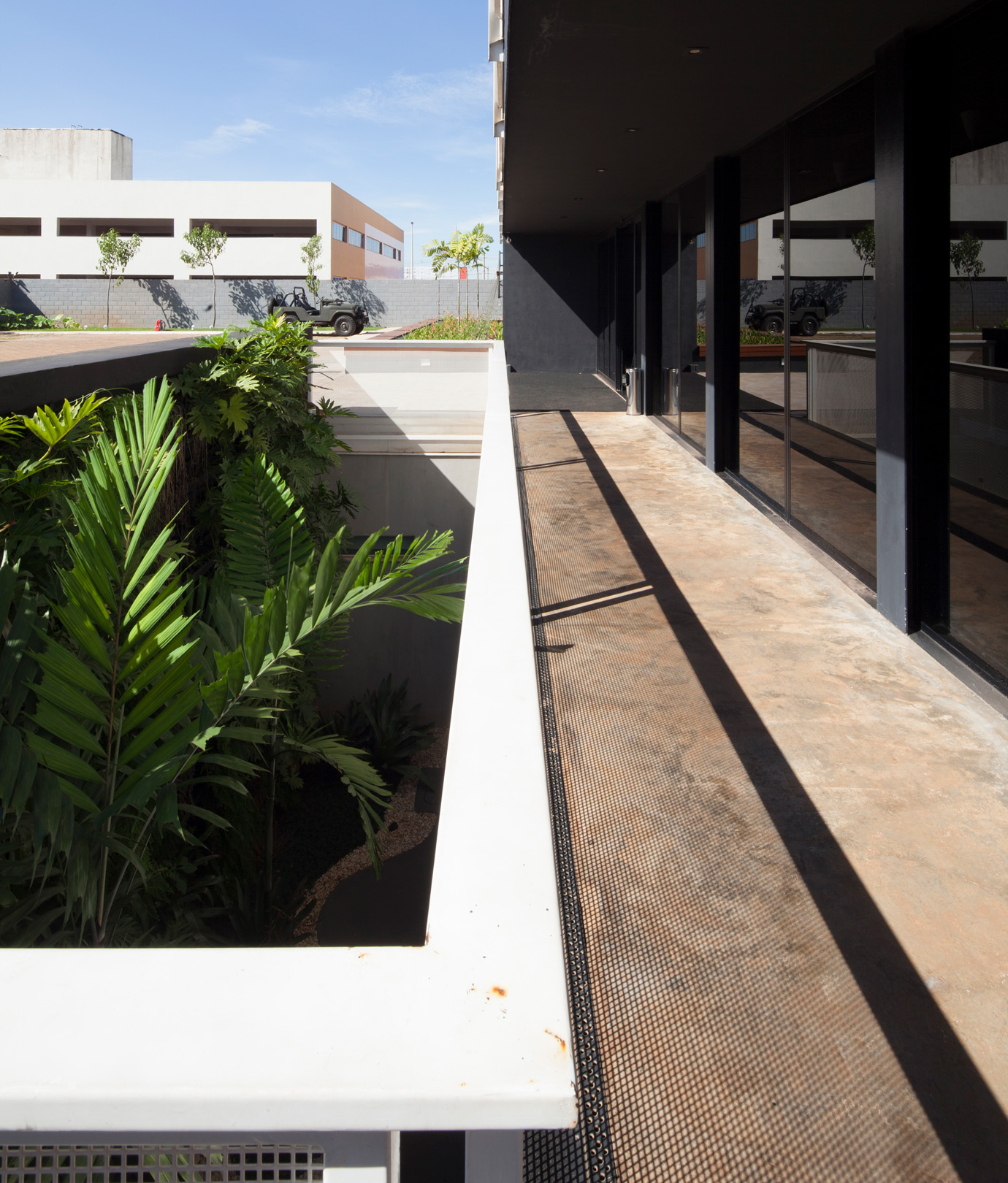
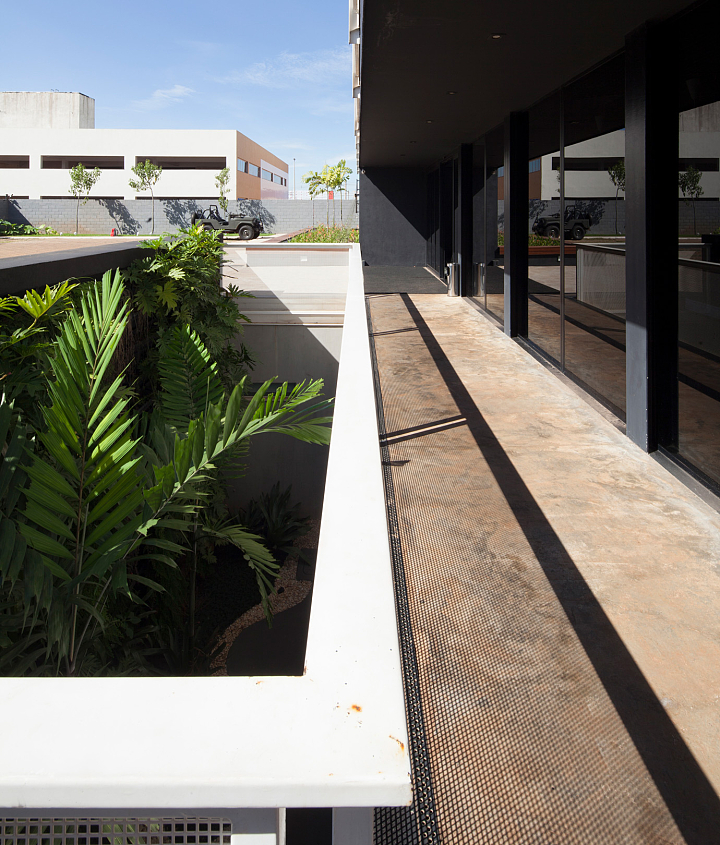
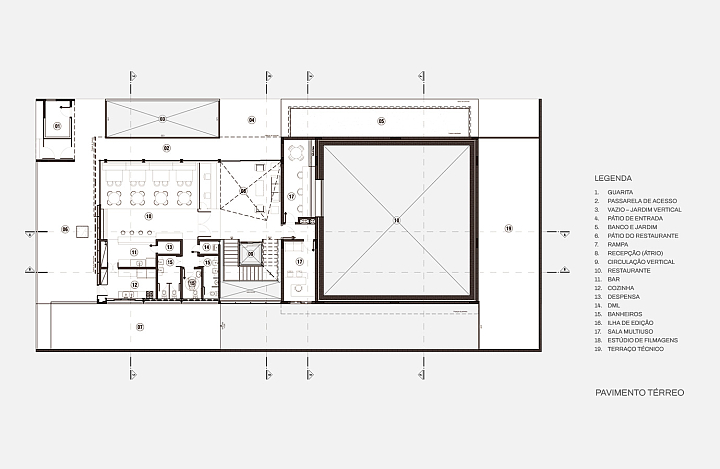
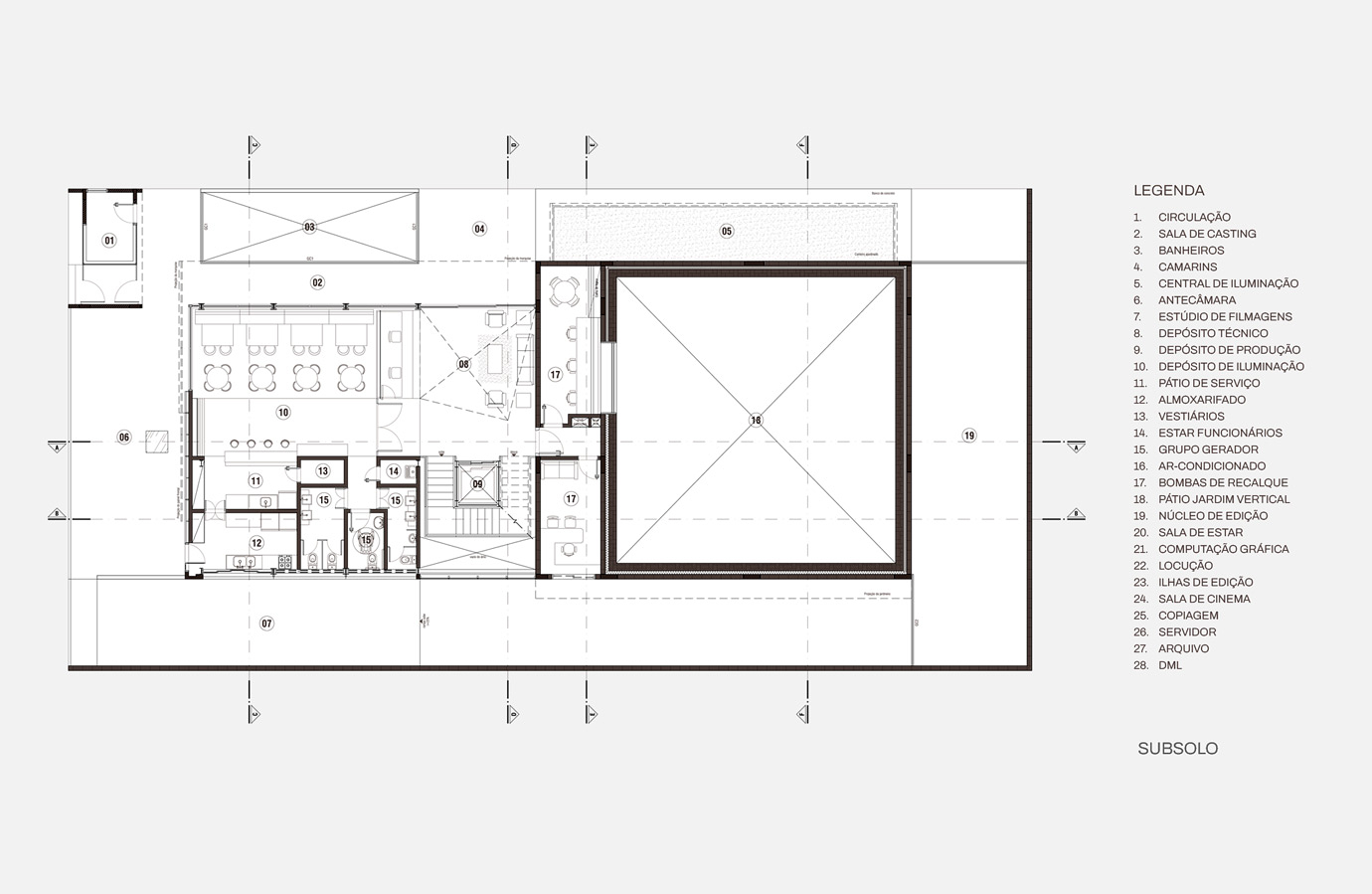
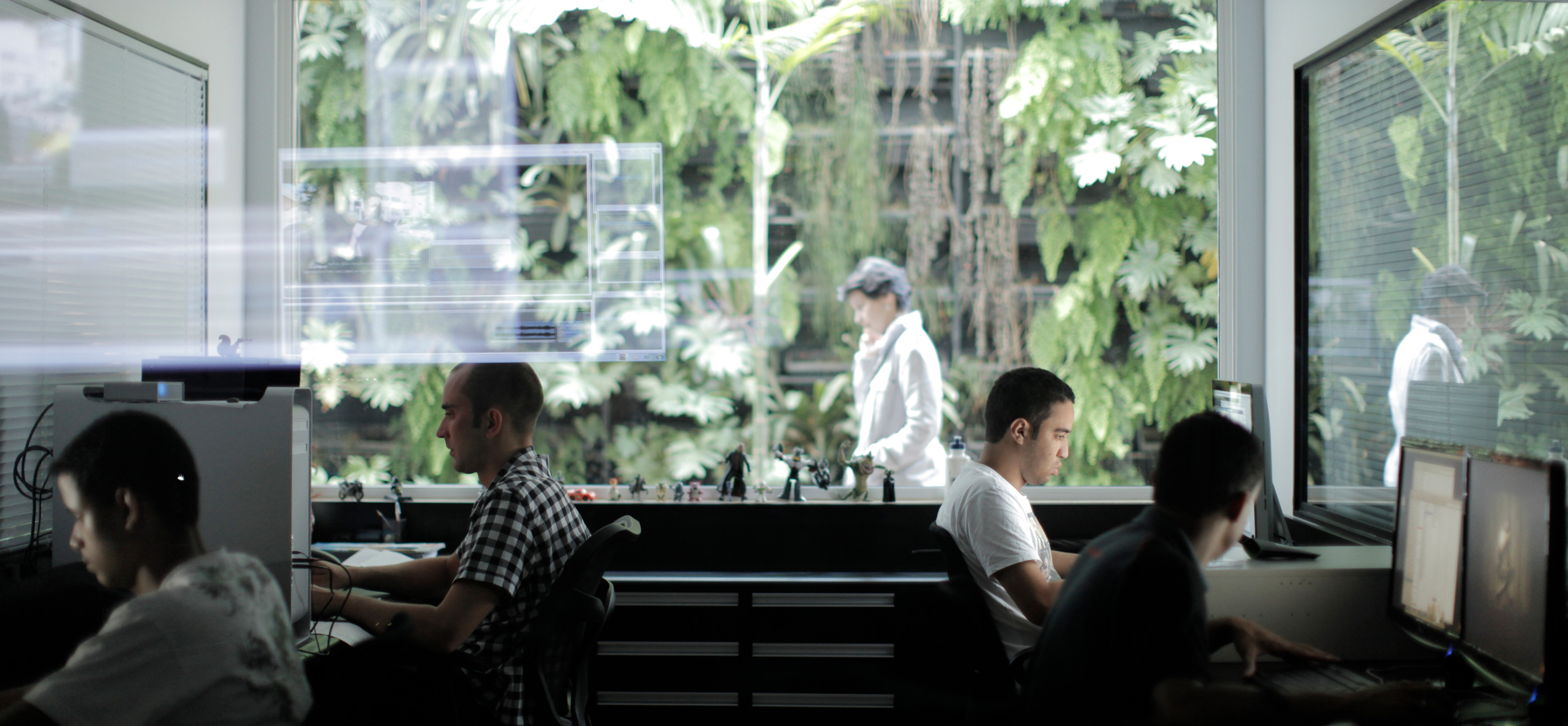
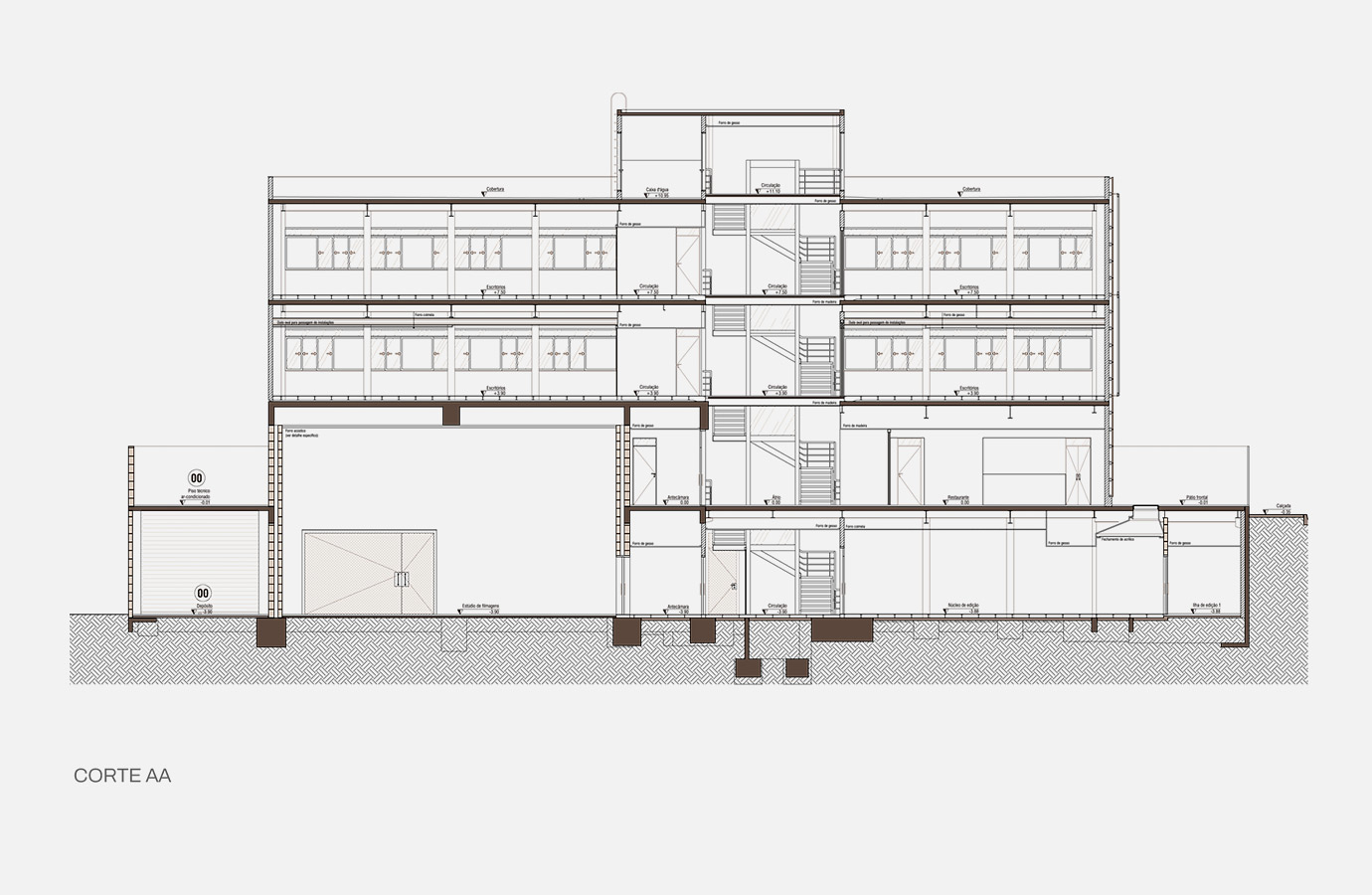
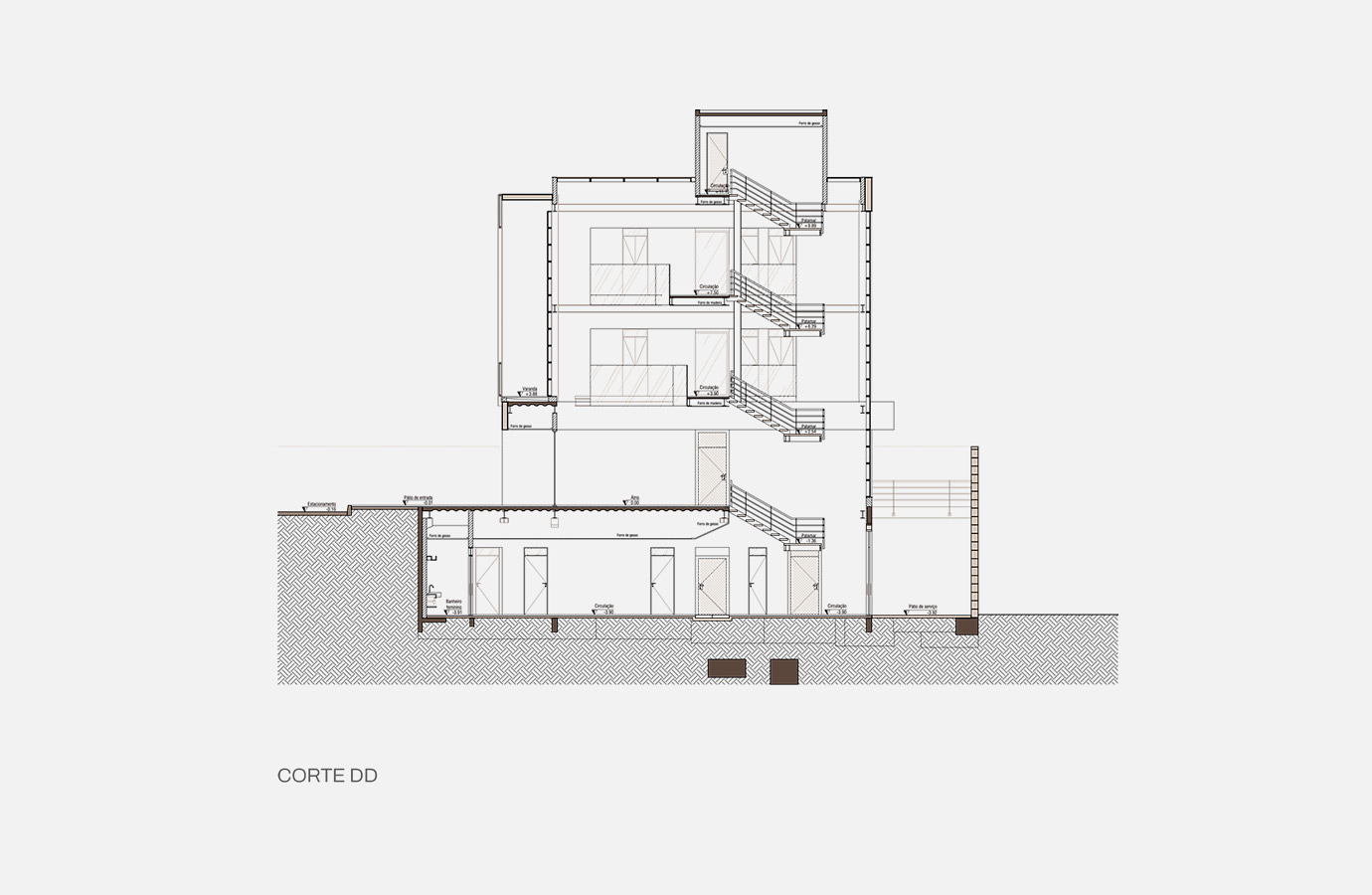
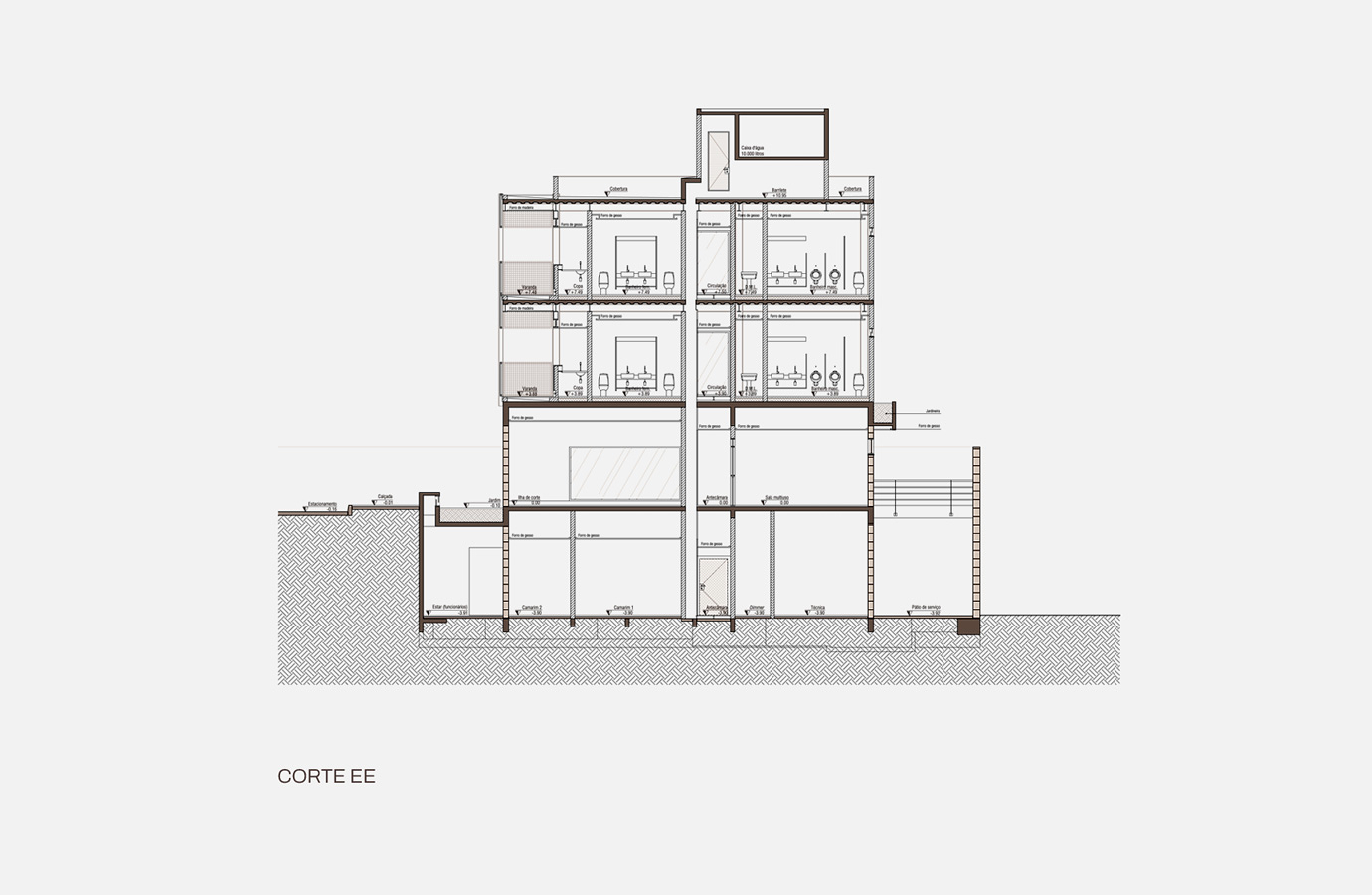
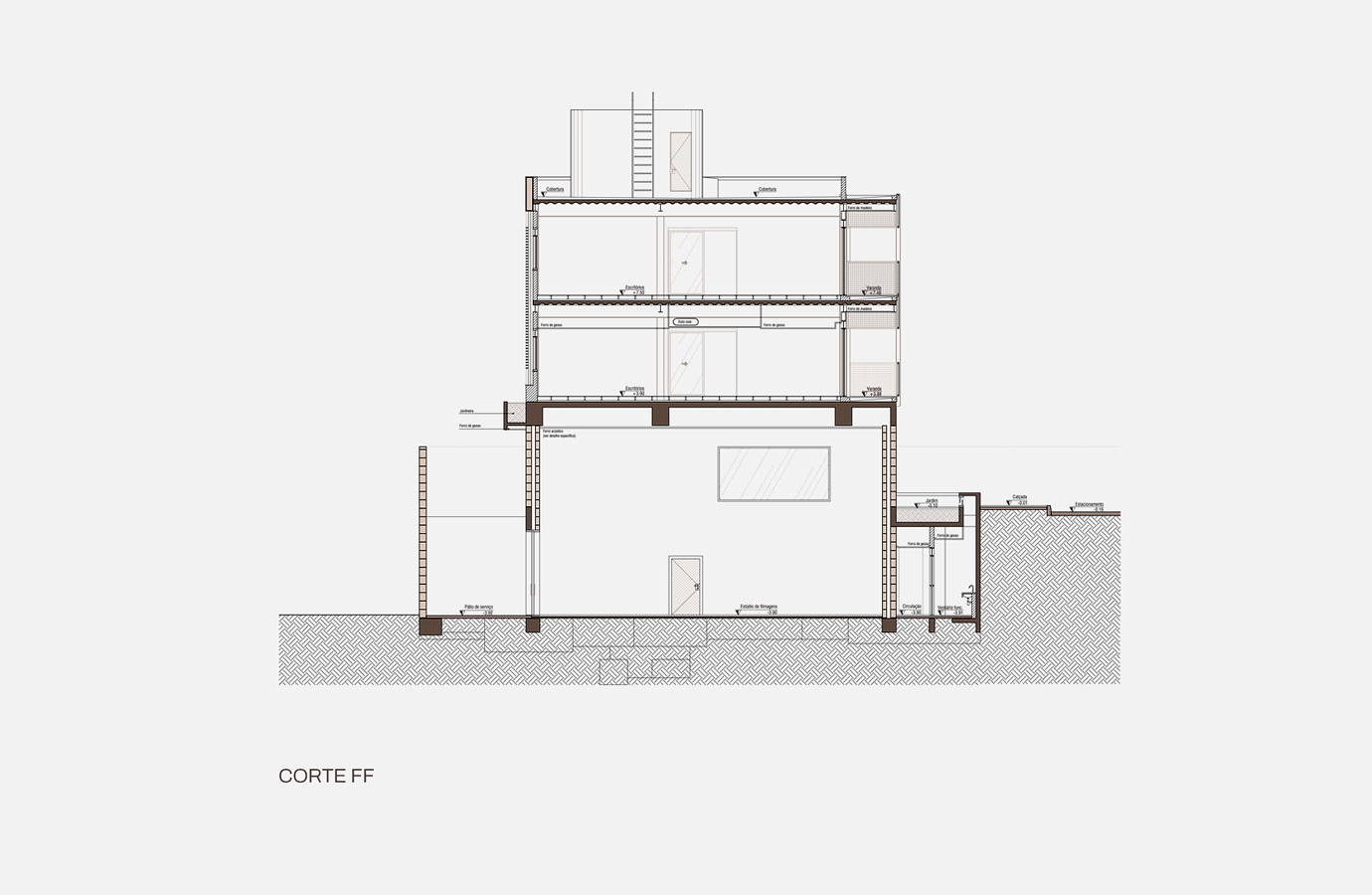
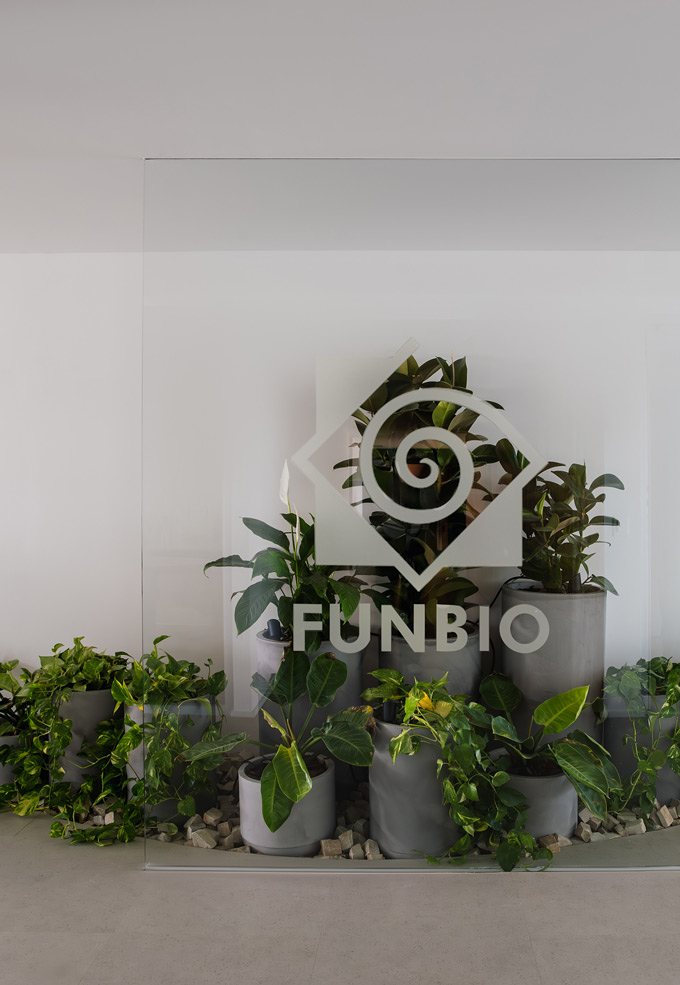
With approximately 80% of the basement area built upon, concerns regarding natural ventilation and lighting became even more critical. Whenever possible, openings for hot air exhaust and natural light intake were incorporated, such as the one beneath the ground-floor bench, strategically placed to encourage social interaction in the outdoor area while also ensuring a well-ventilated and naturally lit basement. Even in areas with lighting restrictions, it seemed essential to create a large excavation in the terrain that would allow basement users direct contact with the outdoors. There, just below Fabrika’s main entrance, a massive green wall emerges, signaling the presence of life underground. After all, this is the area where people spend most of their working hours, often late into the night. In those moments, distinguishing between day and night becomes fundamental — hence the importance of natural light in the shared areas.
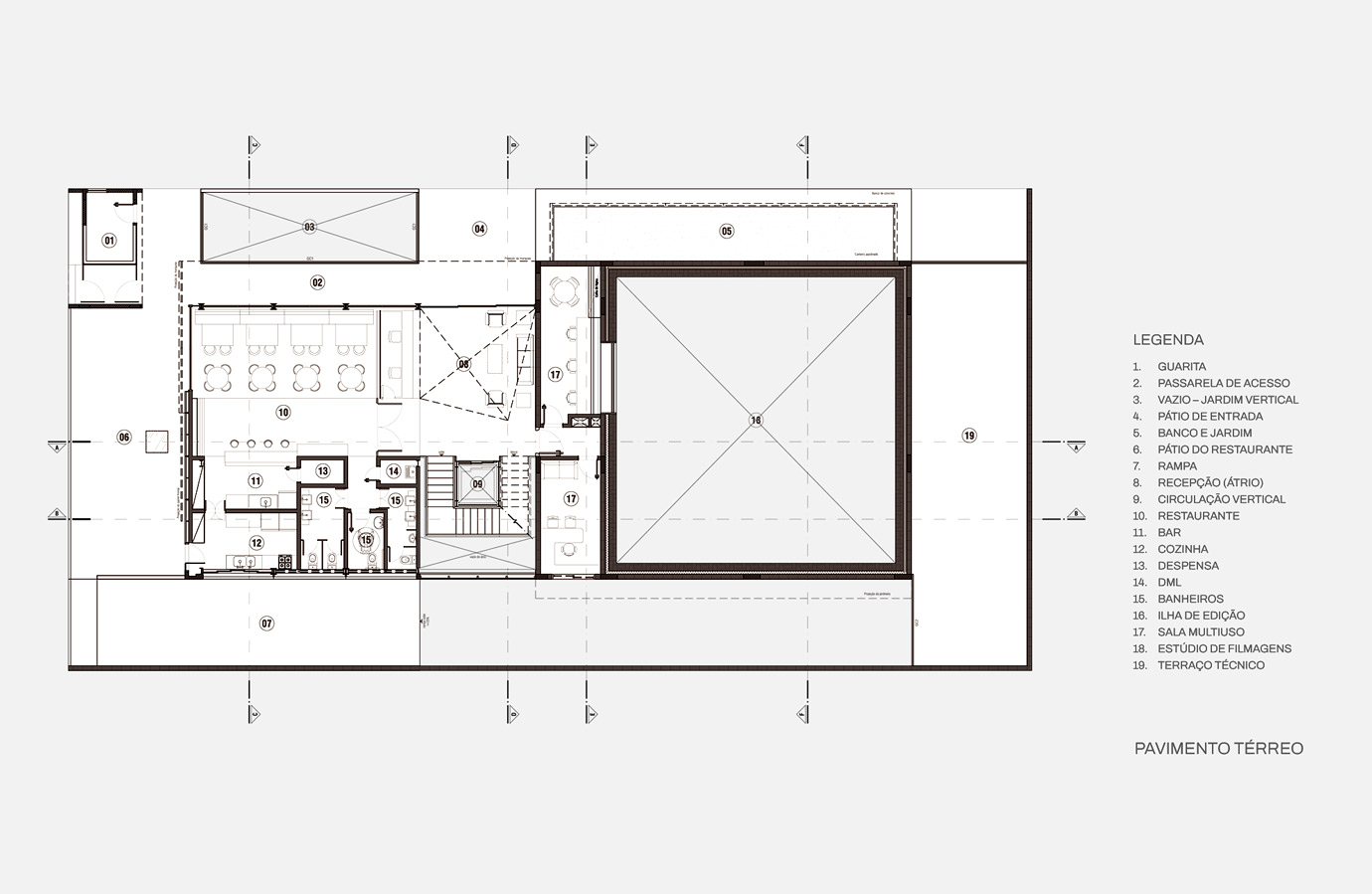
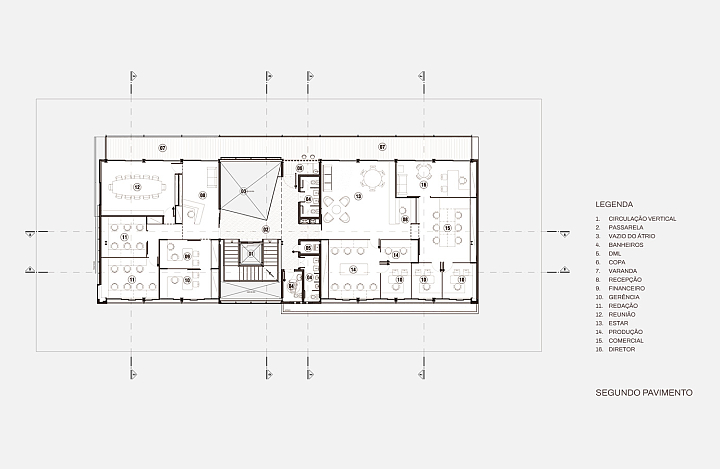
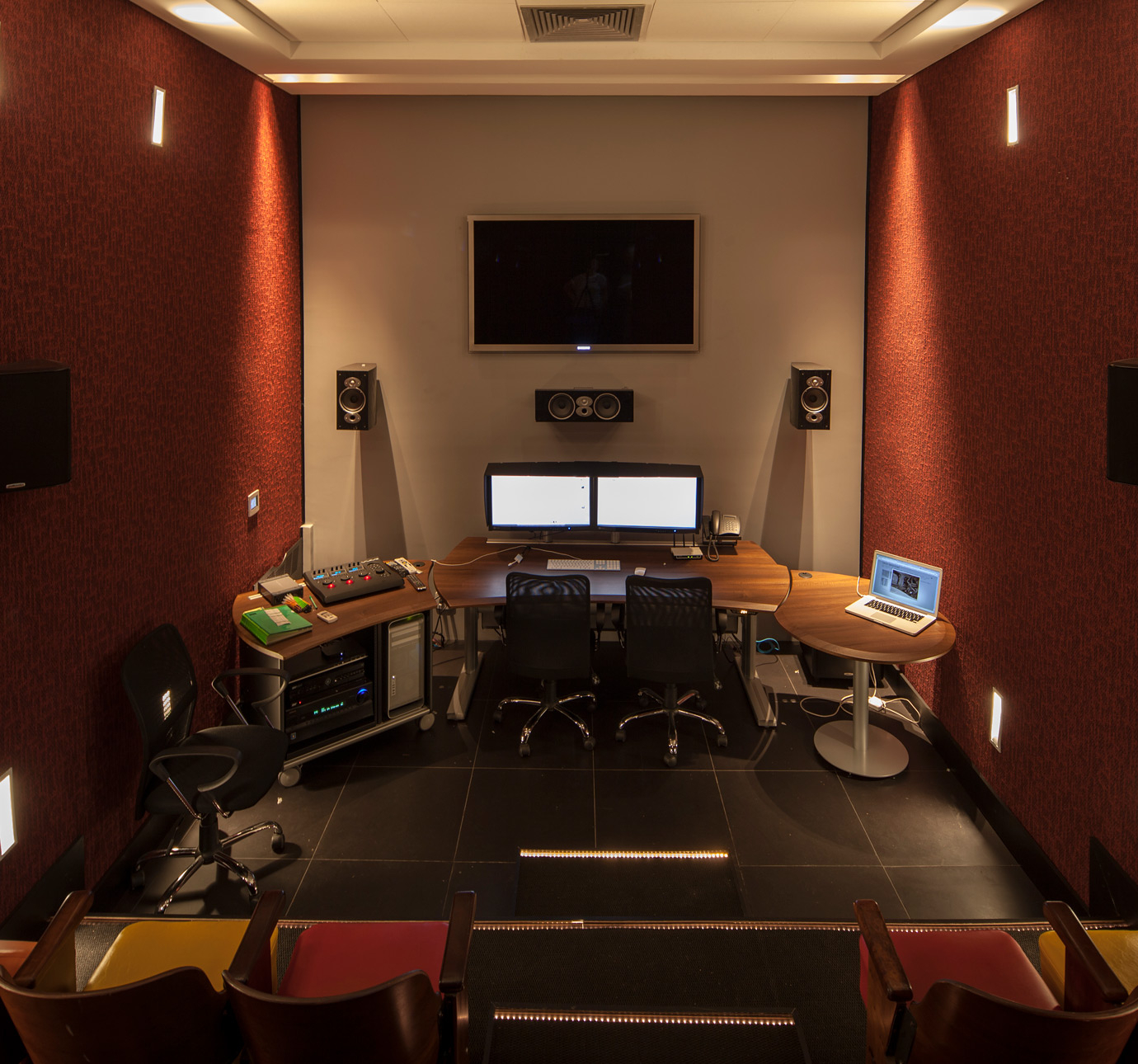
Based on the positioning of the studio, it was decided to relocate the vertical circulation from its most obvious position at the front of the lot to the central area beside the studio. This solution divides the upper floors — where the office spaces are located — into two parts, contributing to a satisfactory stratification of the building, which gains greater flexibility and spatial efficiency. This arrangement allows for multiple layout variations on the floors intended for rental and partnerships with companies and independent professionals of mutual interest. Furthermore, the decision to create a fully open central distribution space extending from the ground floor to the roof provides greater visual connection between the building’s different areas and encourages a larger number of encounters, reinforcing the company’s social character.
Atrium of Light
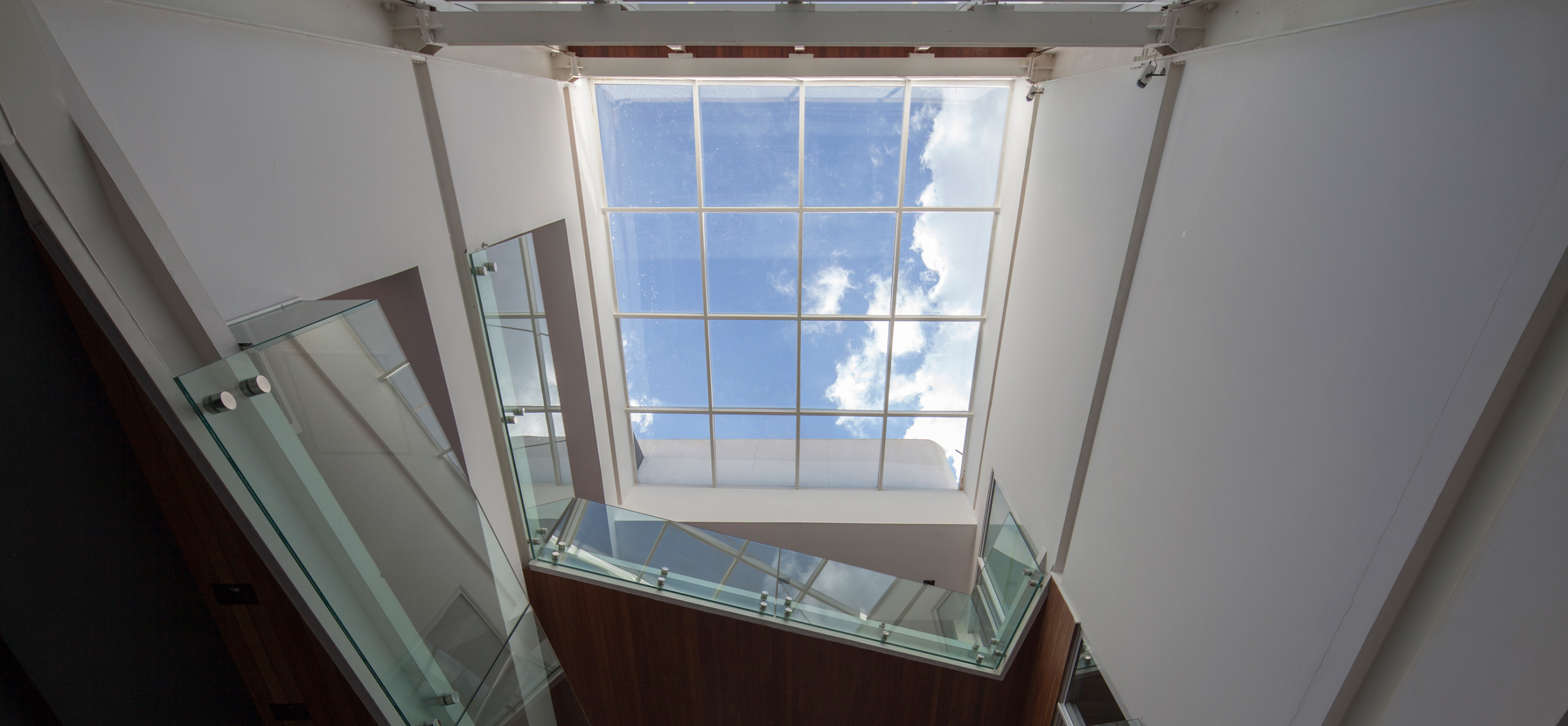
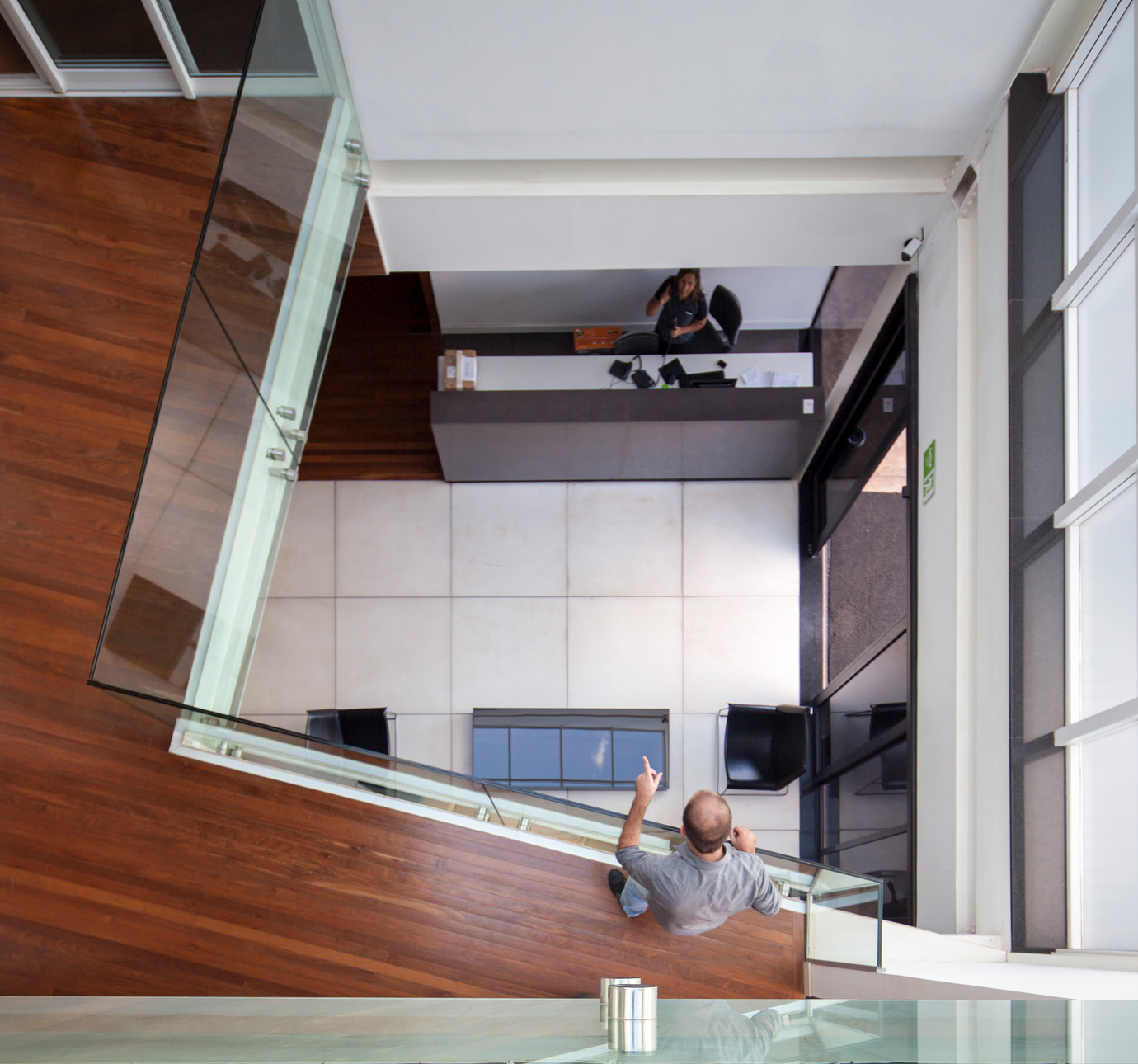
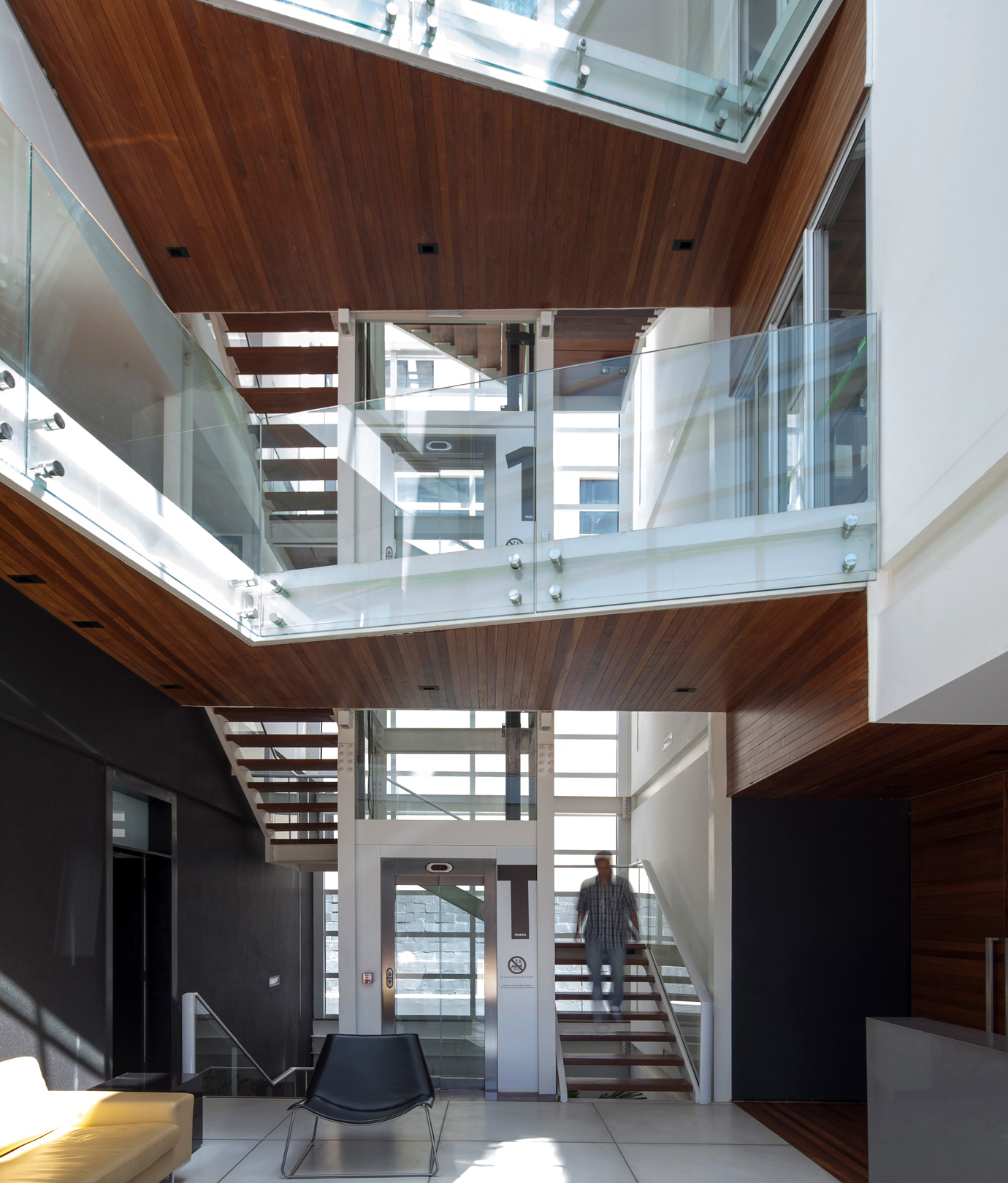
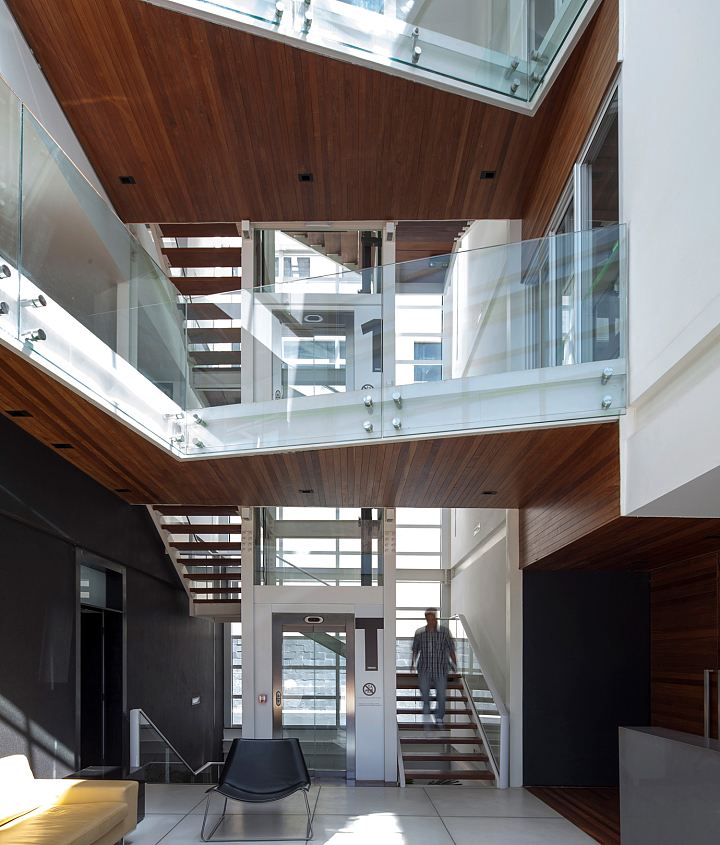
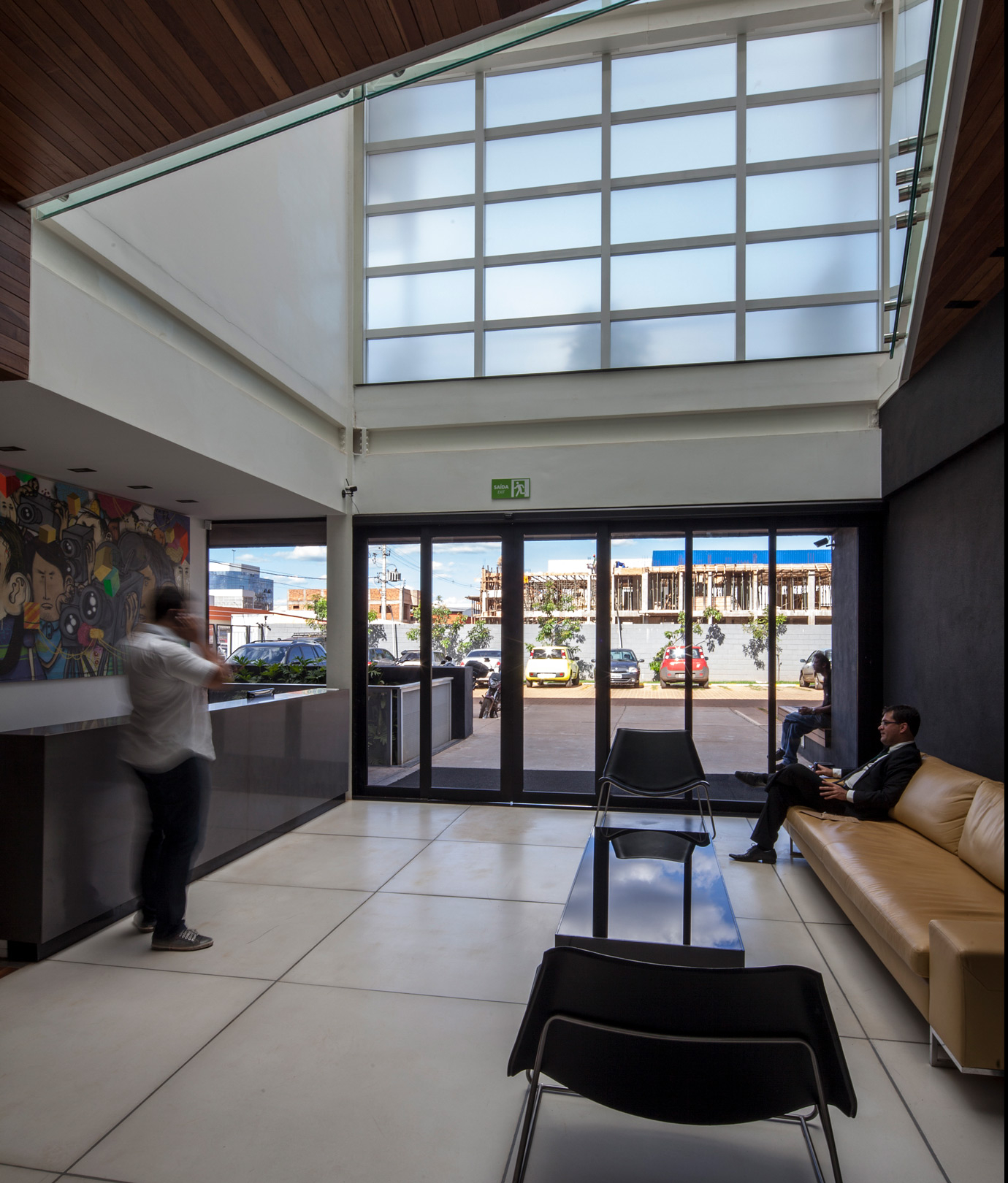
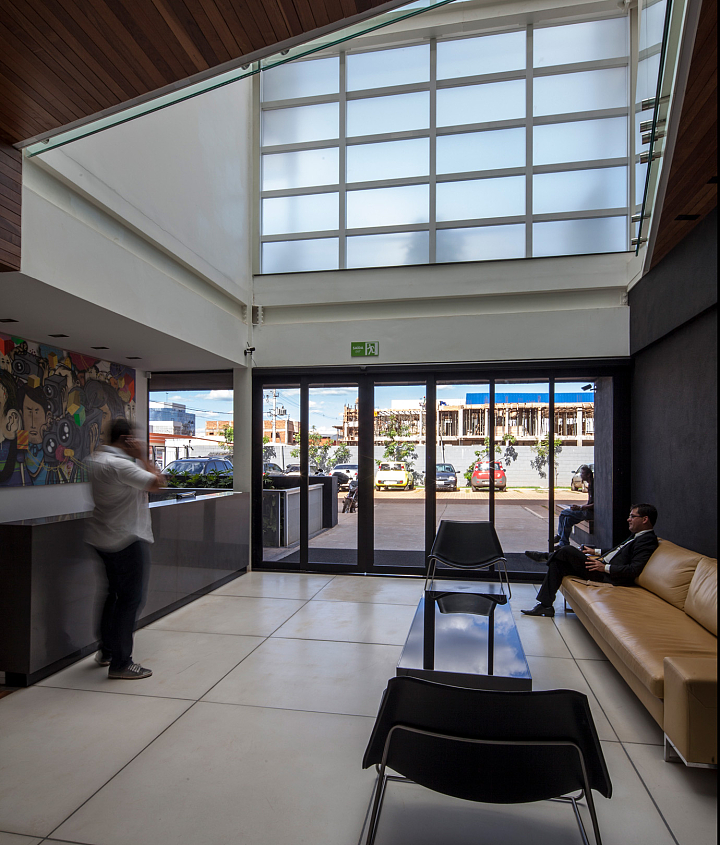
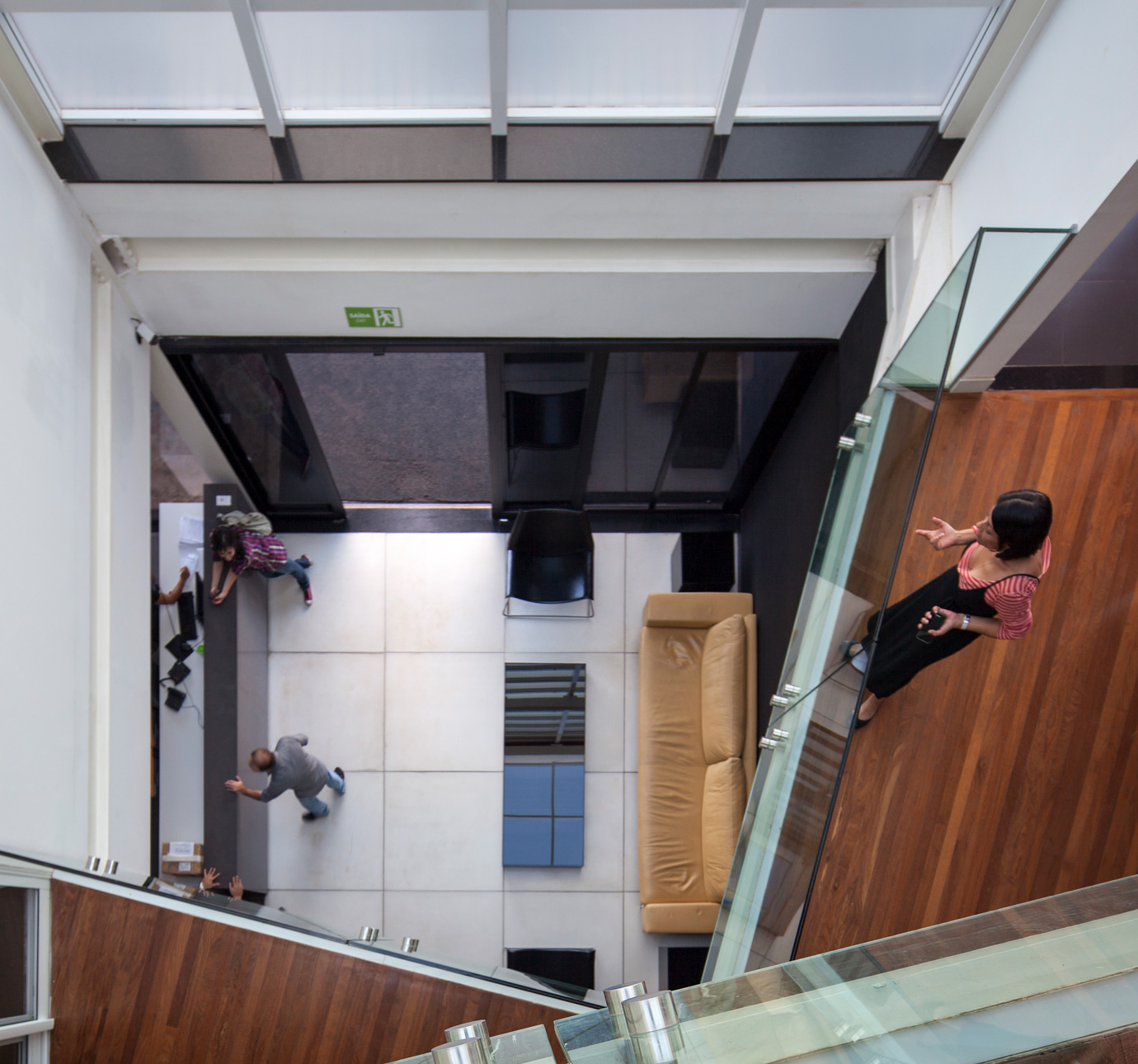
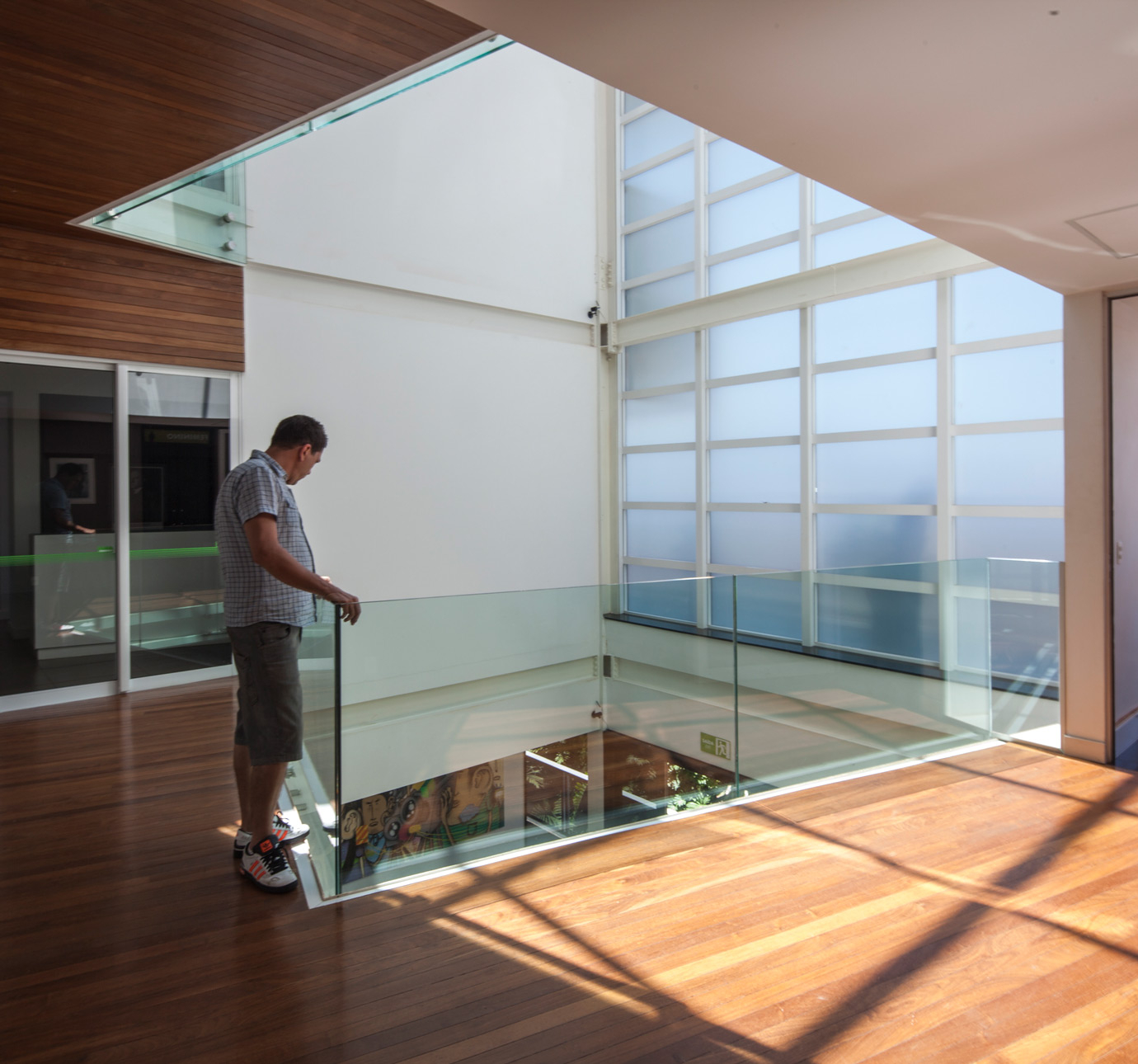
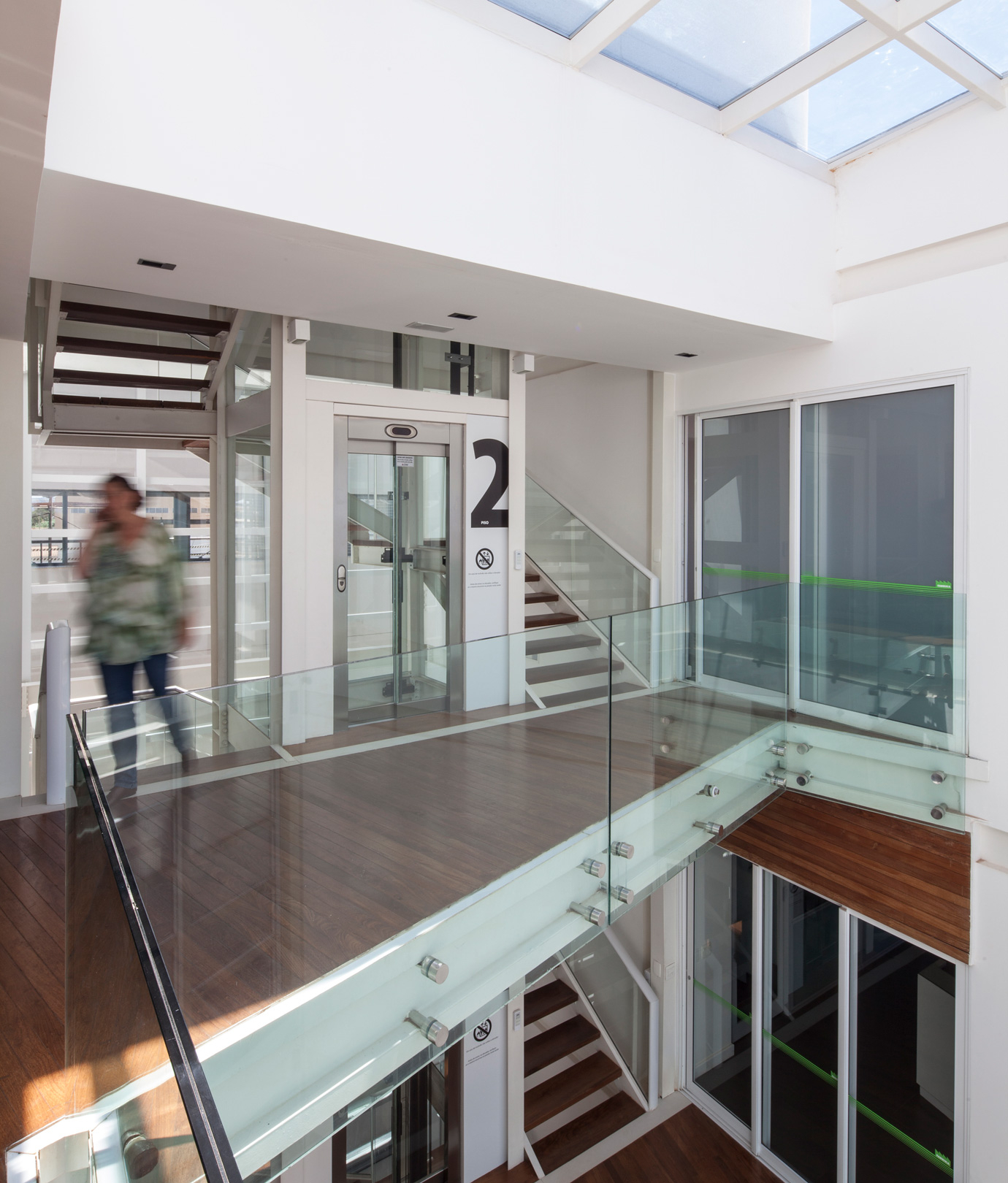
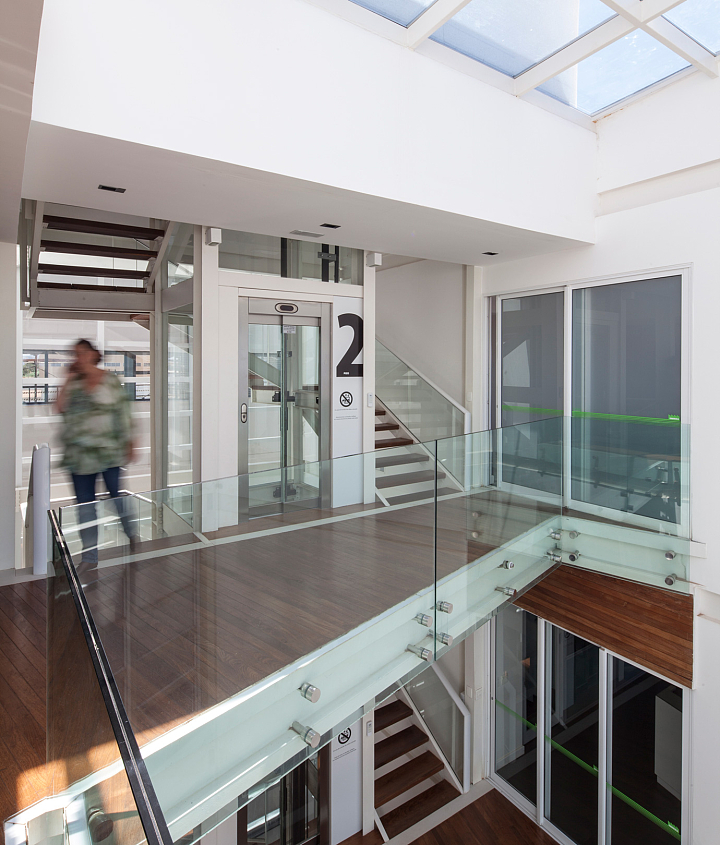
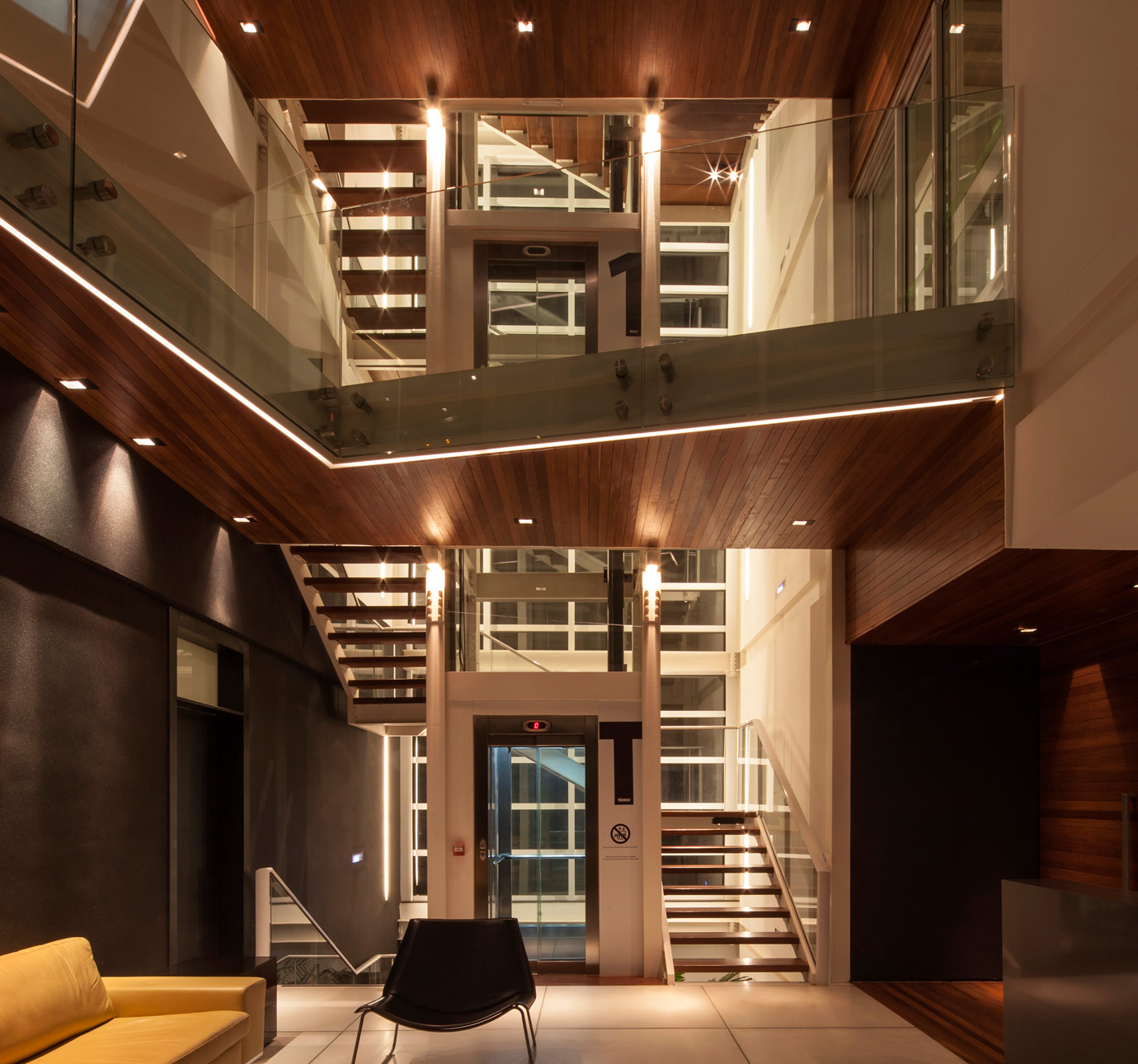
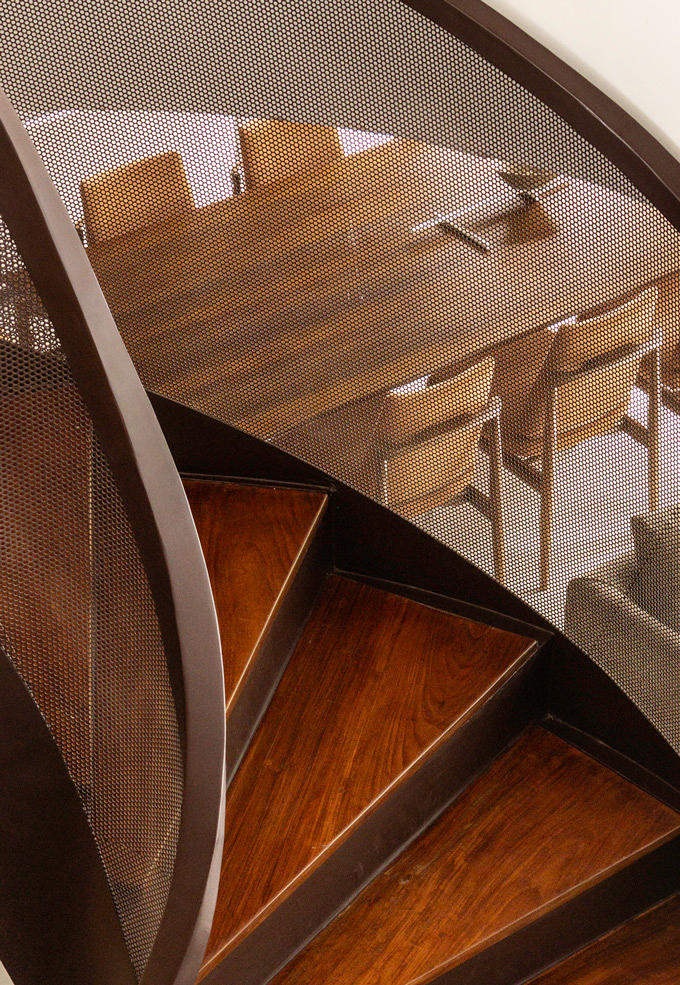
The atrium resulting from this central void constitutes Fabrika’s main exceptional space. The atrium is the core, the origin of all circulation throughout the building. Its full-height ceiling integrates the suspended walkways with the vertical circulation, establishes a permanent visual connection between social and restricted functions, and intersects the continuous modulation of the steel structure. From there, one perceives the movement across the two office floors and the ground level, a characteristic reinforced by the extensive use of glass — on the east and west façades, as well as on the roof and the enclosures of the elevator, staircases, and connecting walkways between the two sides of the building.
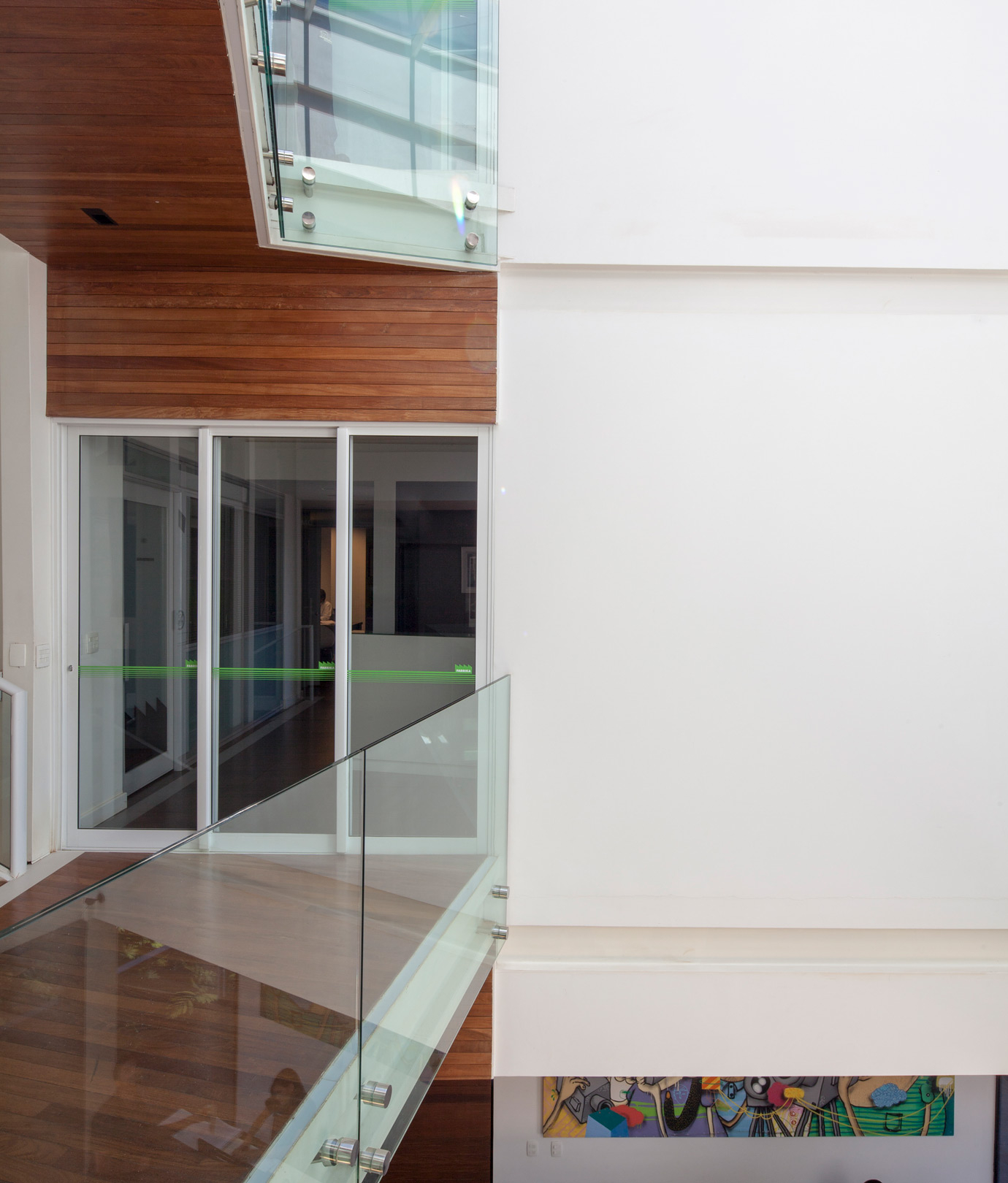
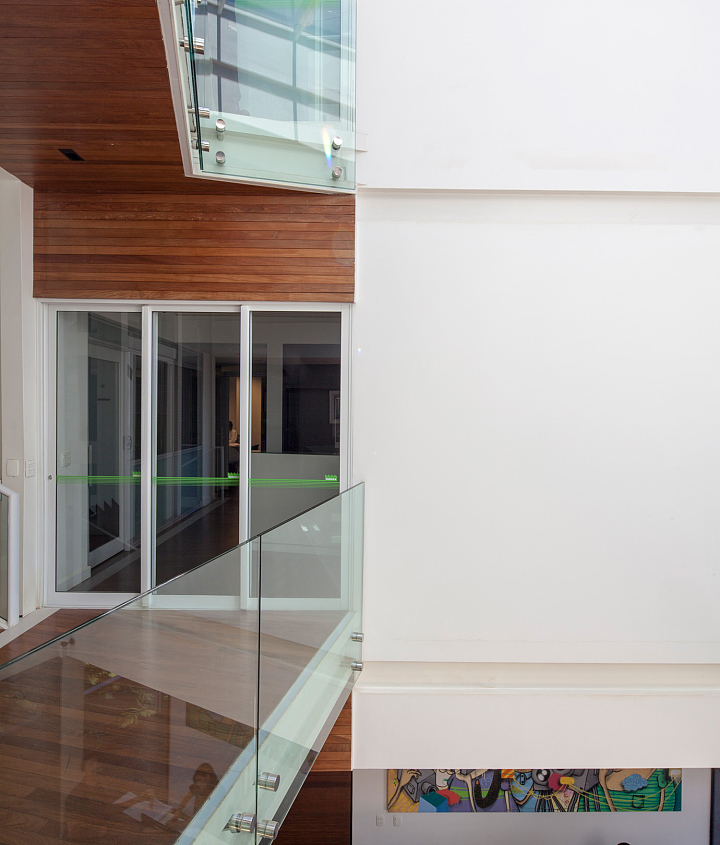
To reinforce the dynamism of this space, an unusual formal gesture was employed. The atrium floor is a perfect square composed of sixteen 120 x 120 cm cement panels, while the roof is formed by a glass skin mirroring the floor’s modulation. The walkways connecting the two sides of the building introduce a rupture within this regularity. One may imagine a twisted cube, like a spine, creating imaginary voids from square cutouts rotated along the walkways. This effect is further enhanced by the wooden paneling intersected by linear openings of light, both on the ceilings and the floors of the walkways.
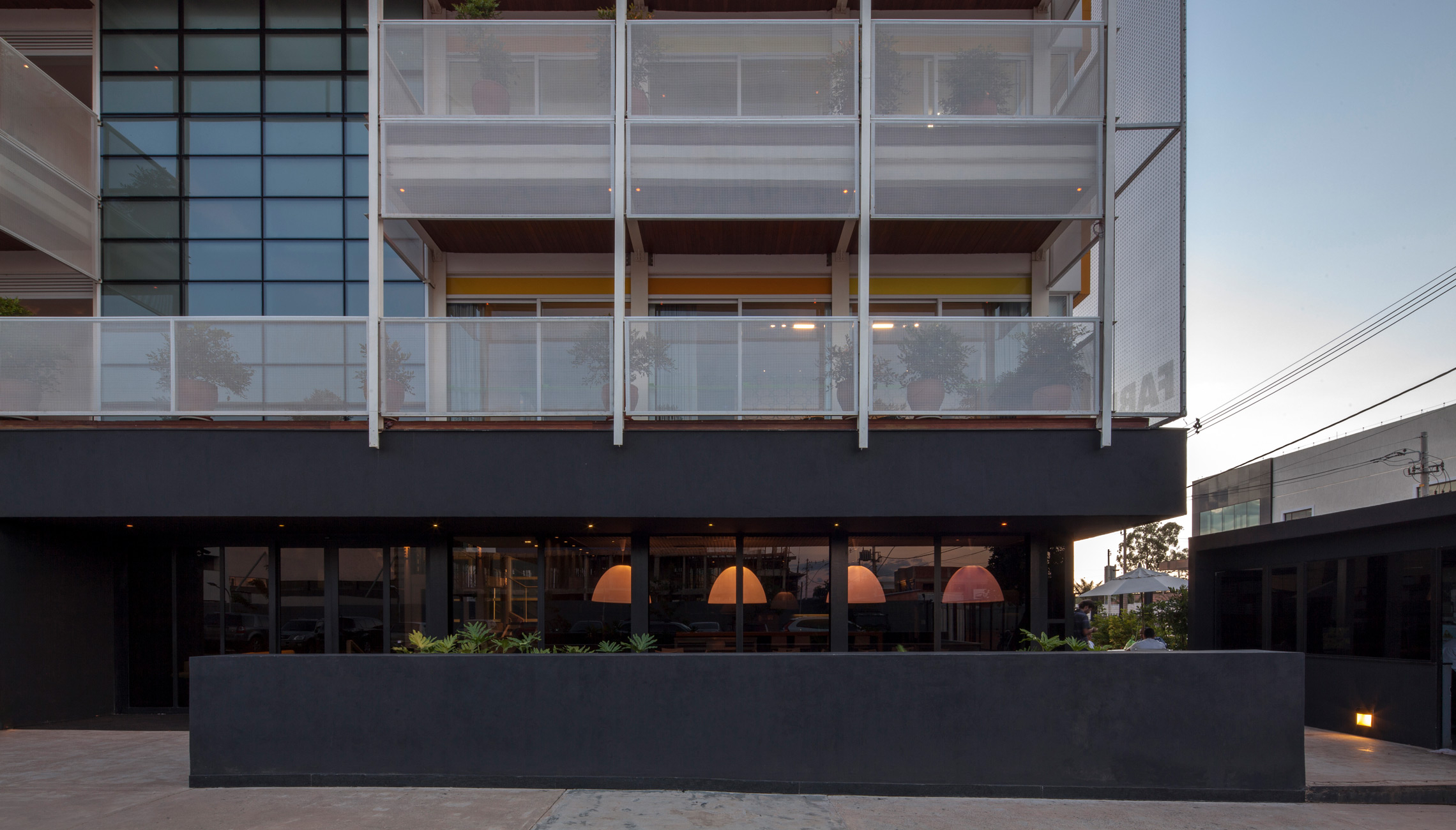
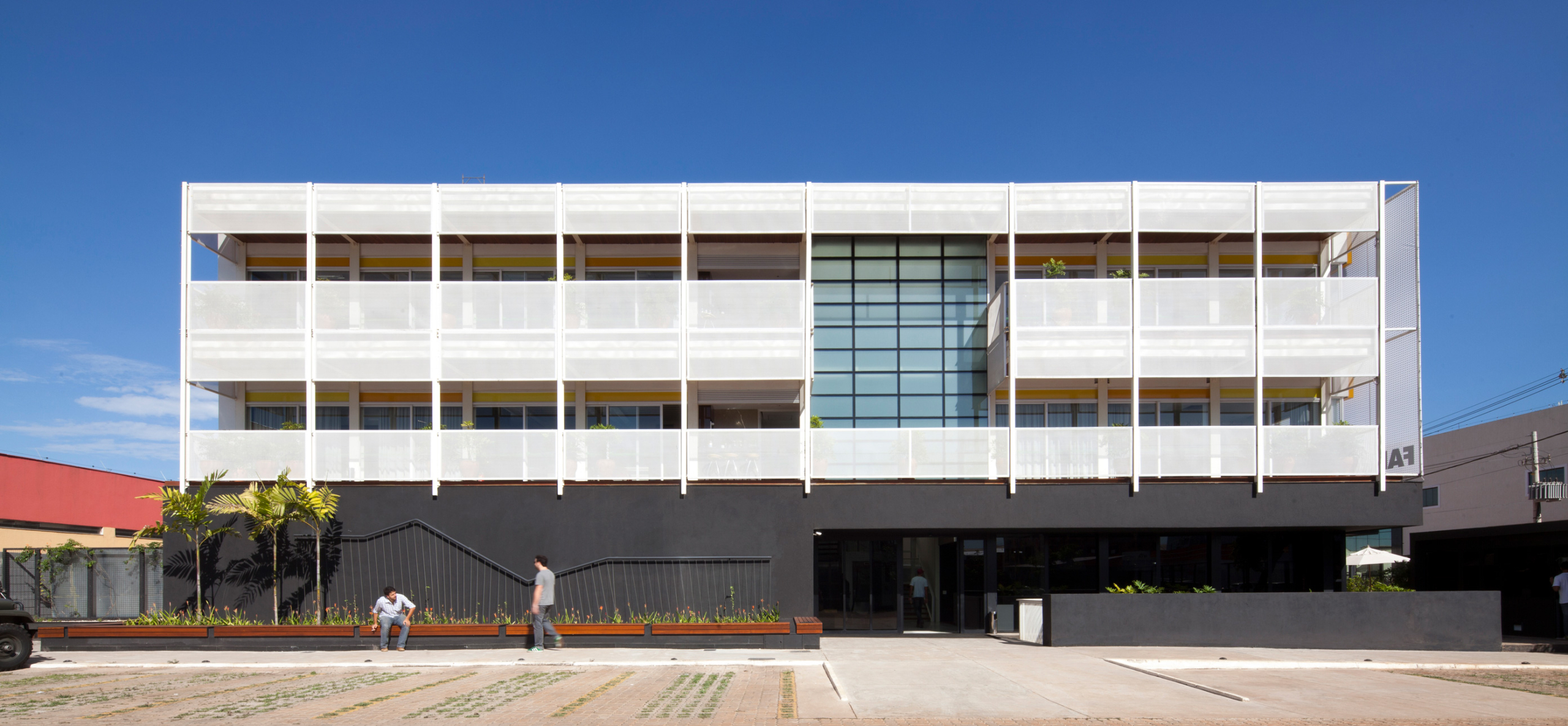
The pedestrian access route was resolved from the front entrance of the lot to the central atrium on the ground floor. The solution was to extend a black canopy toward the front of the site, as an extension of the studio’s concrete structure. This proposal provides adequate shelter along the pedestrian path. The gesture is symbolic: the studio extends an arm toward the city, inviting visitors into the building.
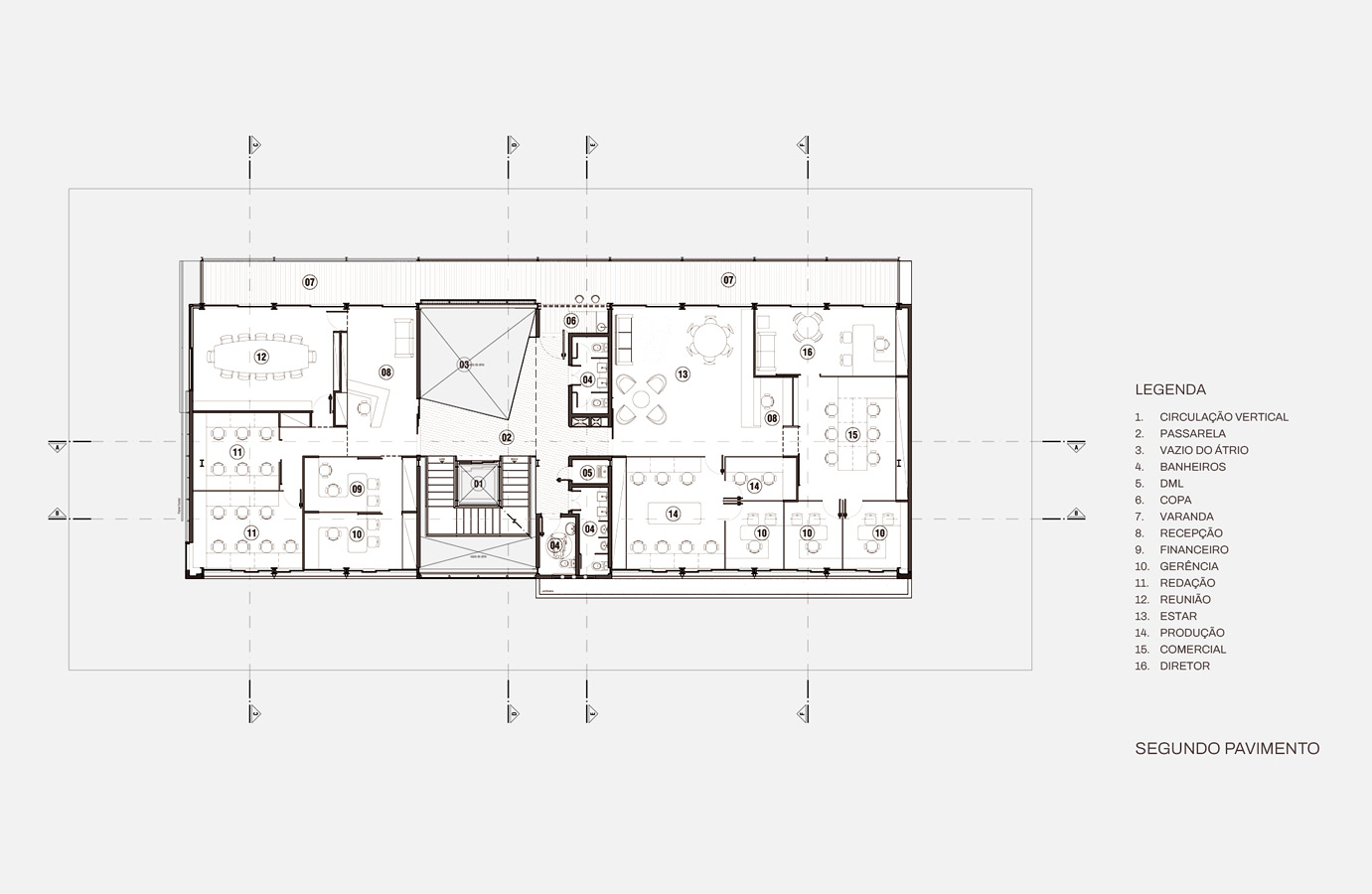
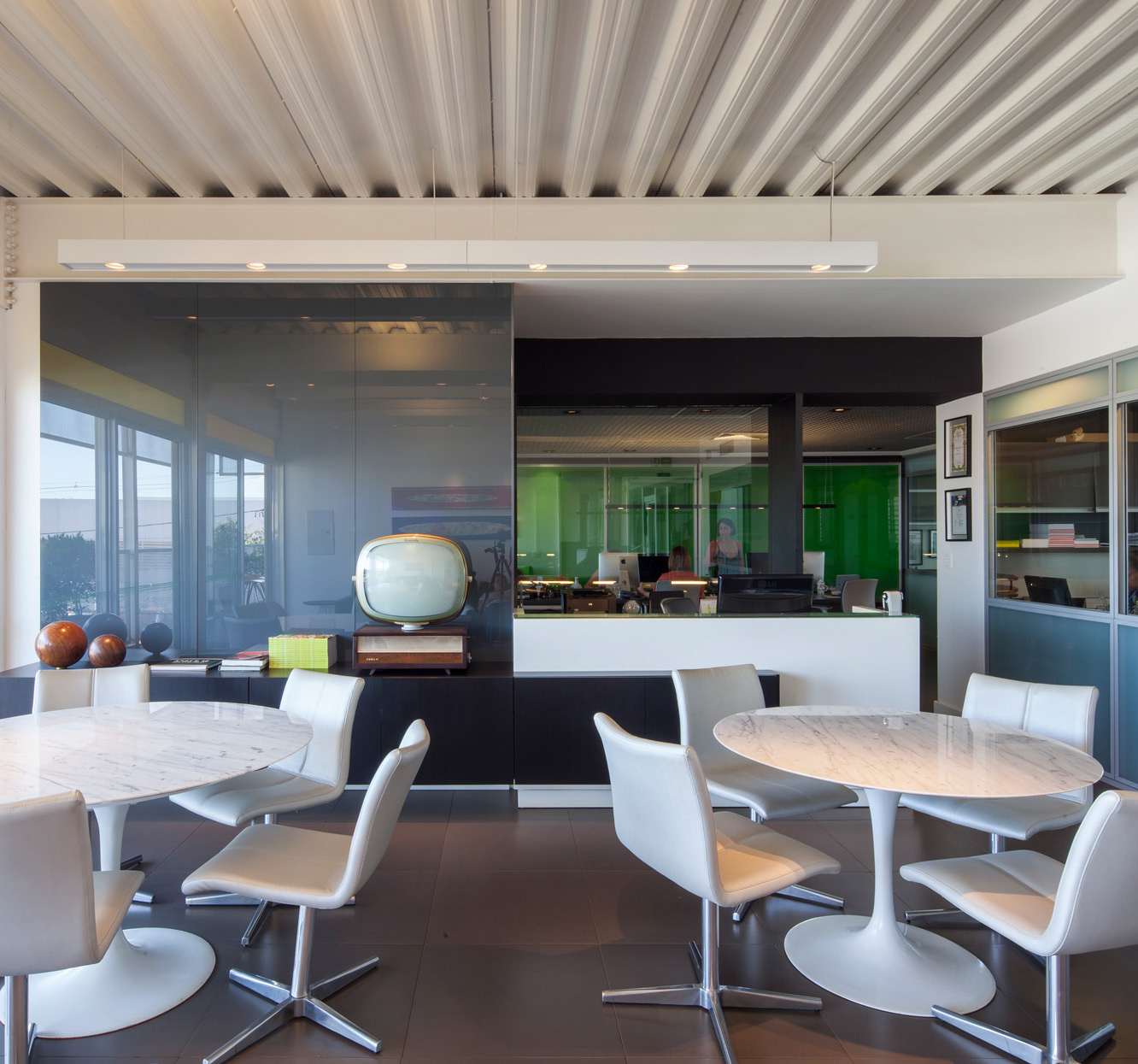
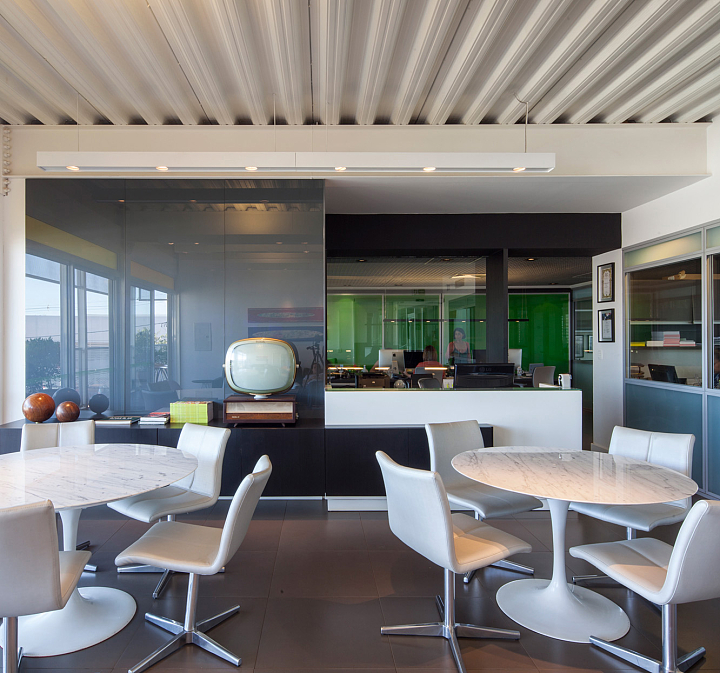
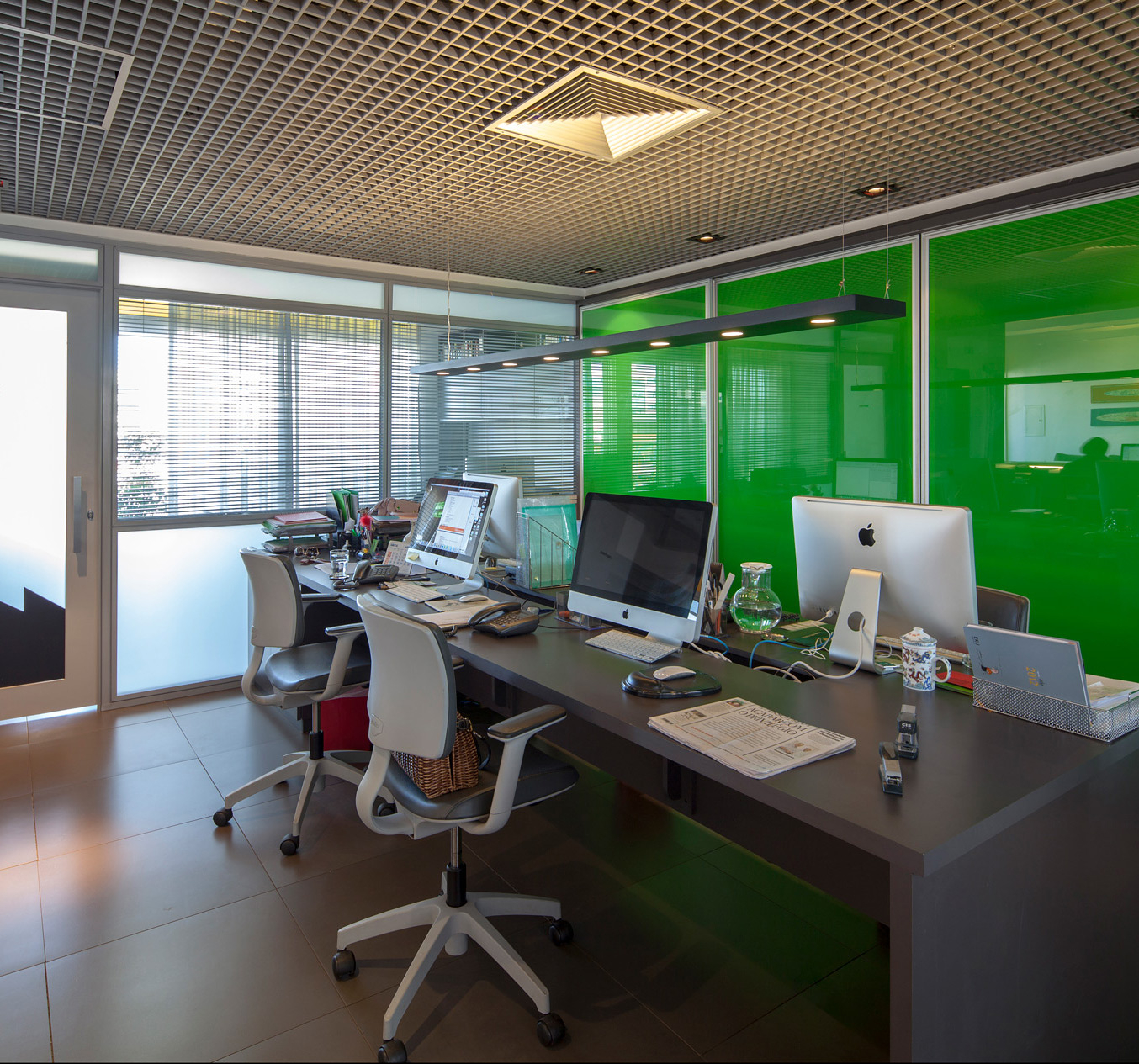
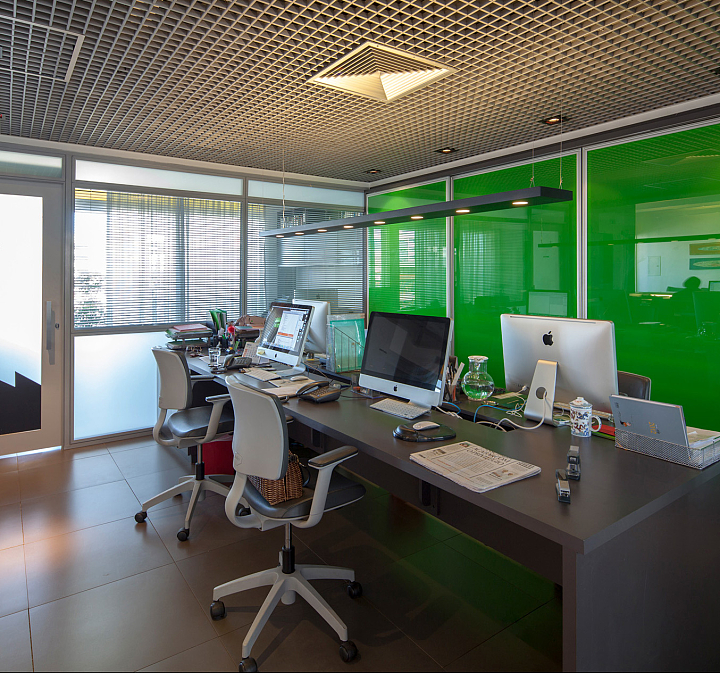
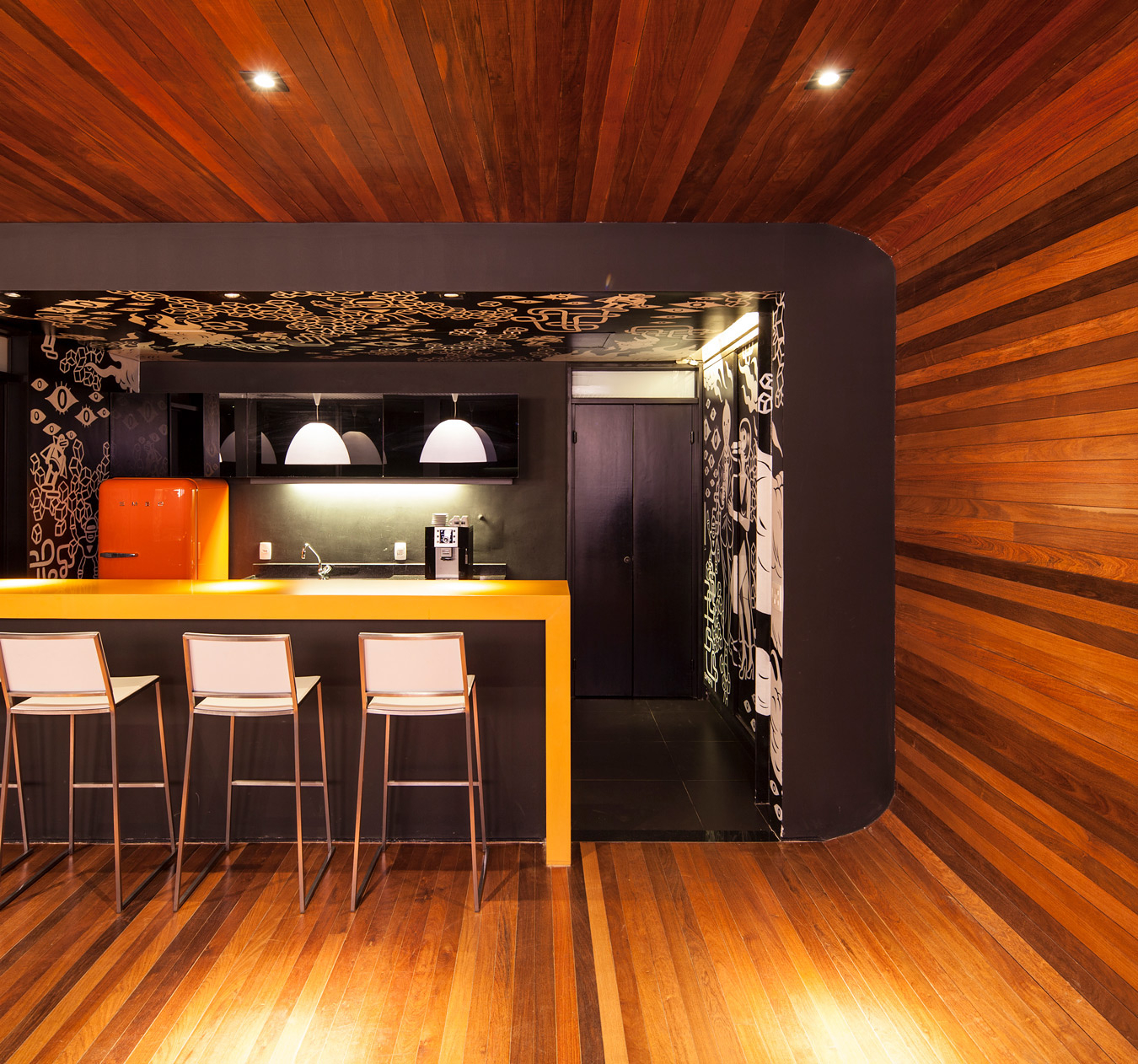
The office floors (second and third levels) possess the flexibility required by the program. To achieve this, a vertical strip of shared areas — restrooms, janitorial storage, and pantry — was positioned facing the central atrium, freeing the main span to accommodate only workspaces. The open-plan layout became possible through the use of a steel structure spanning 10.8 meters transversely, as well as raised flooring systems, allowing for rapid layout changes. The use of dedicated shafts for electrical and data installations was essential, enabling the entire building to be easily rewired as needed.
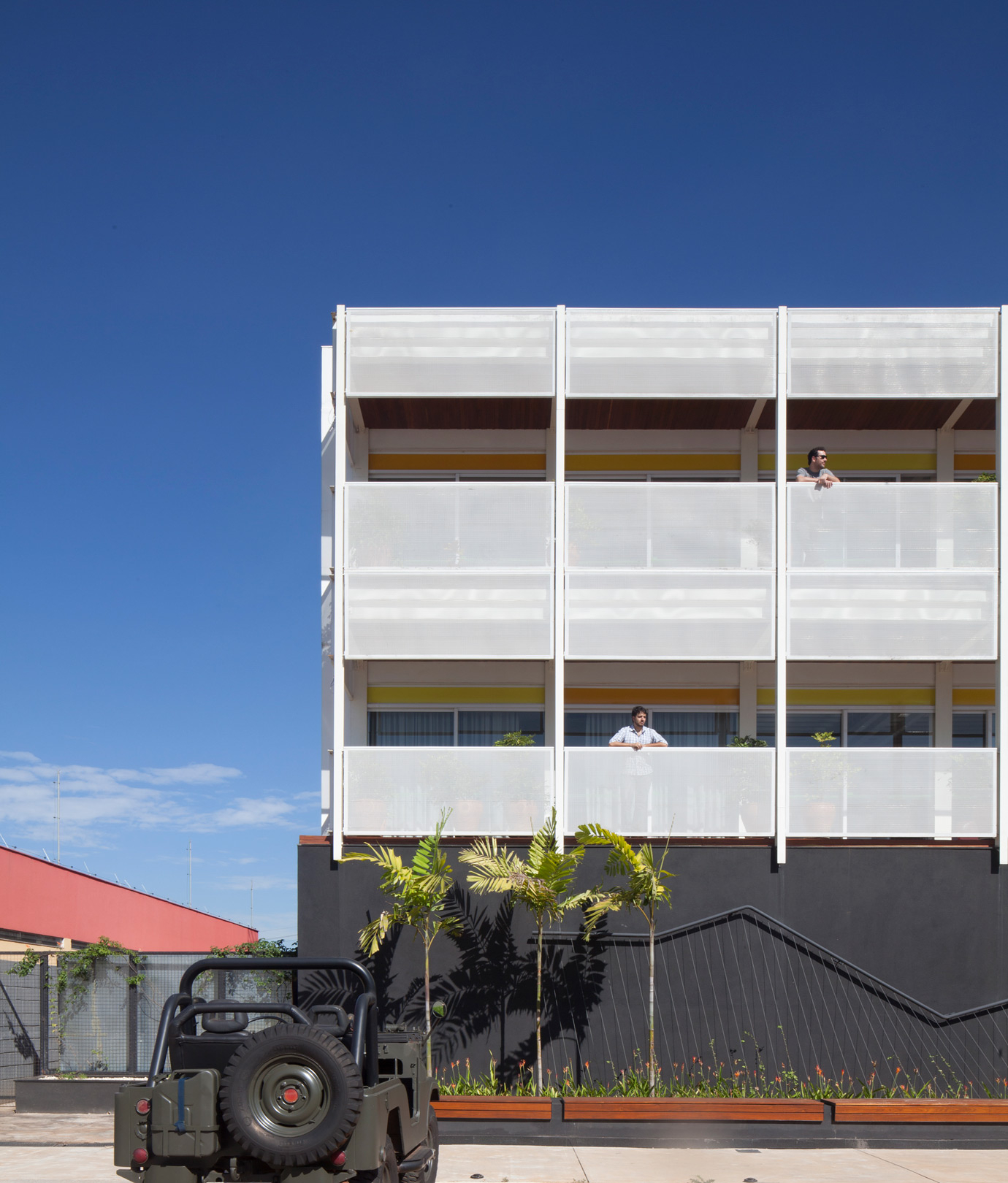
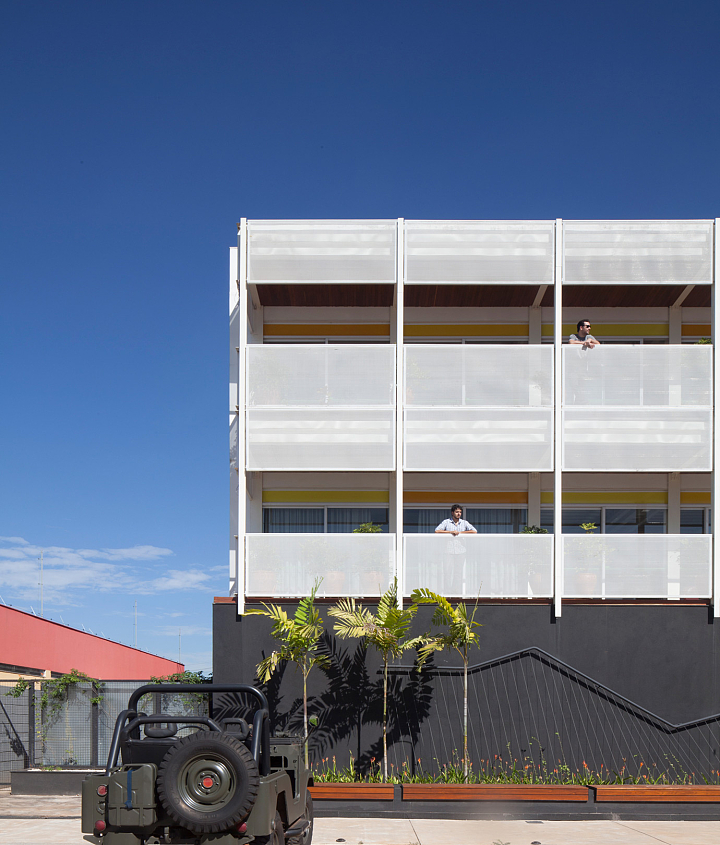
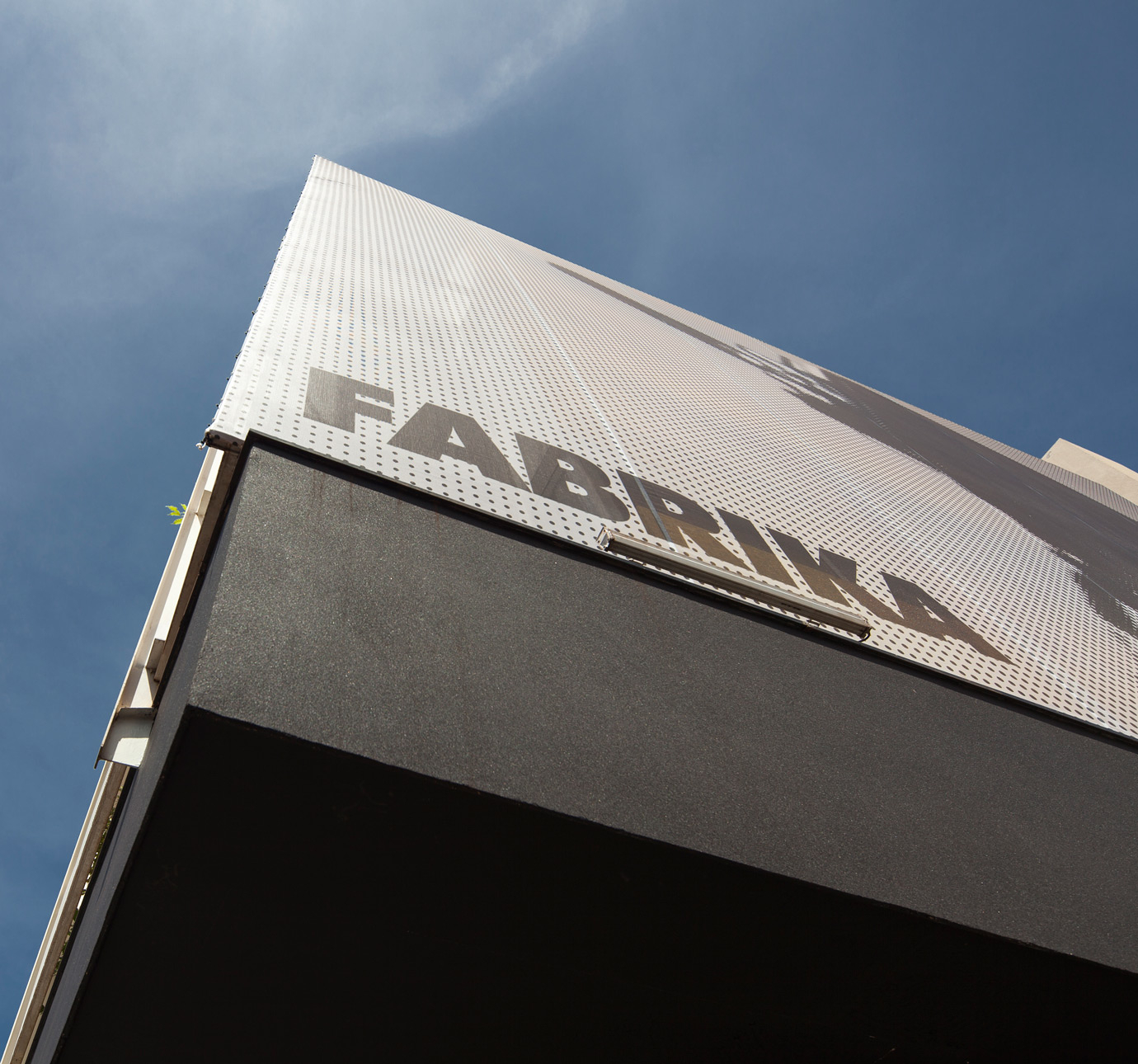
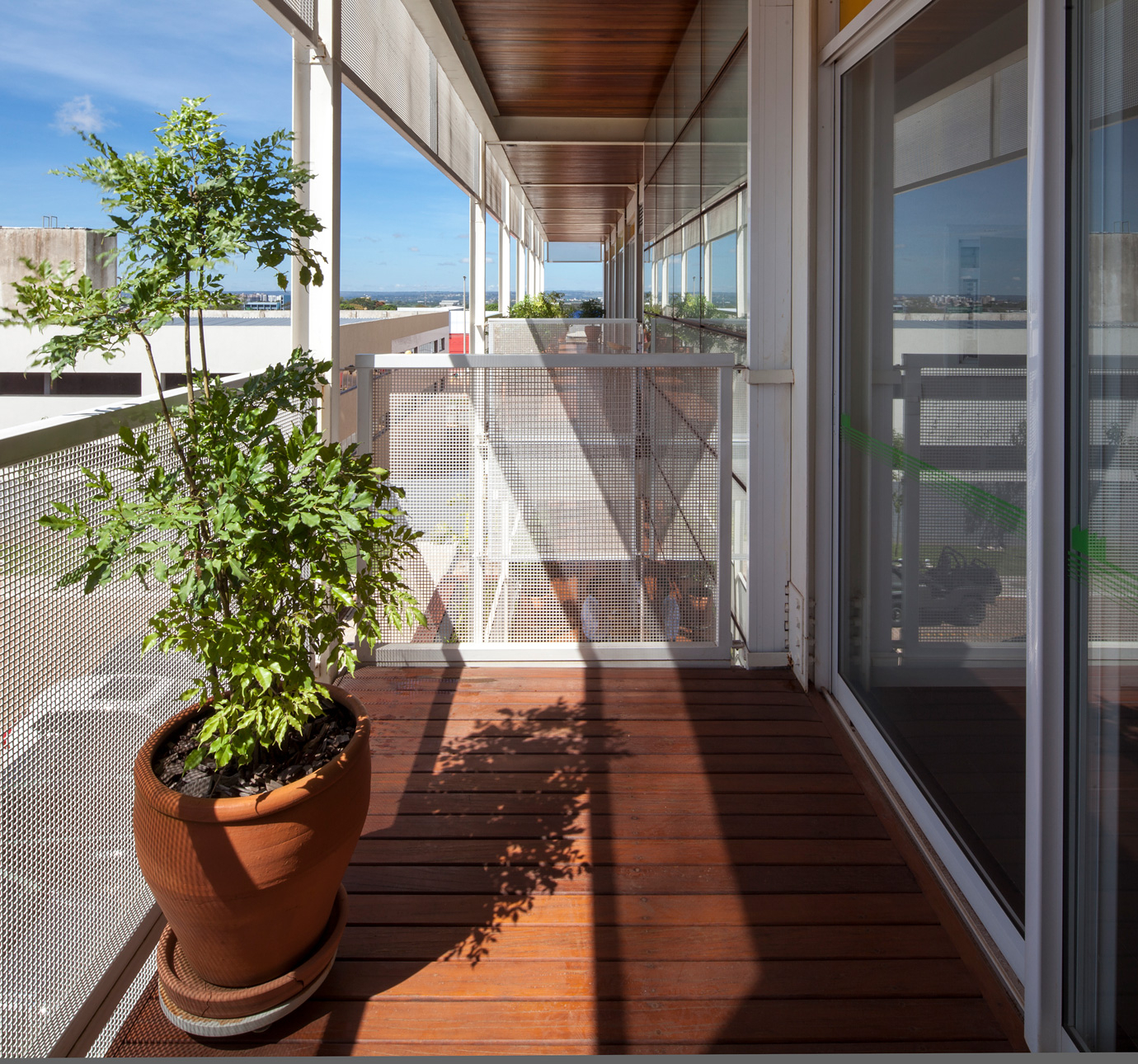
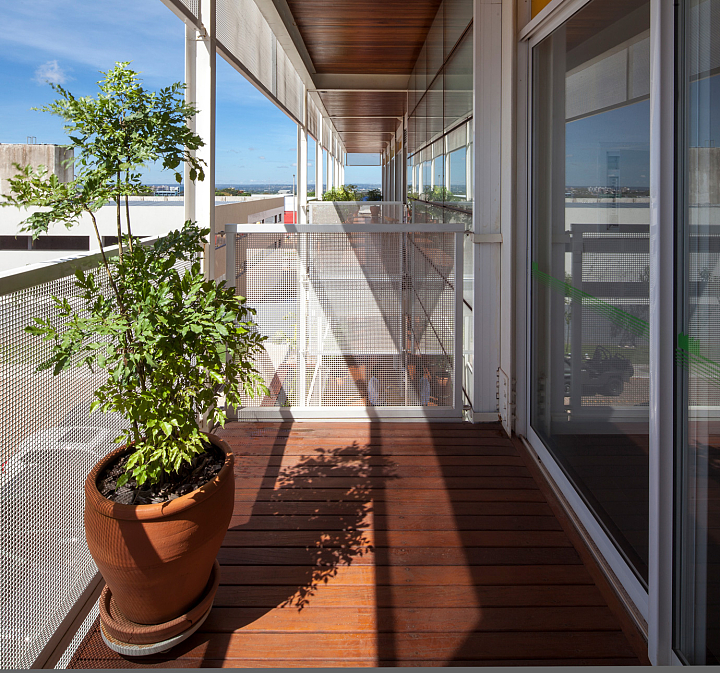
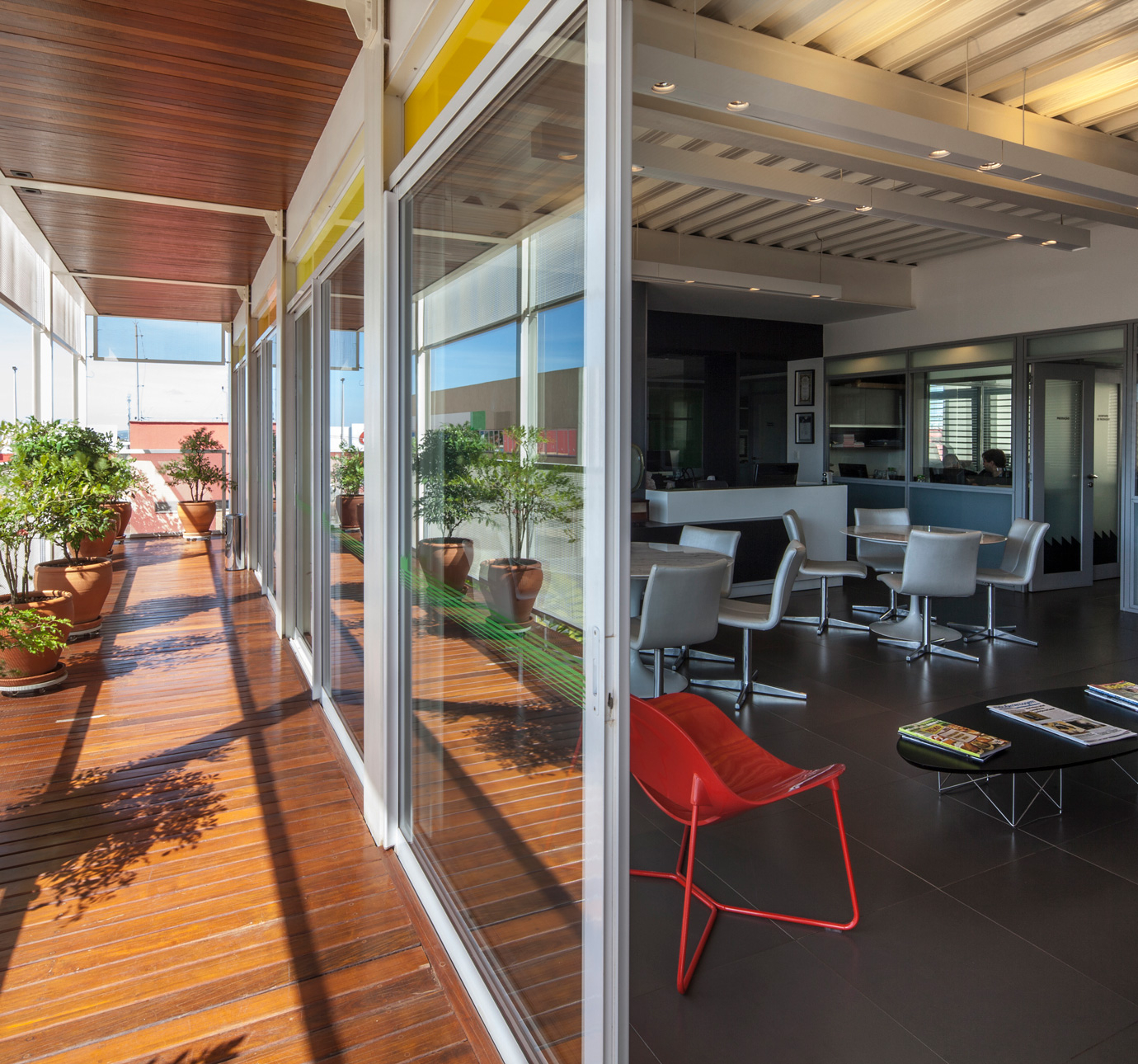
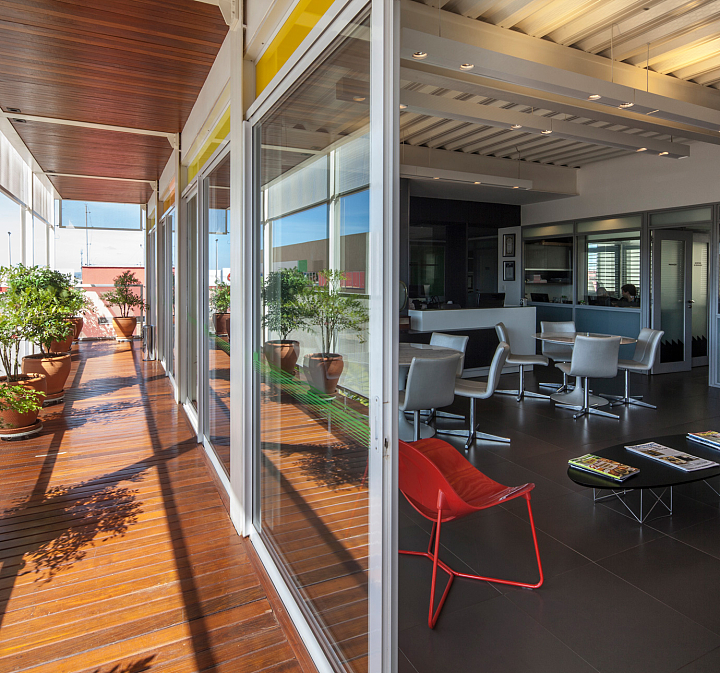
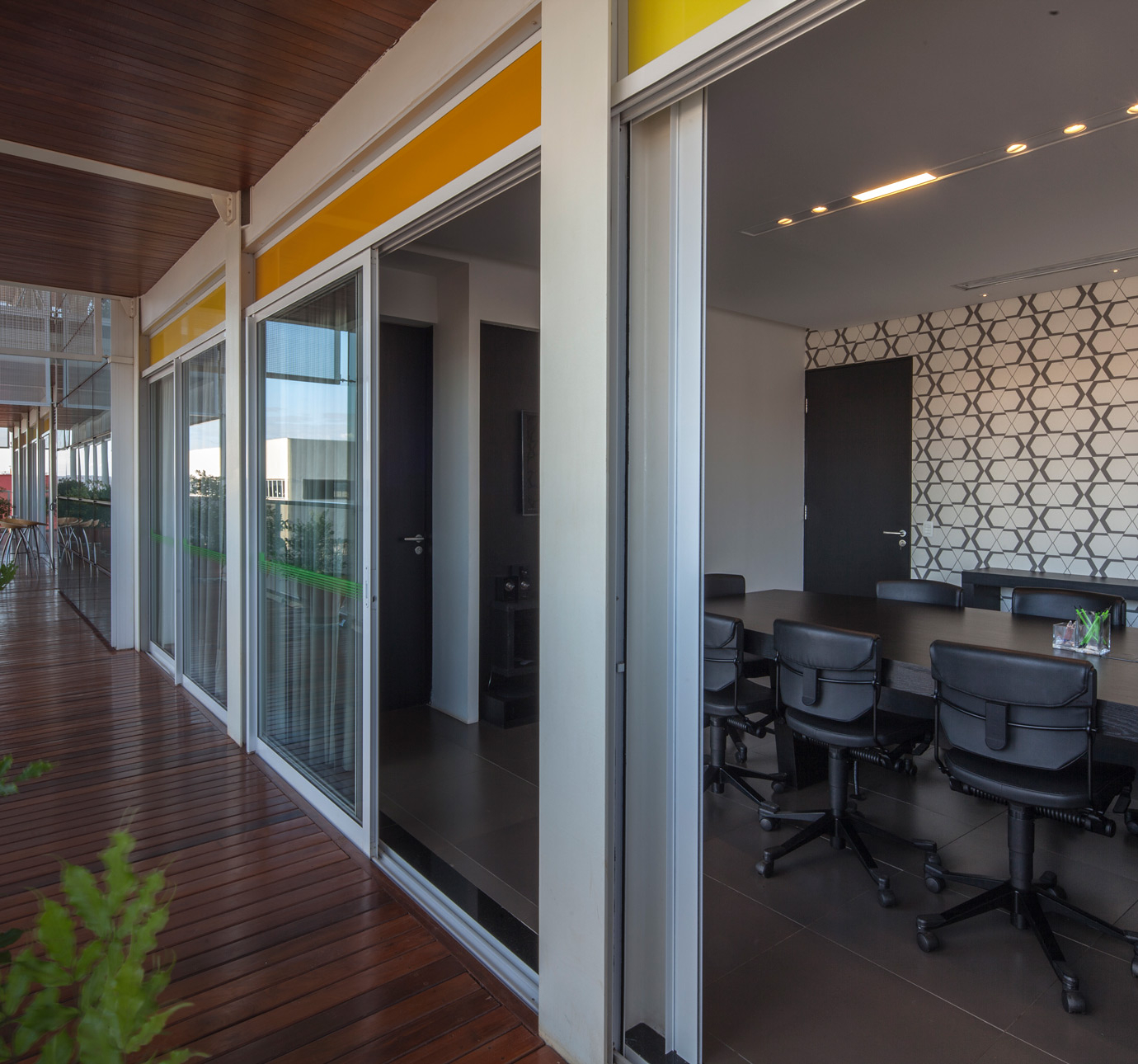
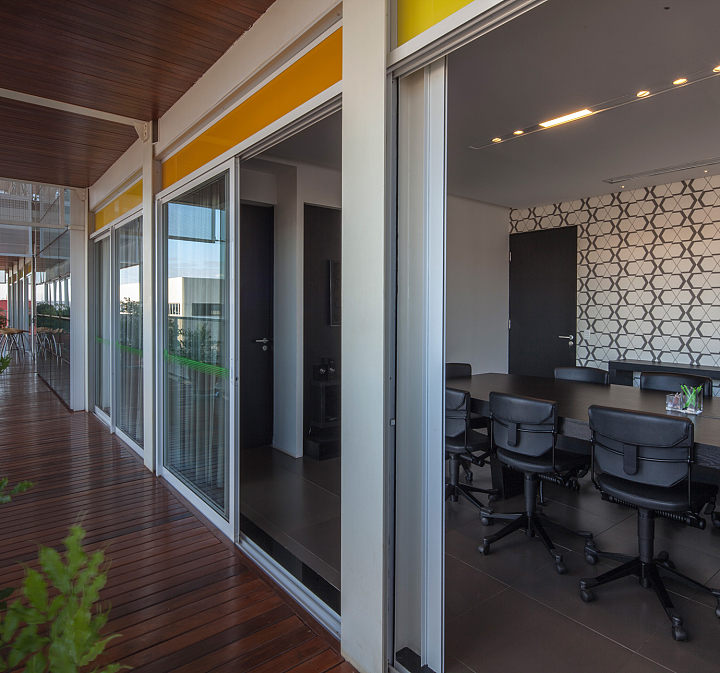
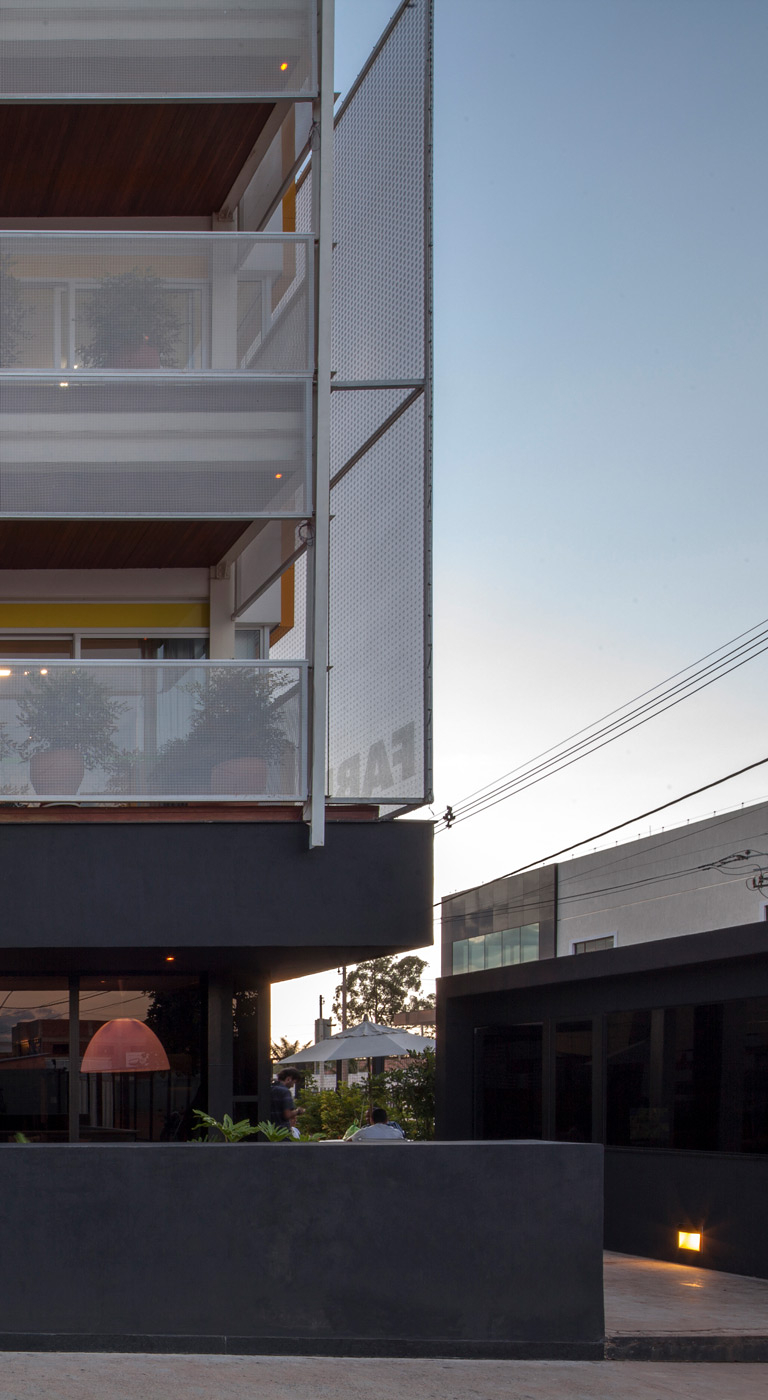
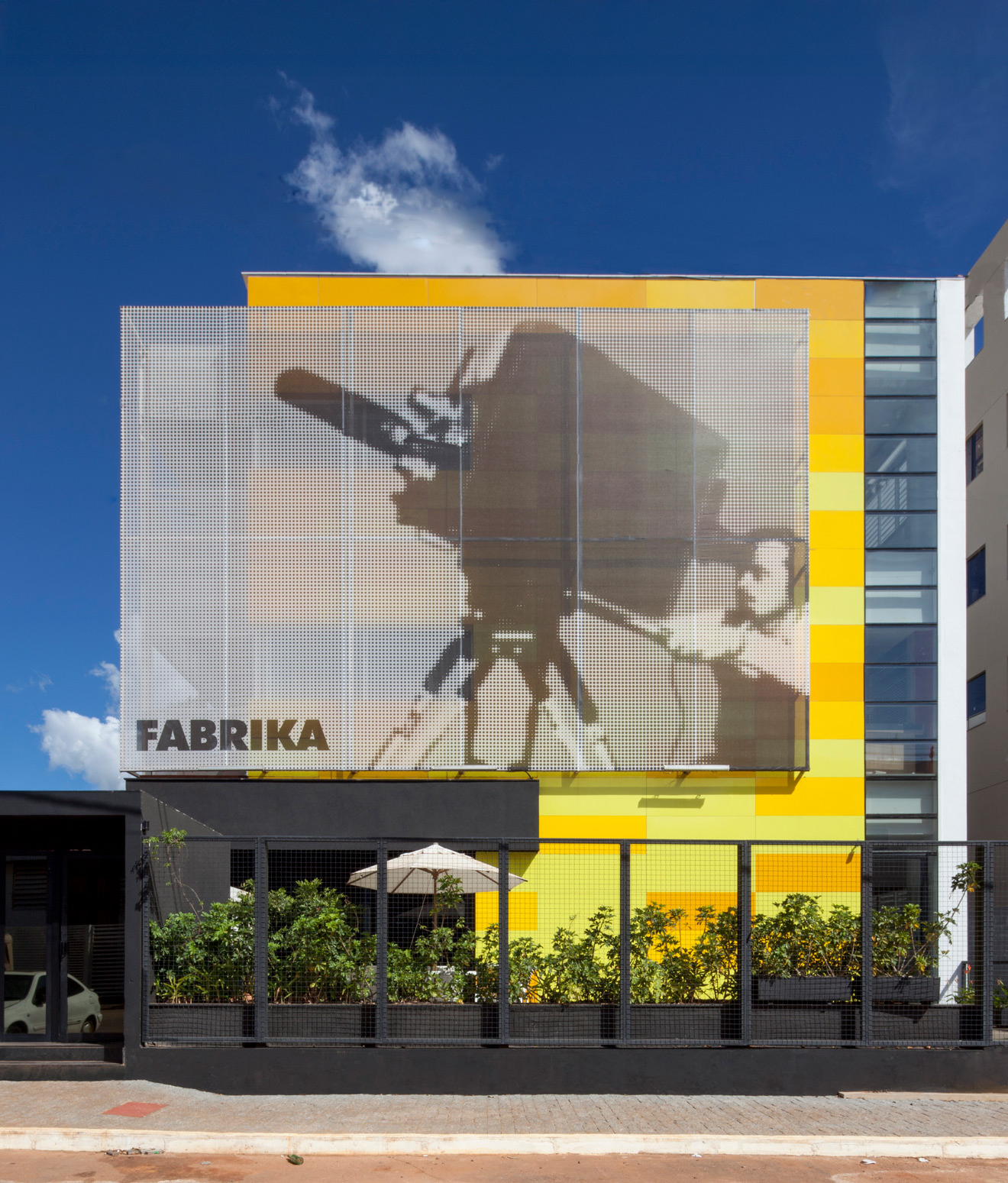
Another advantage of the office configuration is the abundance of natural light combined with cross ventilation, which in most cases eliminates the need for artificial lighting and ventilation systems. Completing the composition of the office floors are the balconies: generous communal spaces connected to the pantry and the atrium walkways. This auxiliary structure, formed by a 1.8-meter cantilever of the steel framework, connects the building longitudinally along the east façade, protected by perforated metal panels.


-
Adress
SIA Trecho 17 - Brasília
-
Area
1700 m²
-
Authors
Pedro Grilo
Gabriel Nogueira
Guilherme Araújo
Alberto Uno -
Team
Thiago Turchi
Daniel Brito
Brunno de Sá -
Photos
Joana França