CODA Headquarters
— Edificio Morro Vermelho

Memória do projeto
During the pandemic, the firm shifted its focus to remote work, leaving our former office space. Gradually, in-person activities resumed, and in 2022, we had the privilege of joining forces with other firms to share a floor in Morro Vermelho, an iconic modernist building in Brasília.
Next to its “sister” building, Camargo Corrêa, Morro Vermelho is located in the heart of Brasília, the Setor Comercial Sul. This area of the city unfortunately became deserted between the late 1990s and early 2000s, but has recently been undergoing a revitalization as a vibrant hub of the city.
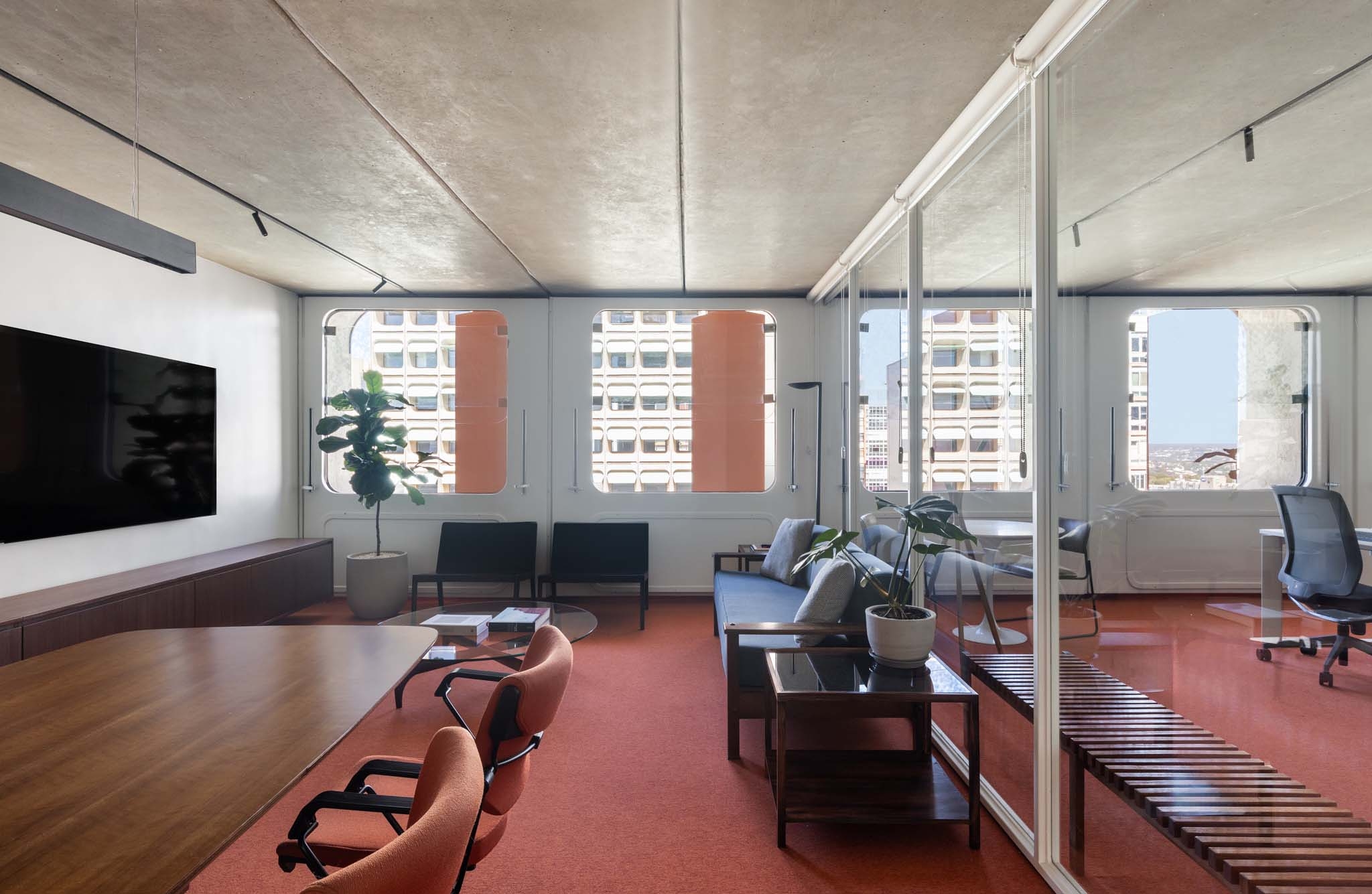
The building itself was constructed during a period of intense experimentation in the formation of the newly born city, marked by the use of reinforced and exposed concrete, as well as prefabrication. Its architect, João Filgueiras Lima, was one of the architects who most explored this construction technique in Brasília. The choice of the location that houses the firm’s headquarters is fully in line with CODA’s purpose of uniting the modern with the contemporary, highlighting the strengths and iconic characteristics of Brasília’s buildings. The project, therefore, emphasizes the building’s modular character, as well as the exposed structural elements and the texture of the concrete.
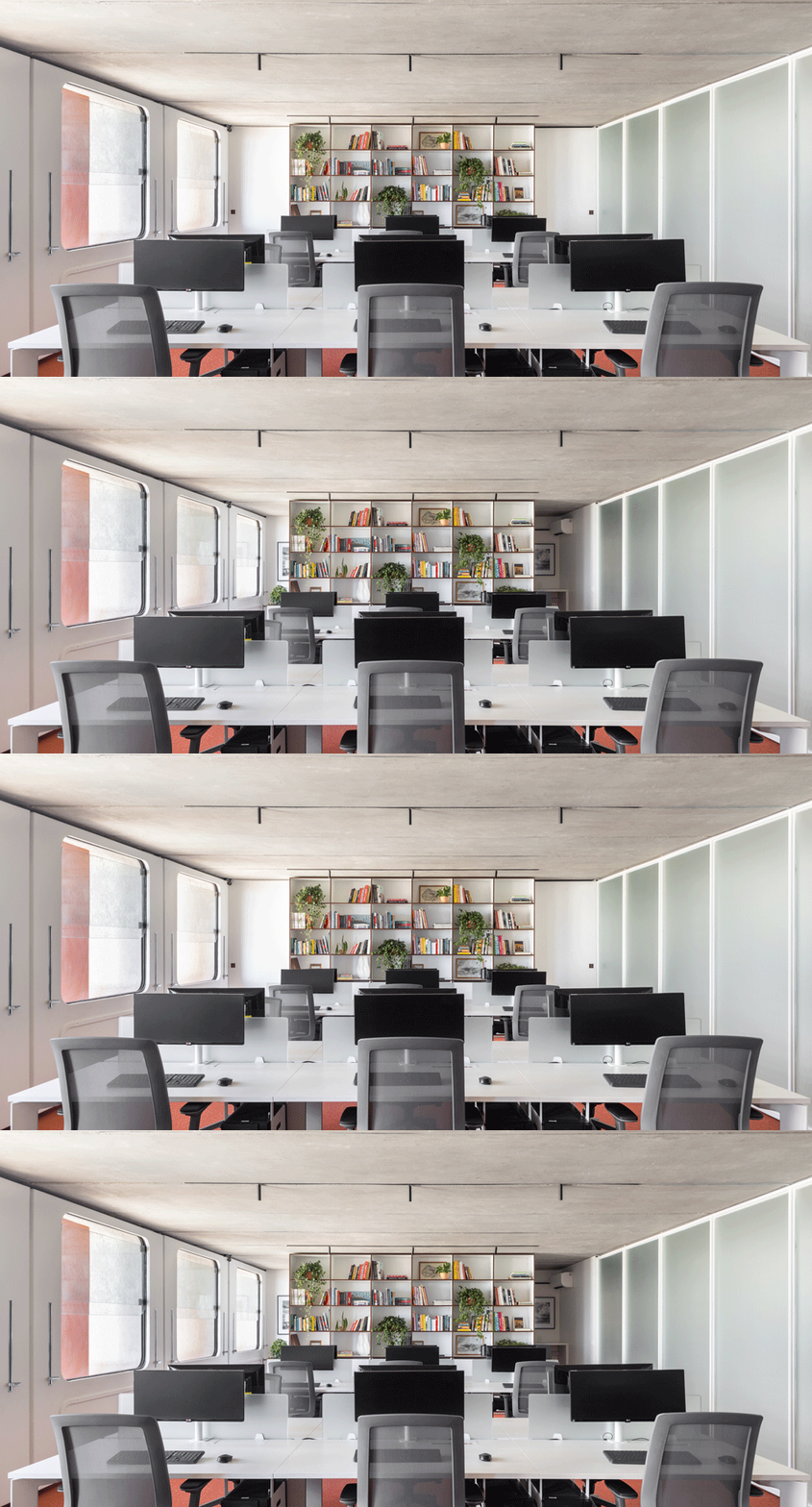
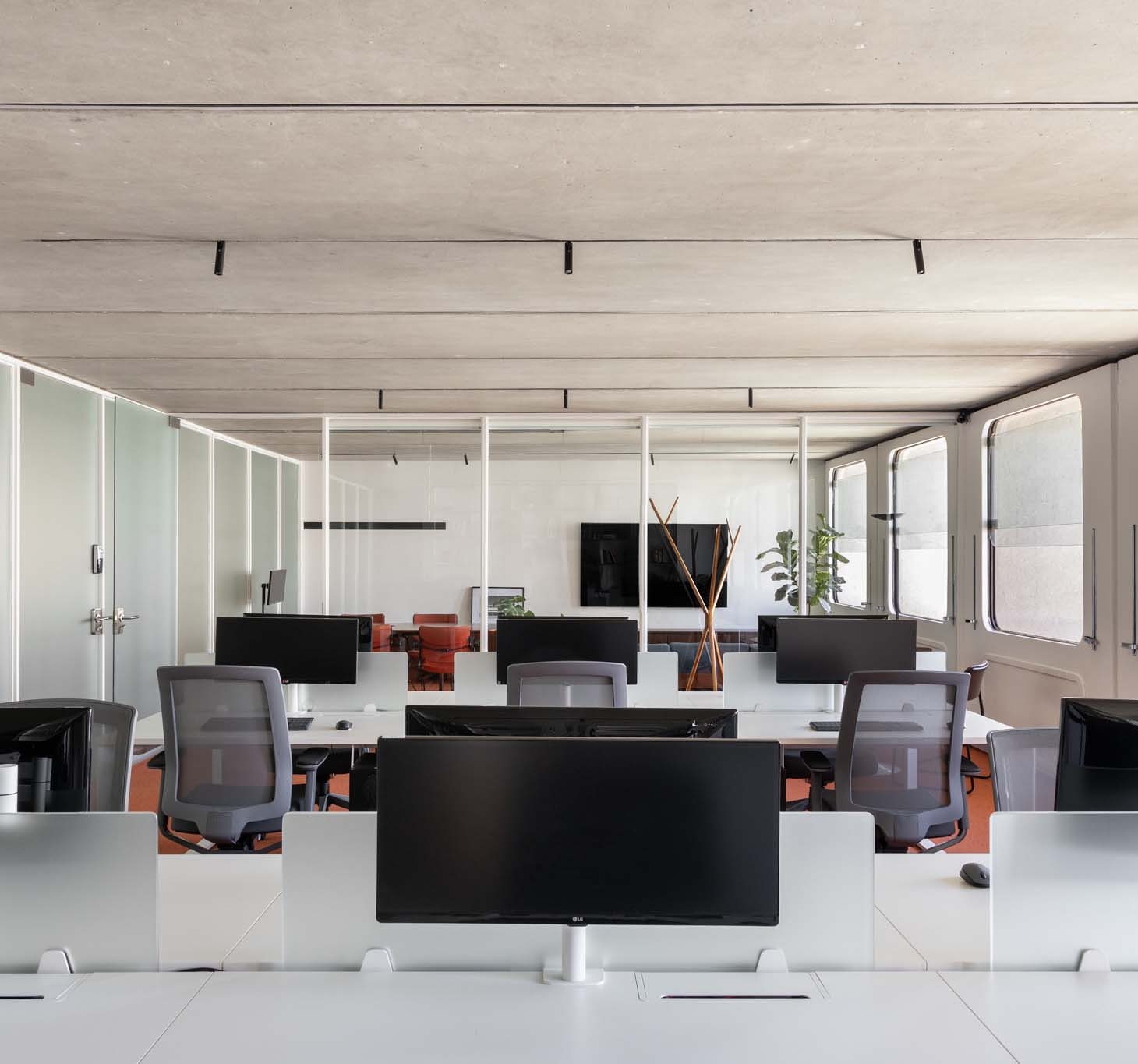
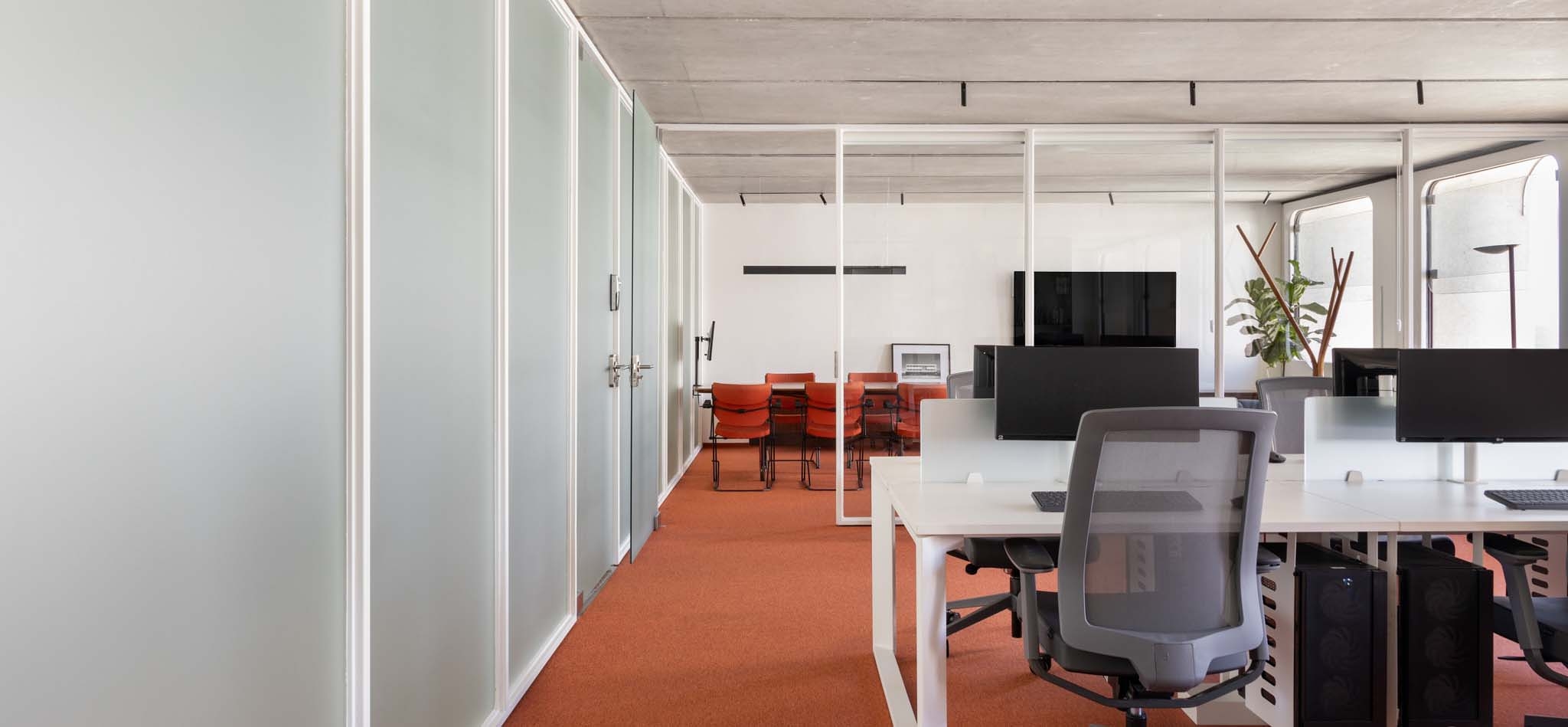
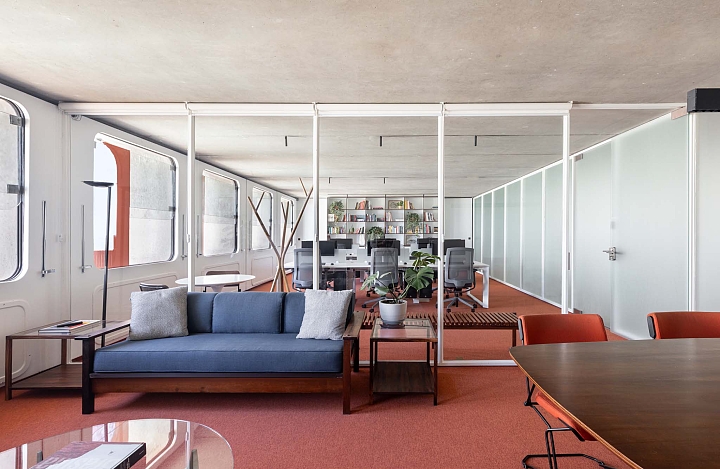
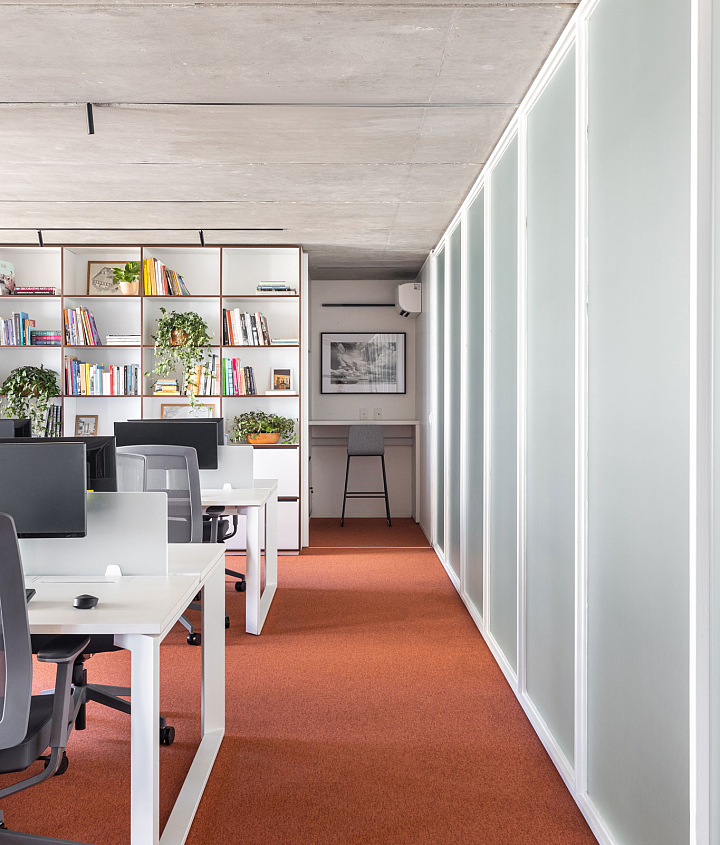
The floor, measuring approximately 402 m², is shared with three other offices and follows the layout of the upper floor, designed by the team at BLOCO Arquitetos. CoDA occupies a 92 m² rectangular space, which is divided into four areas: the team’s workspace, a meeting room, a break room, and a server room.
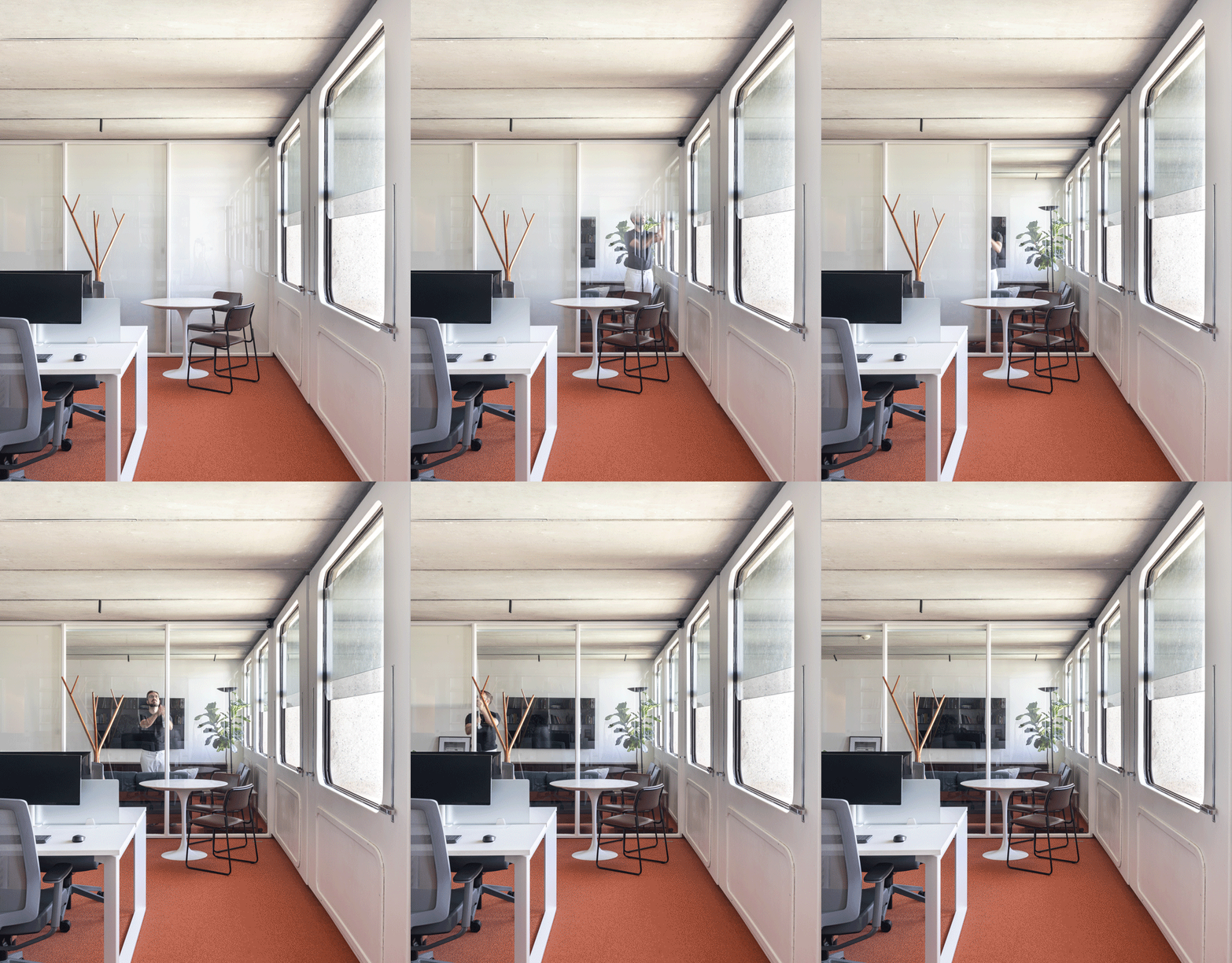
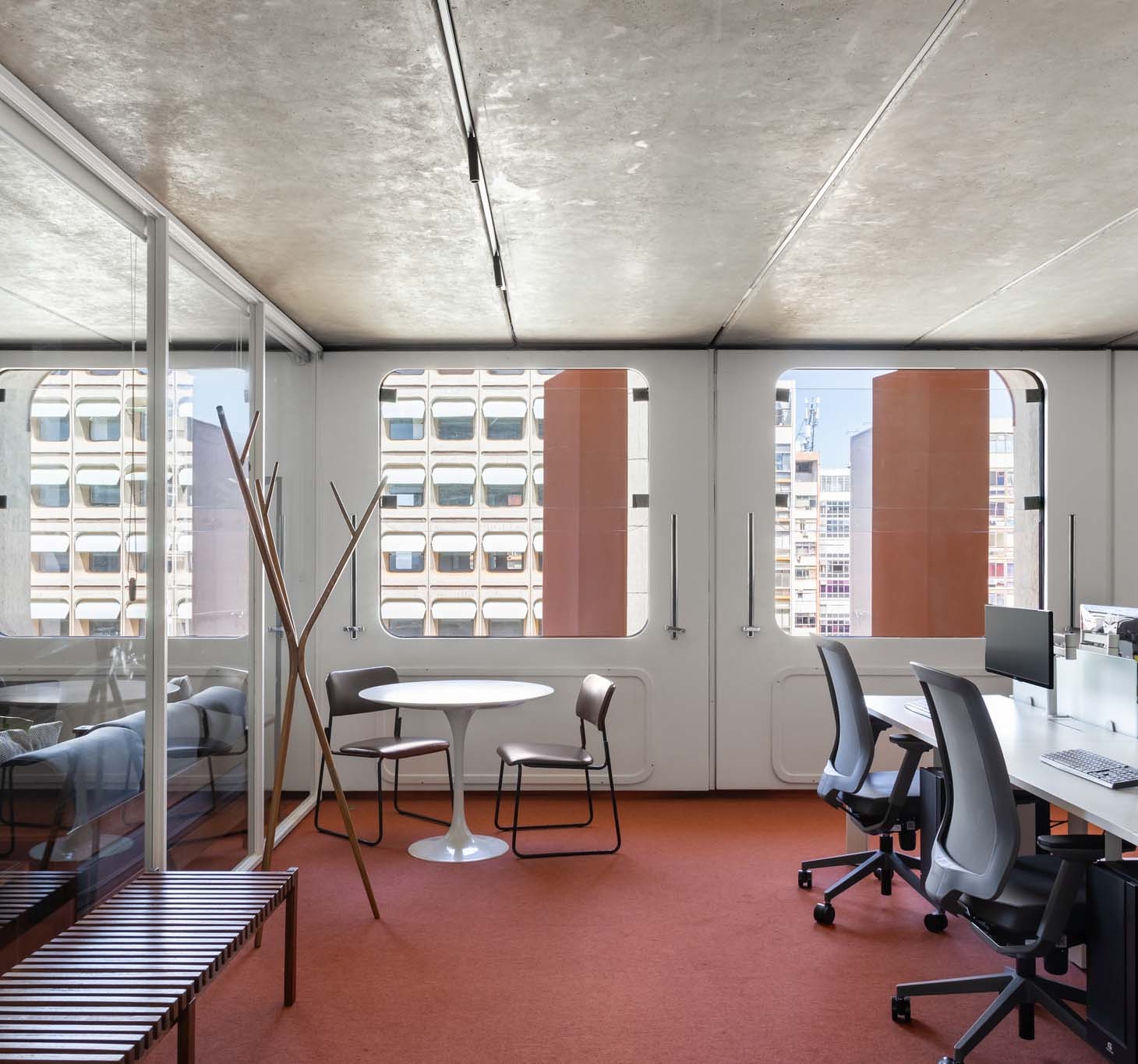
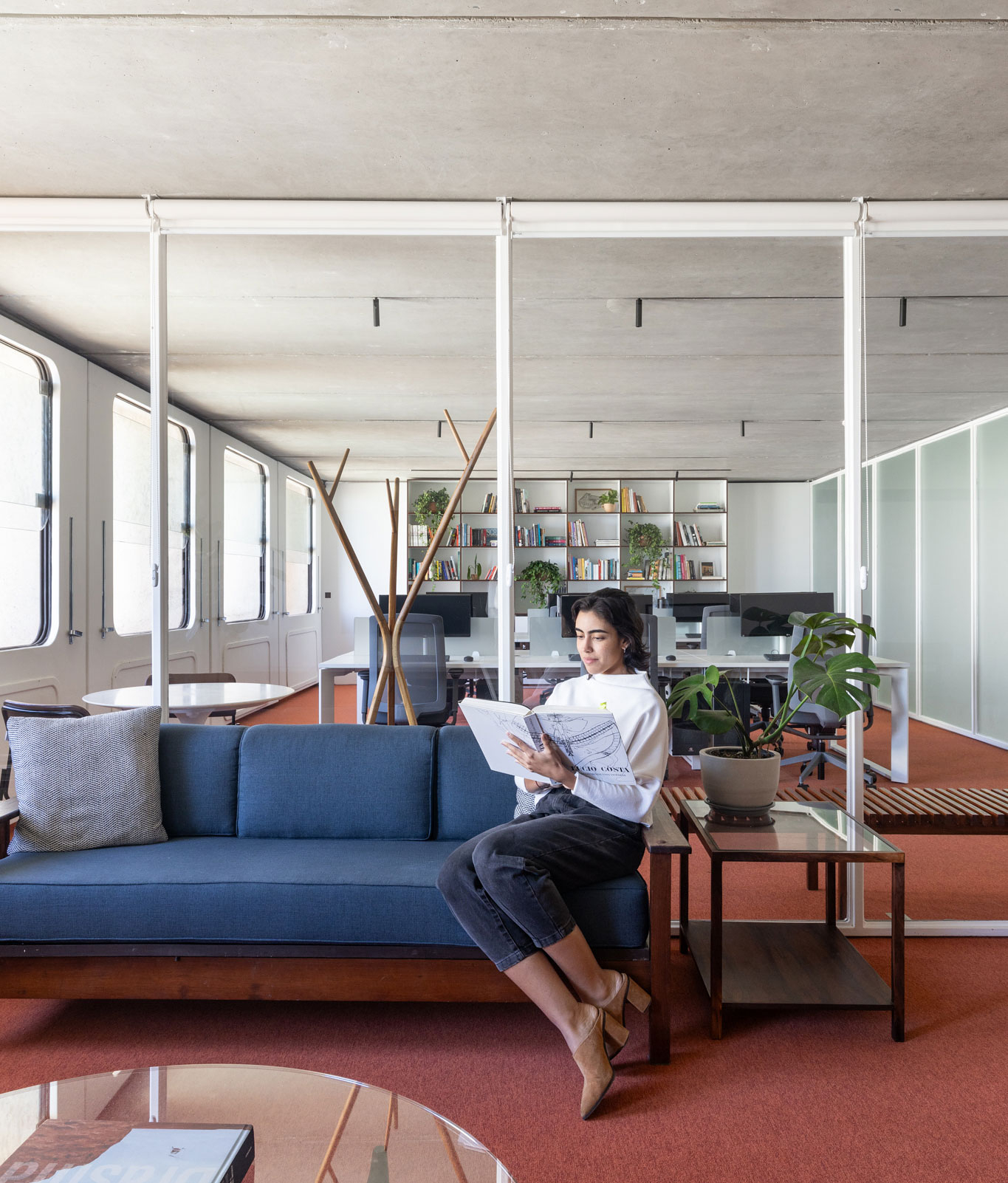
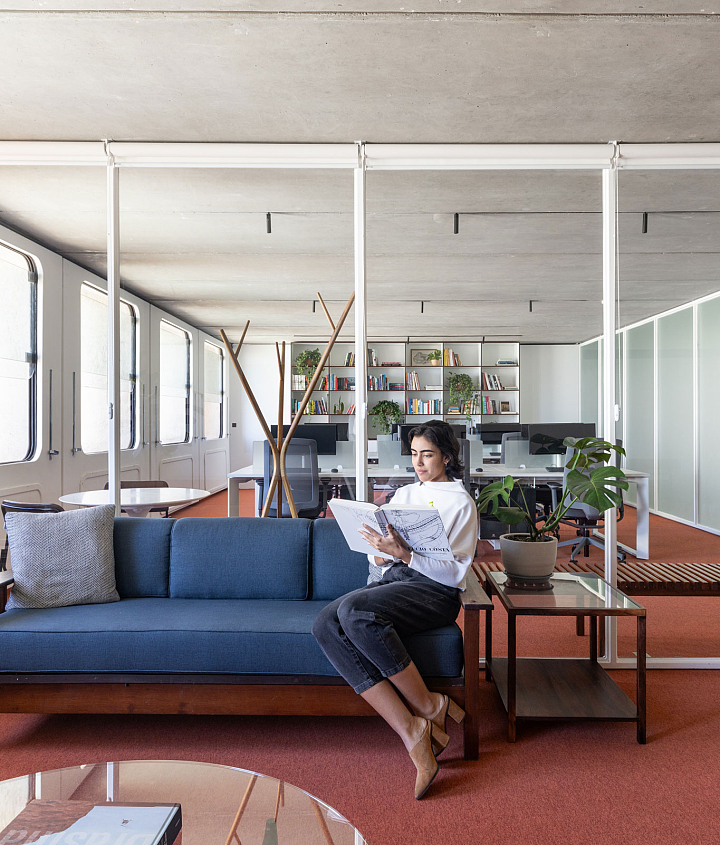
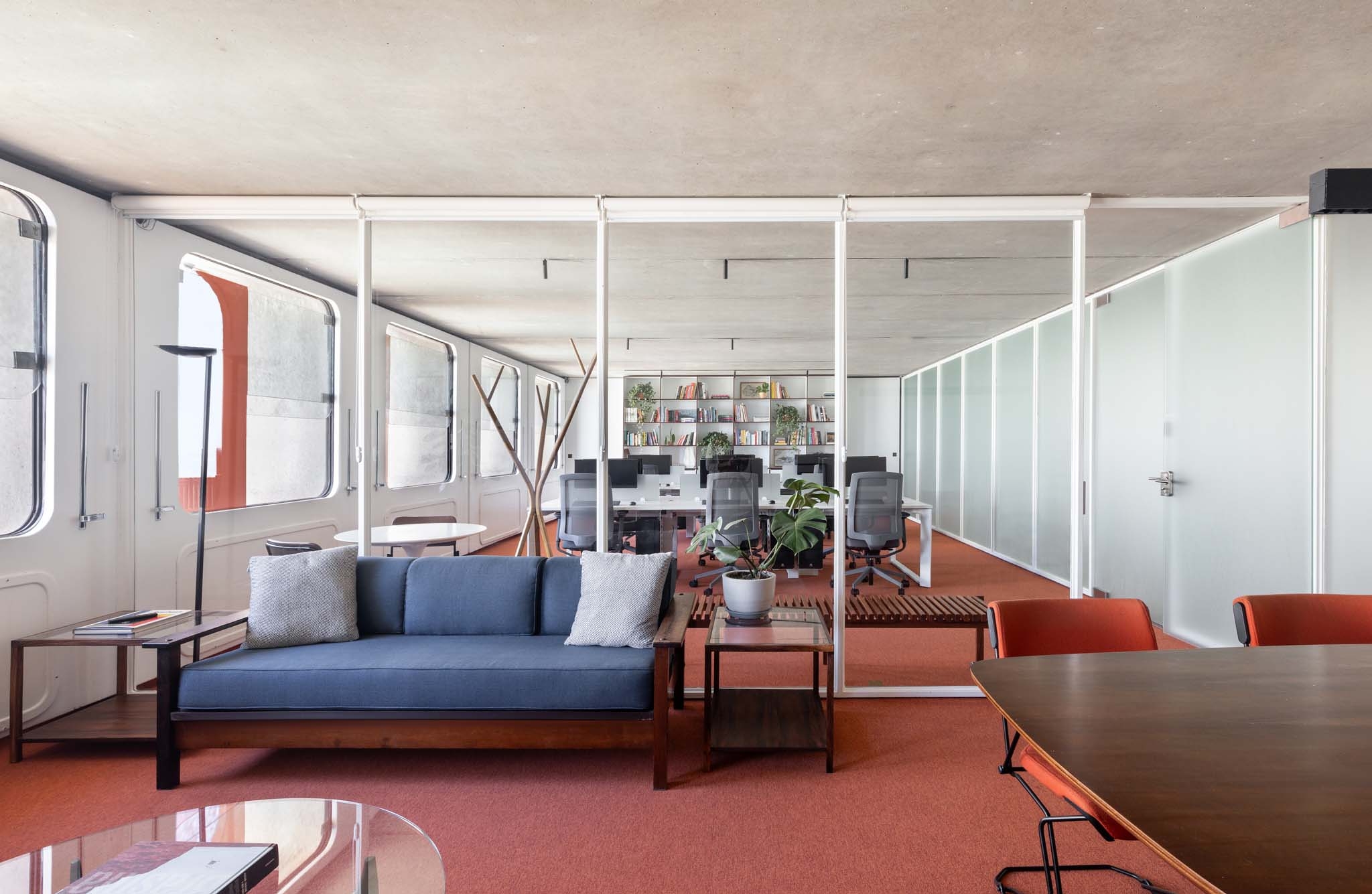
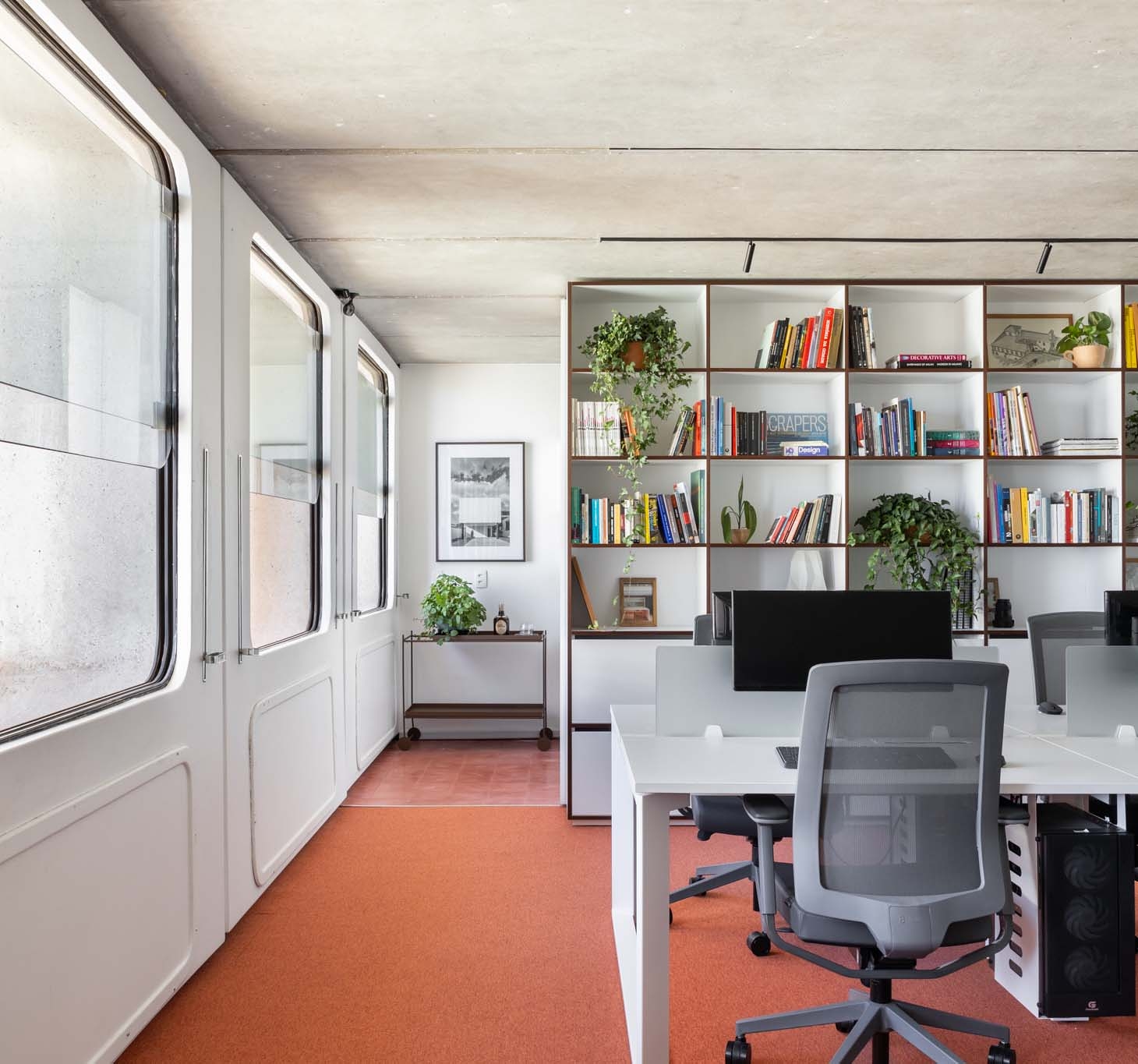
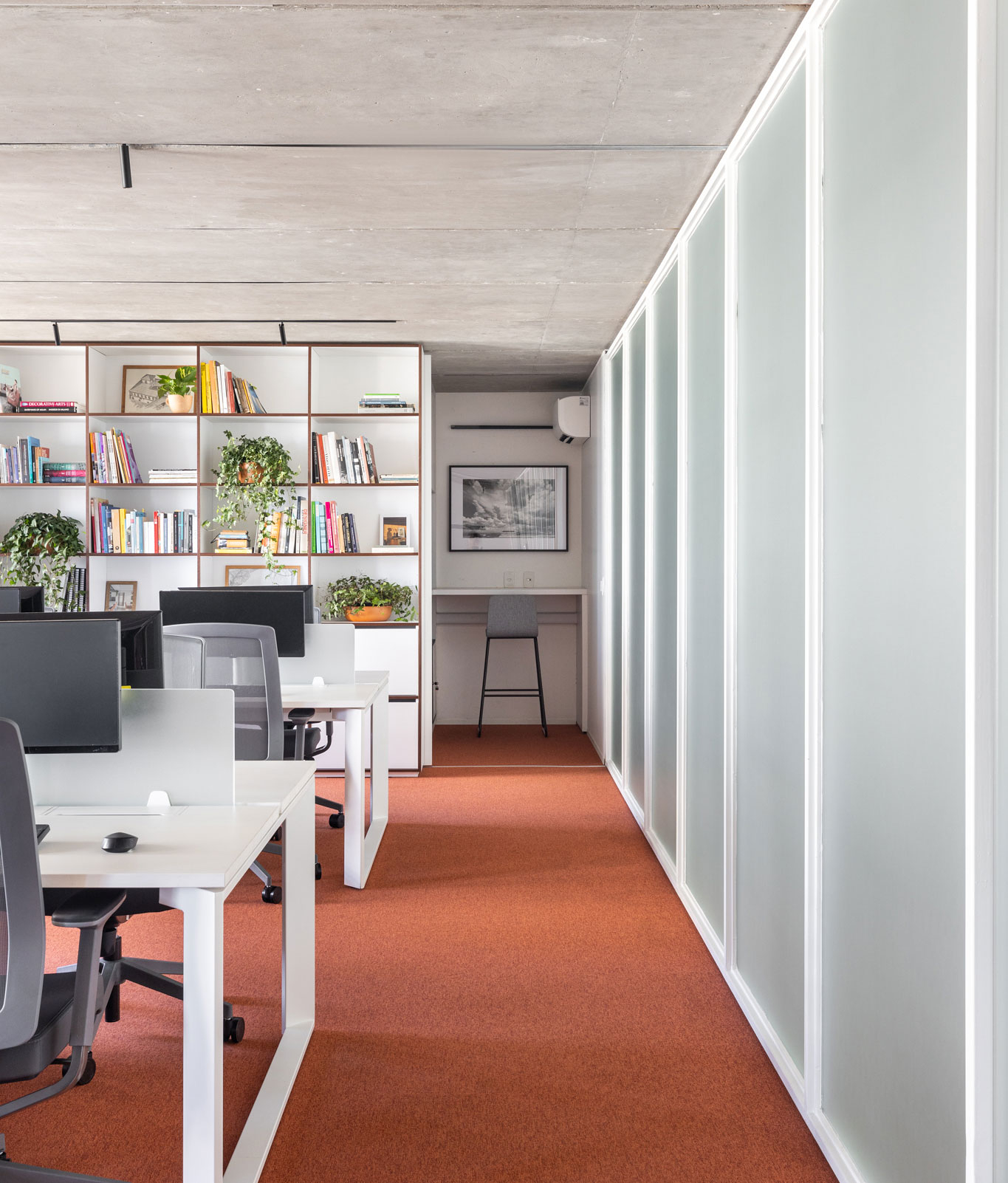
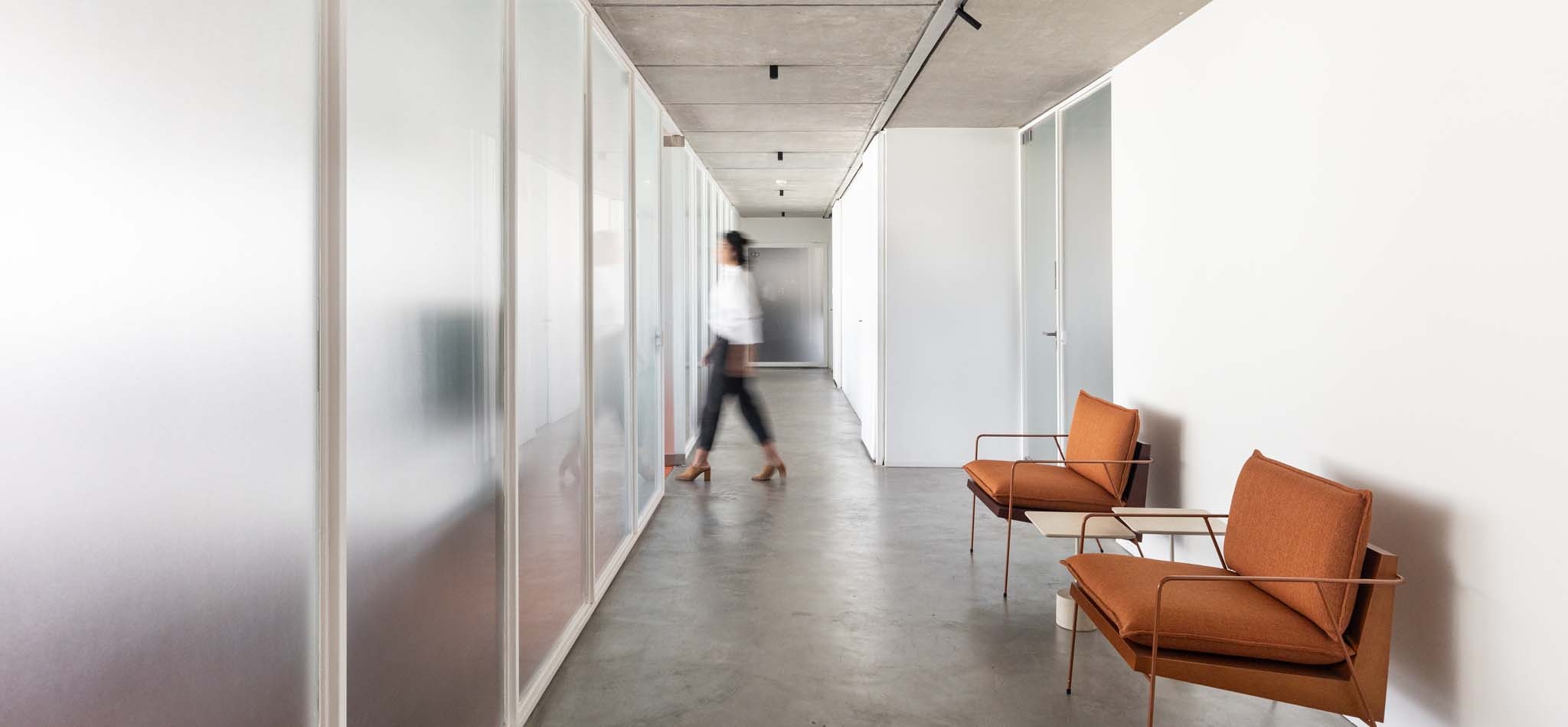
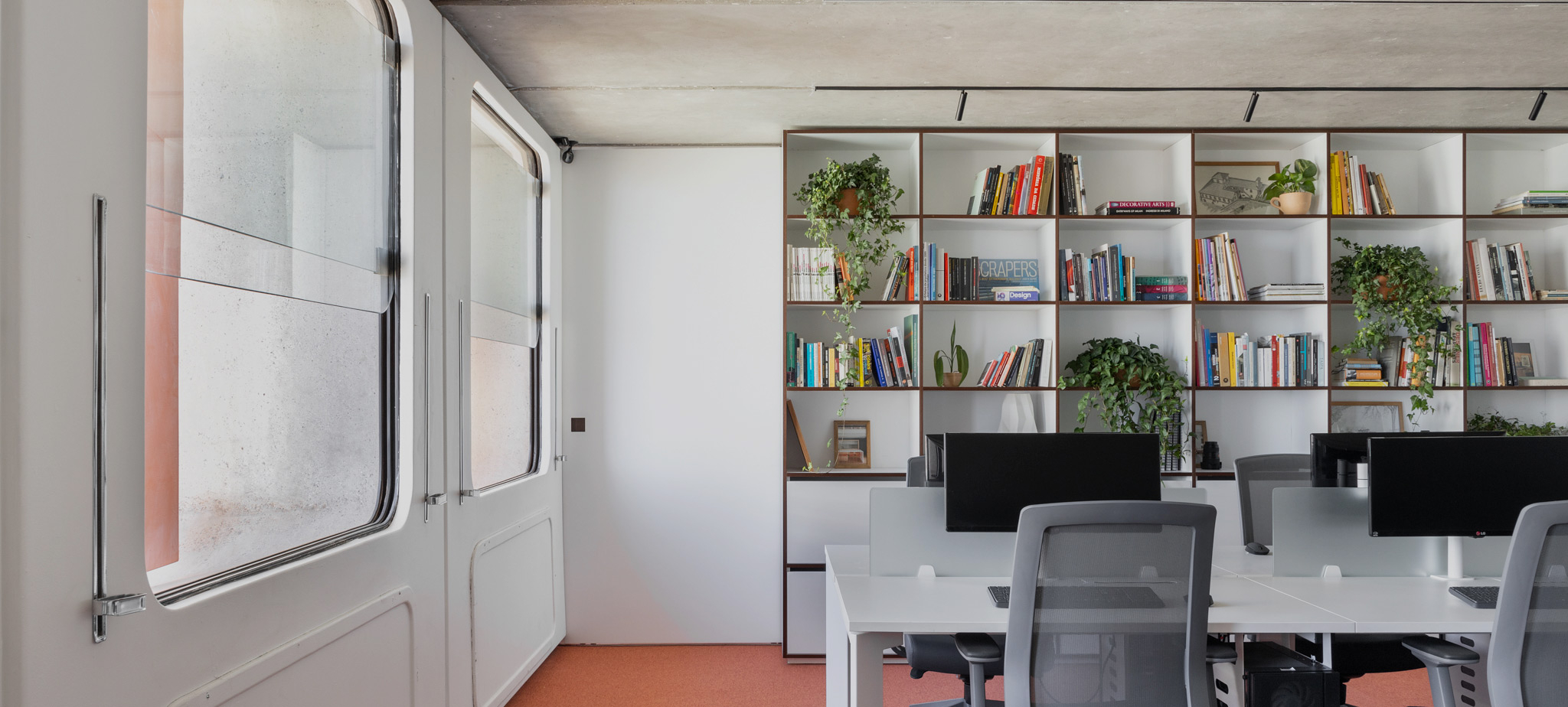
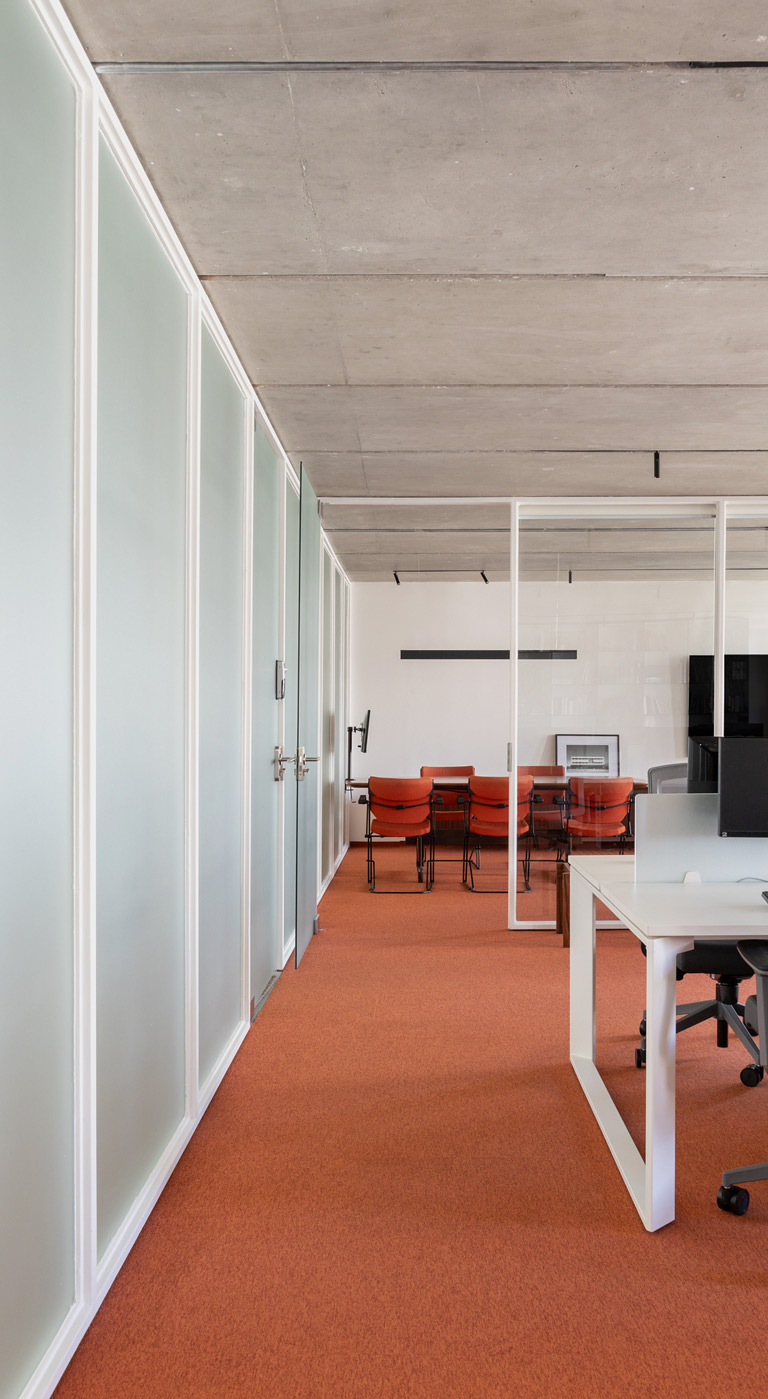
The workspace accommodates twelve workstations, arranged along two benches with open circulation on both sides—highlighting, on one side, the glass facade and, on the other, the building’s iconic windows with orange brises. All internal partitions, layout, and lighting—including the frames of the glass walls—follow the division of the building’s floor slab and windows.
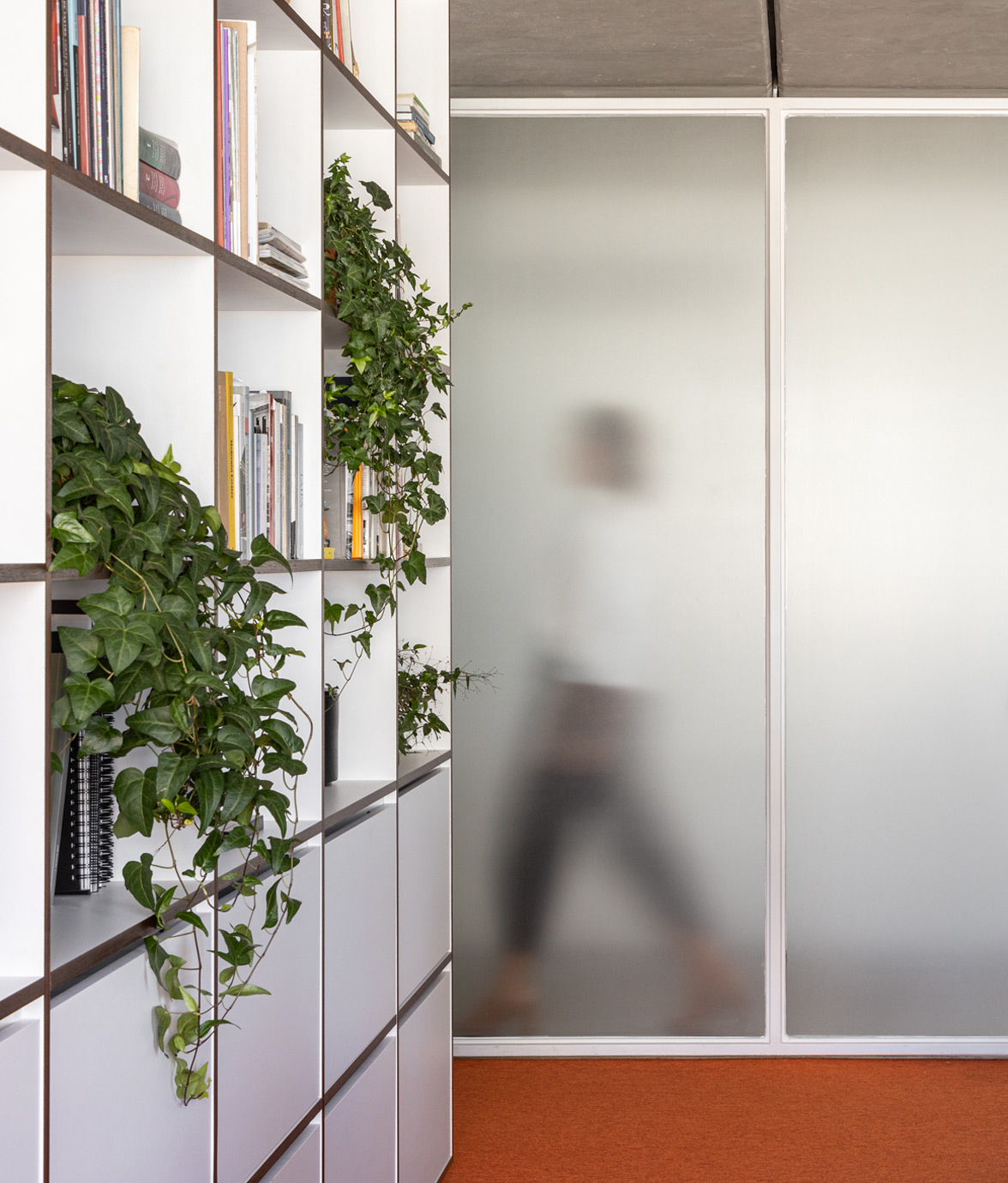
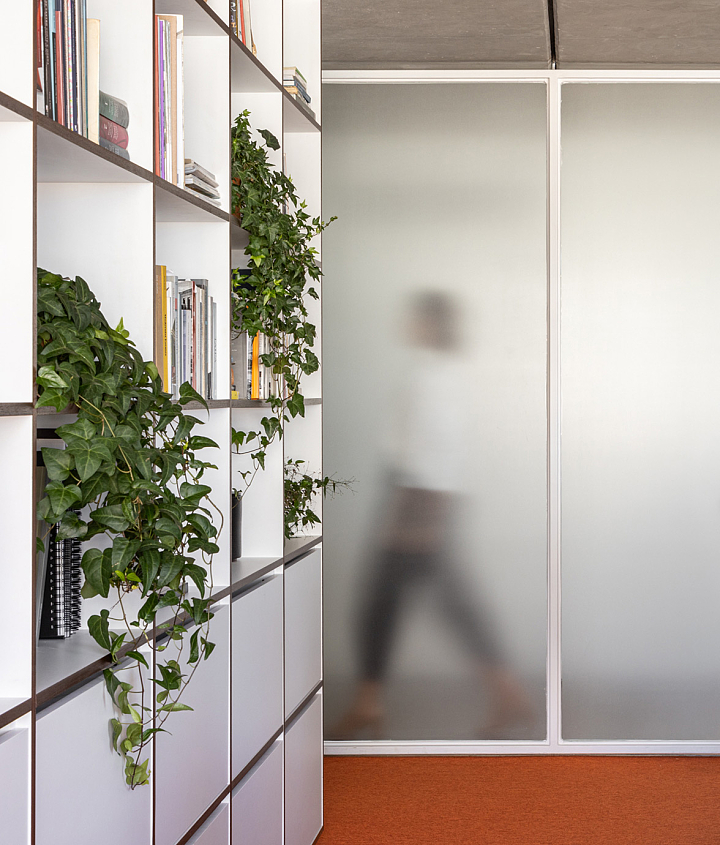
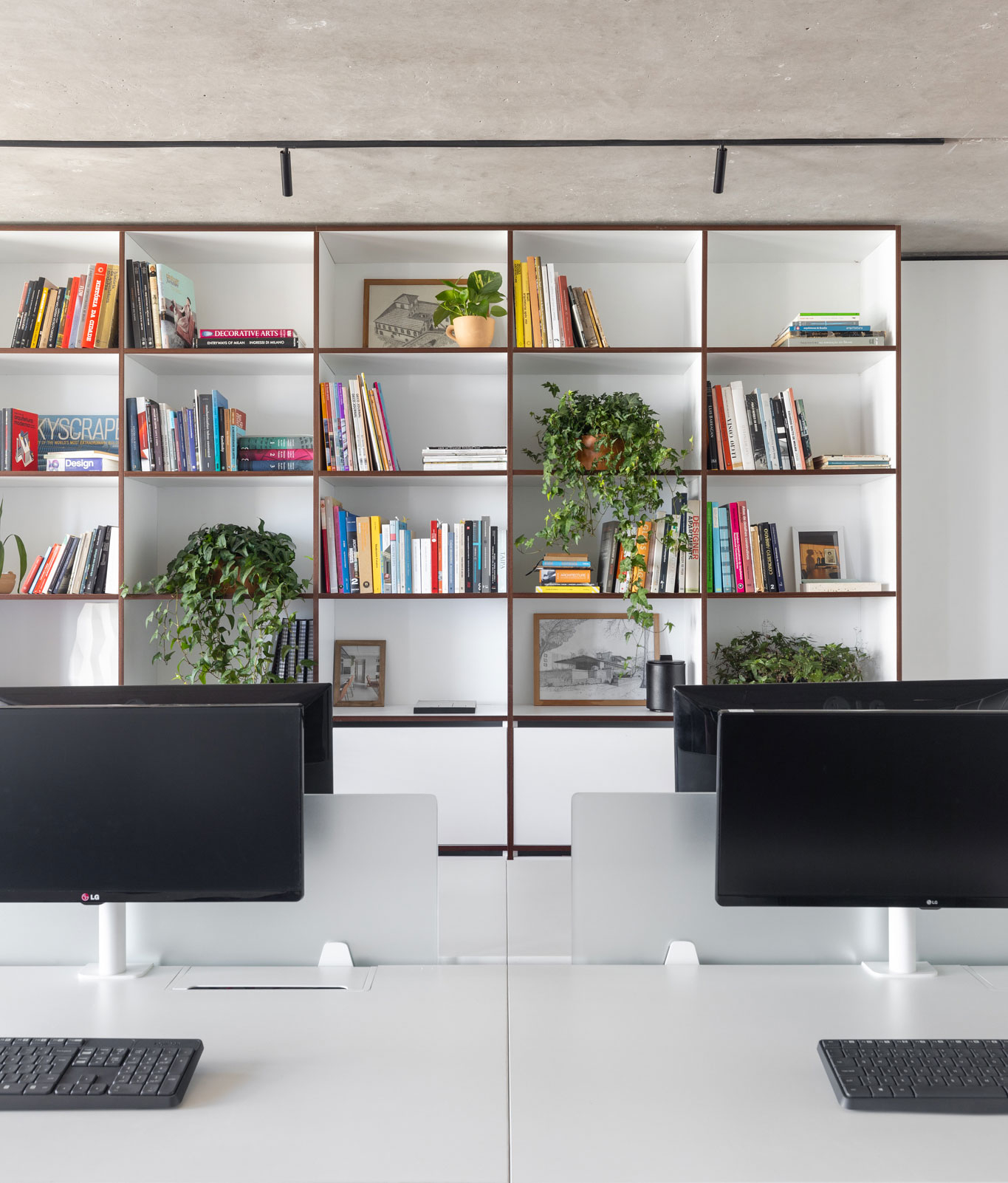
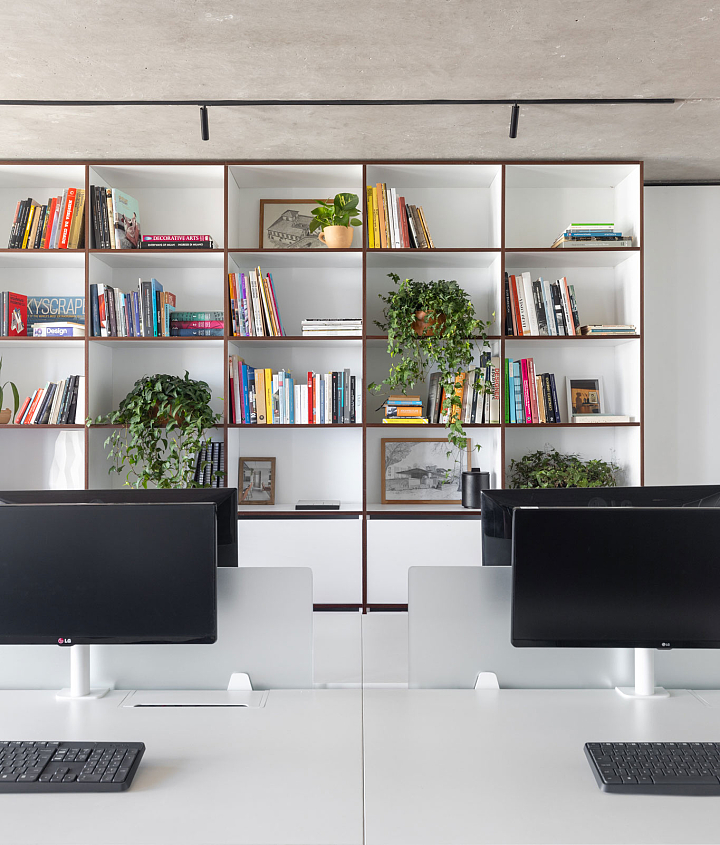
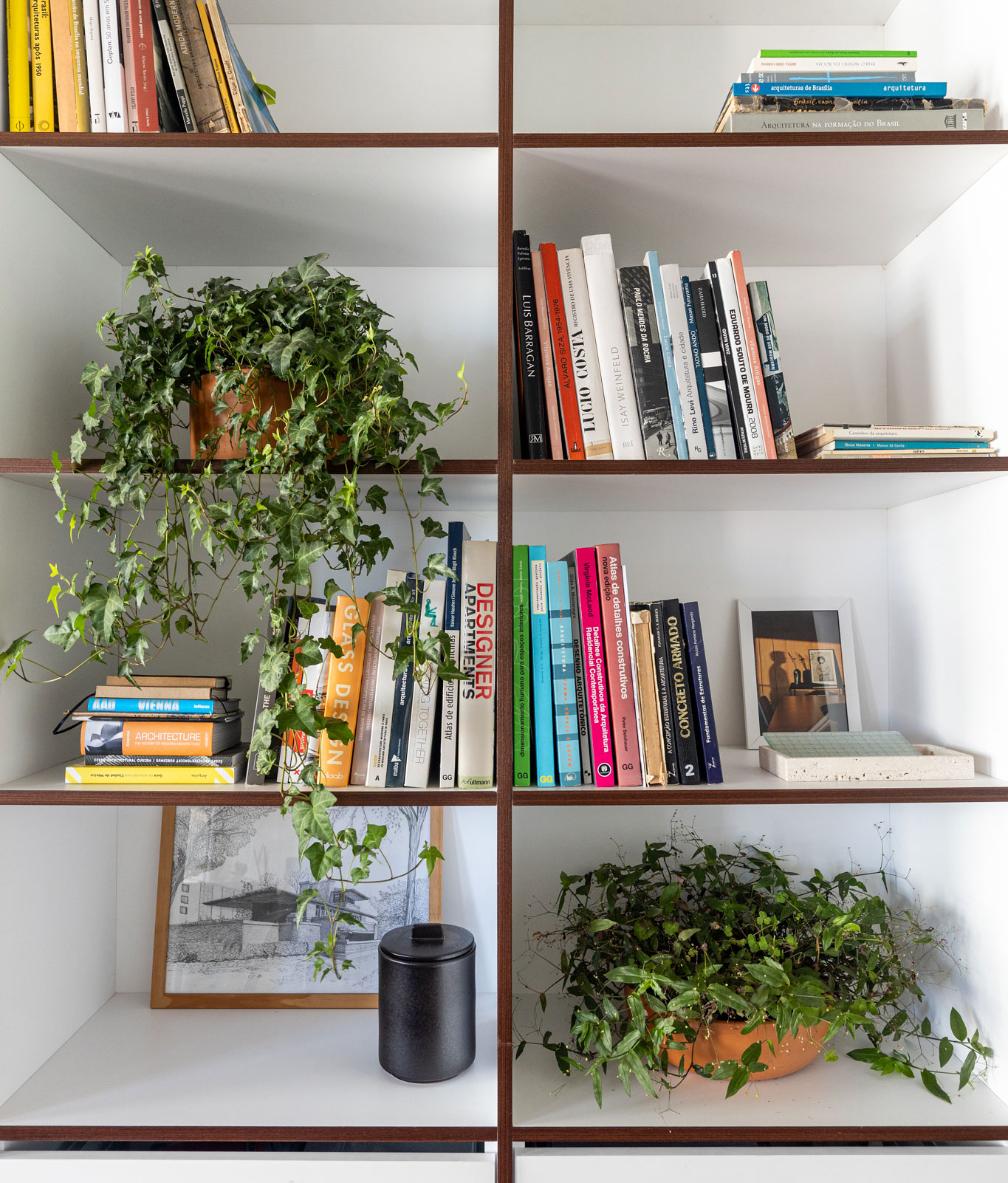
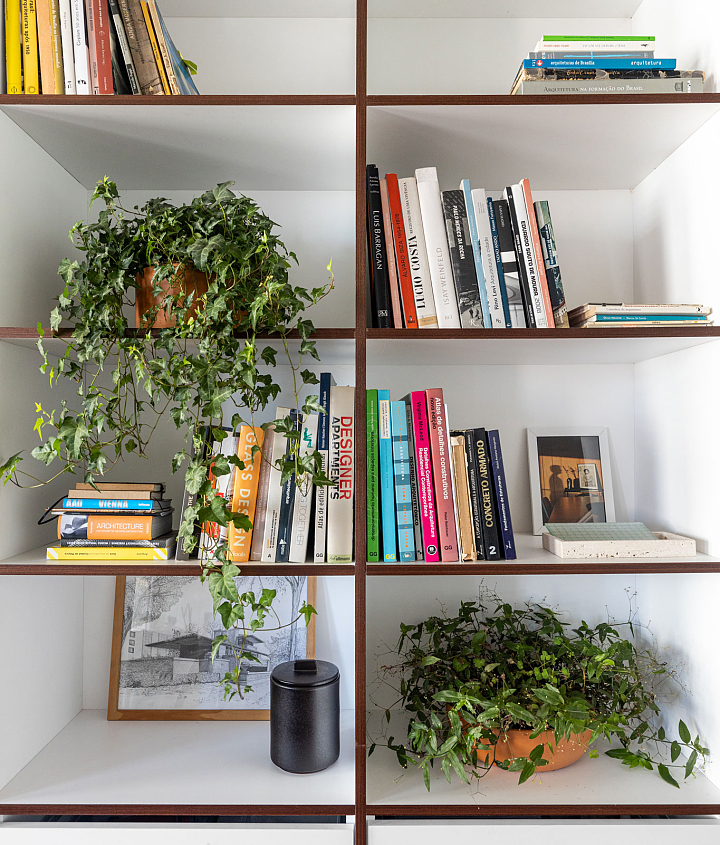
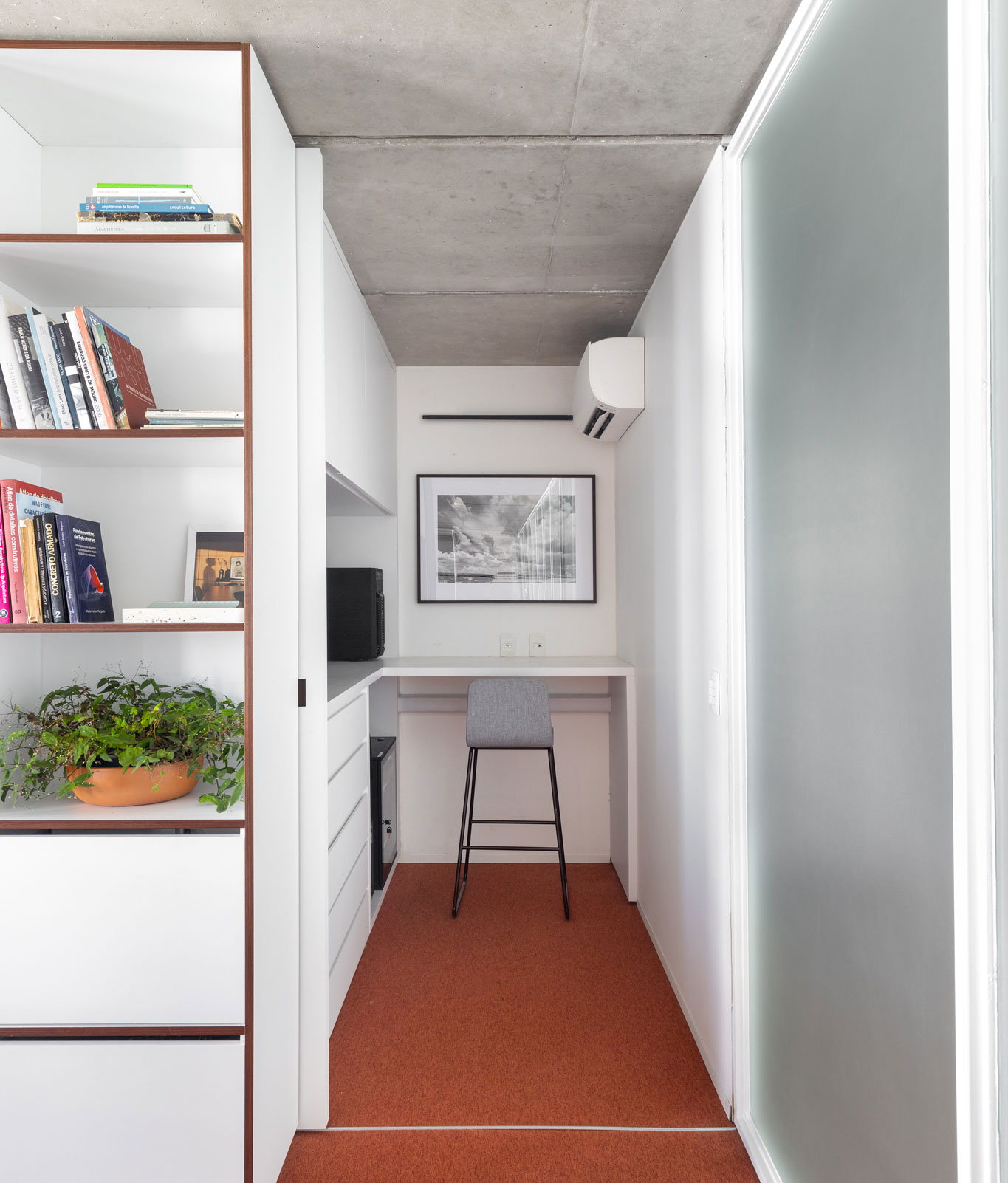
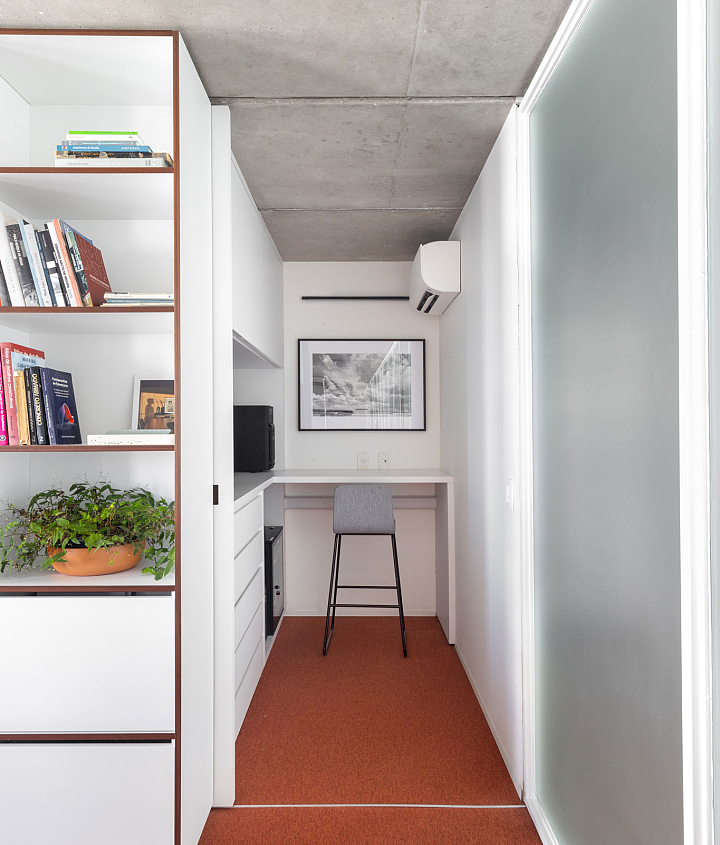
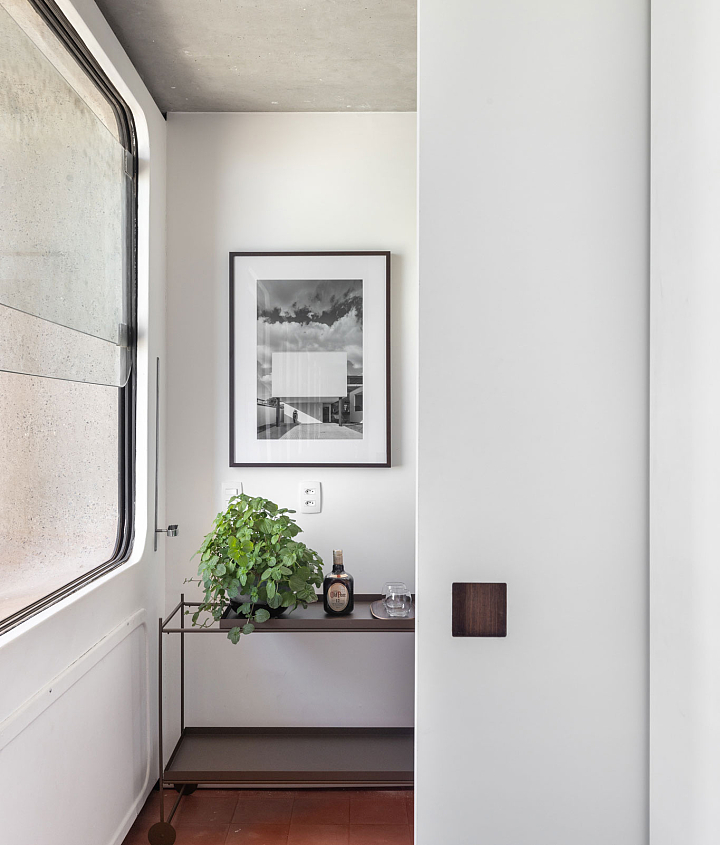
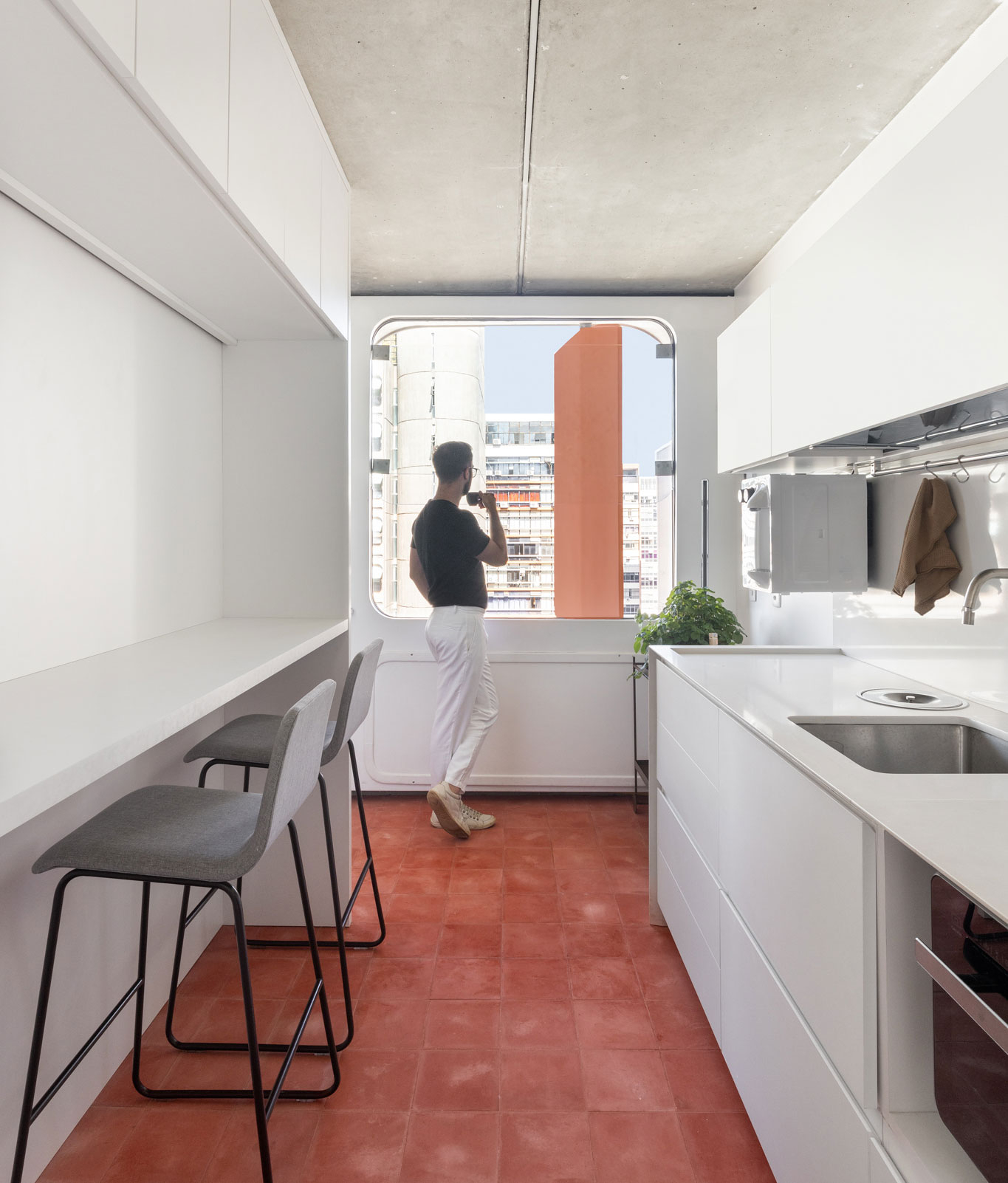
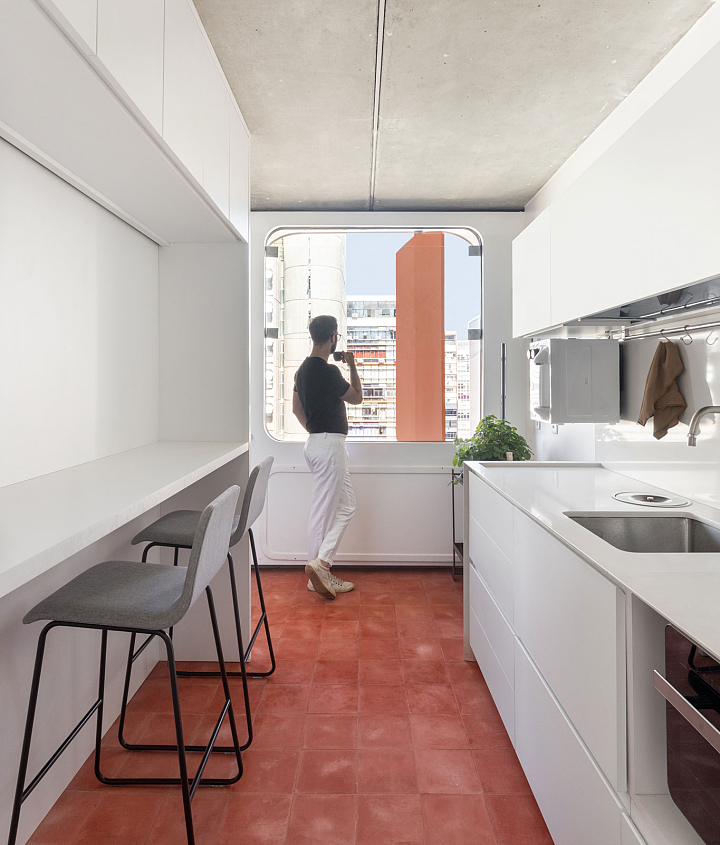
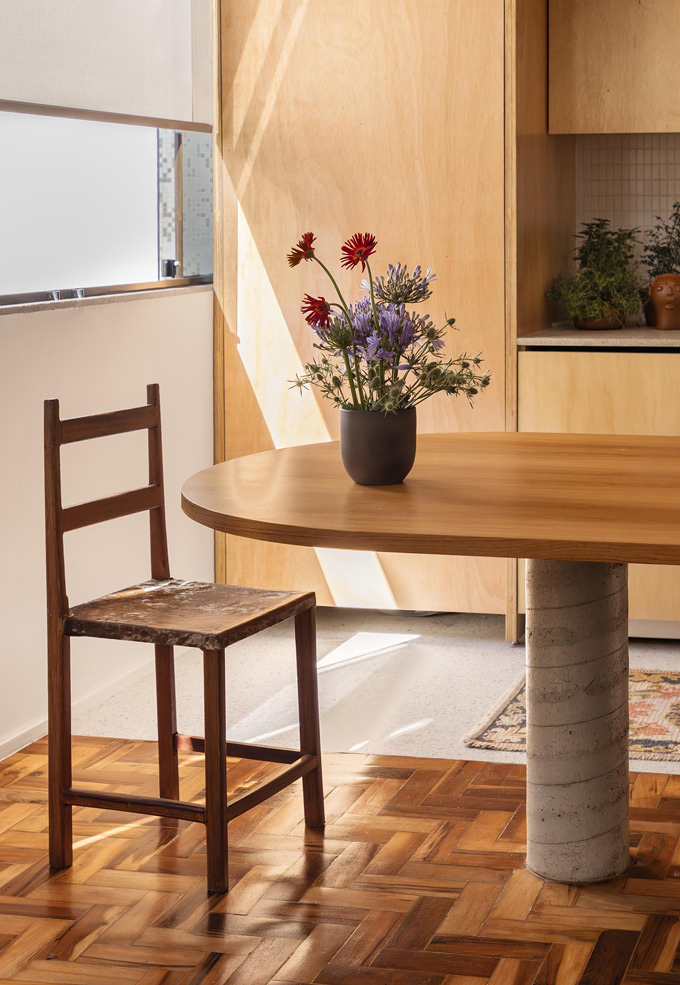
The kitchenette and staff room occupy a module at one end of the office, which is separated from the rest of the space by a large bookcase with symmetrical doors on each side. Neither the bookcase nor the doors touch the upper slab, further emphasizing this original element of the design.
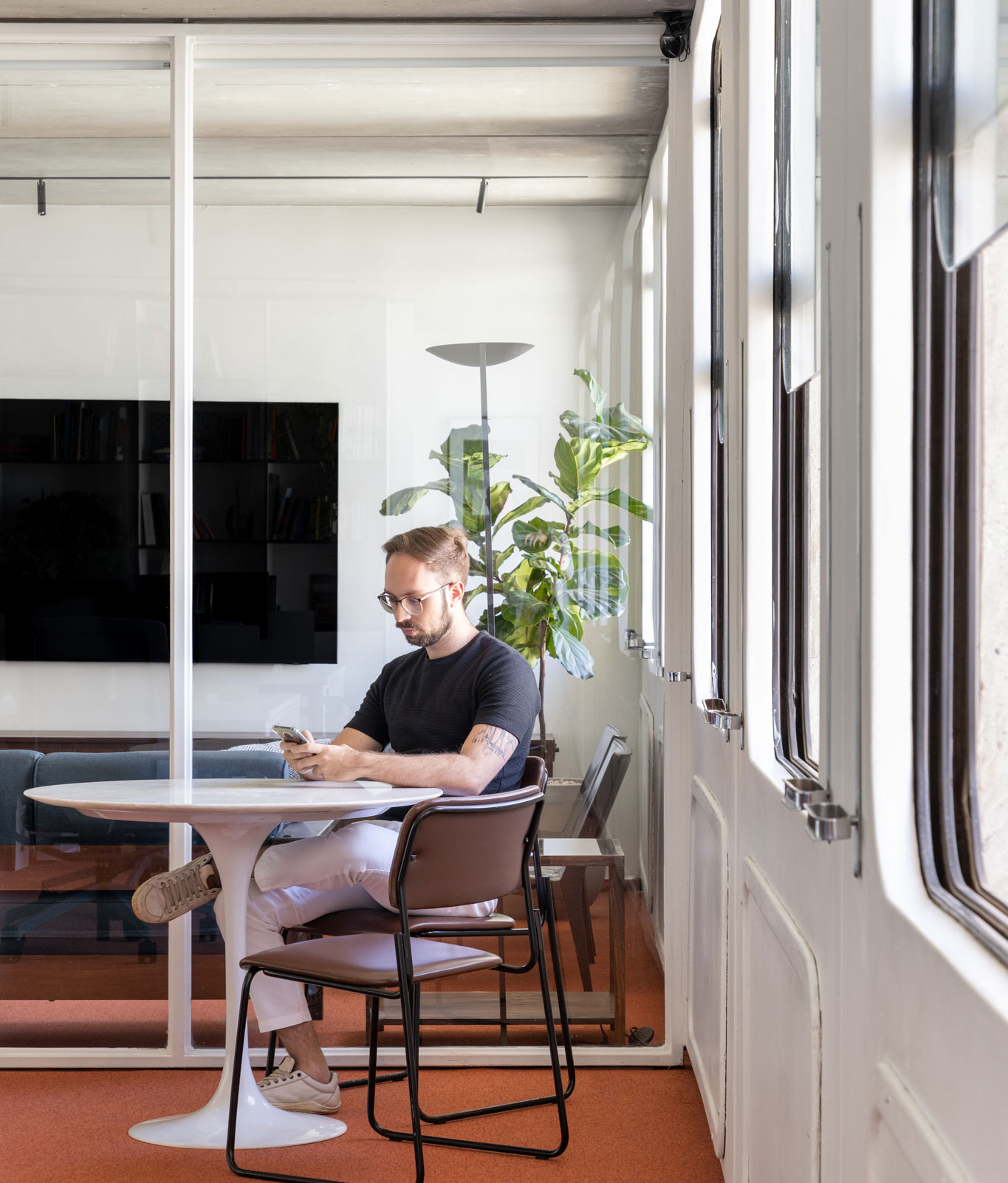
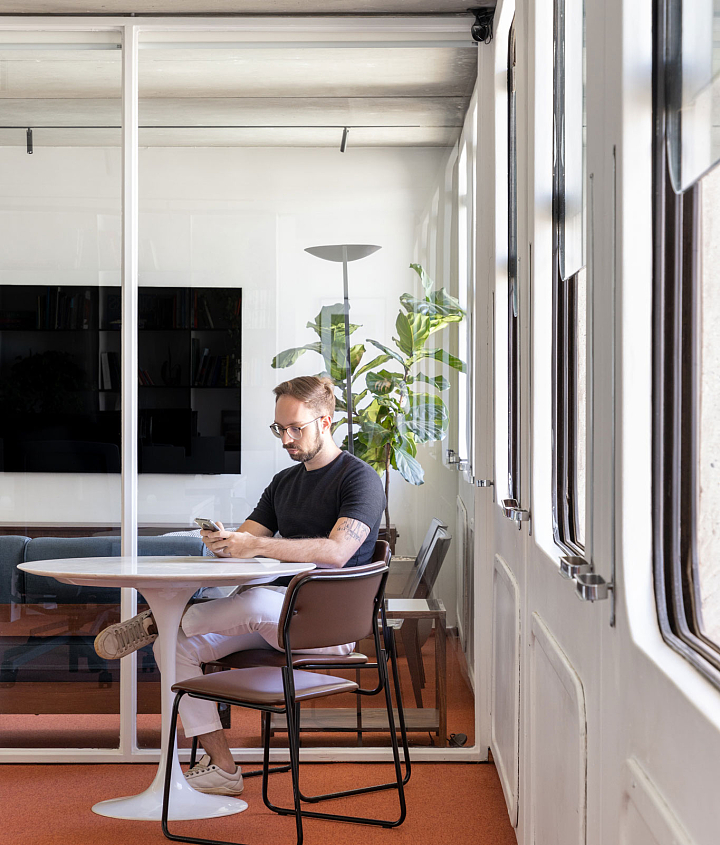
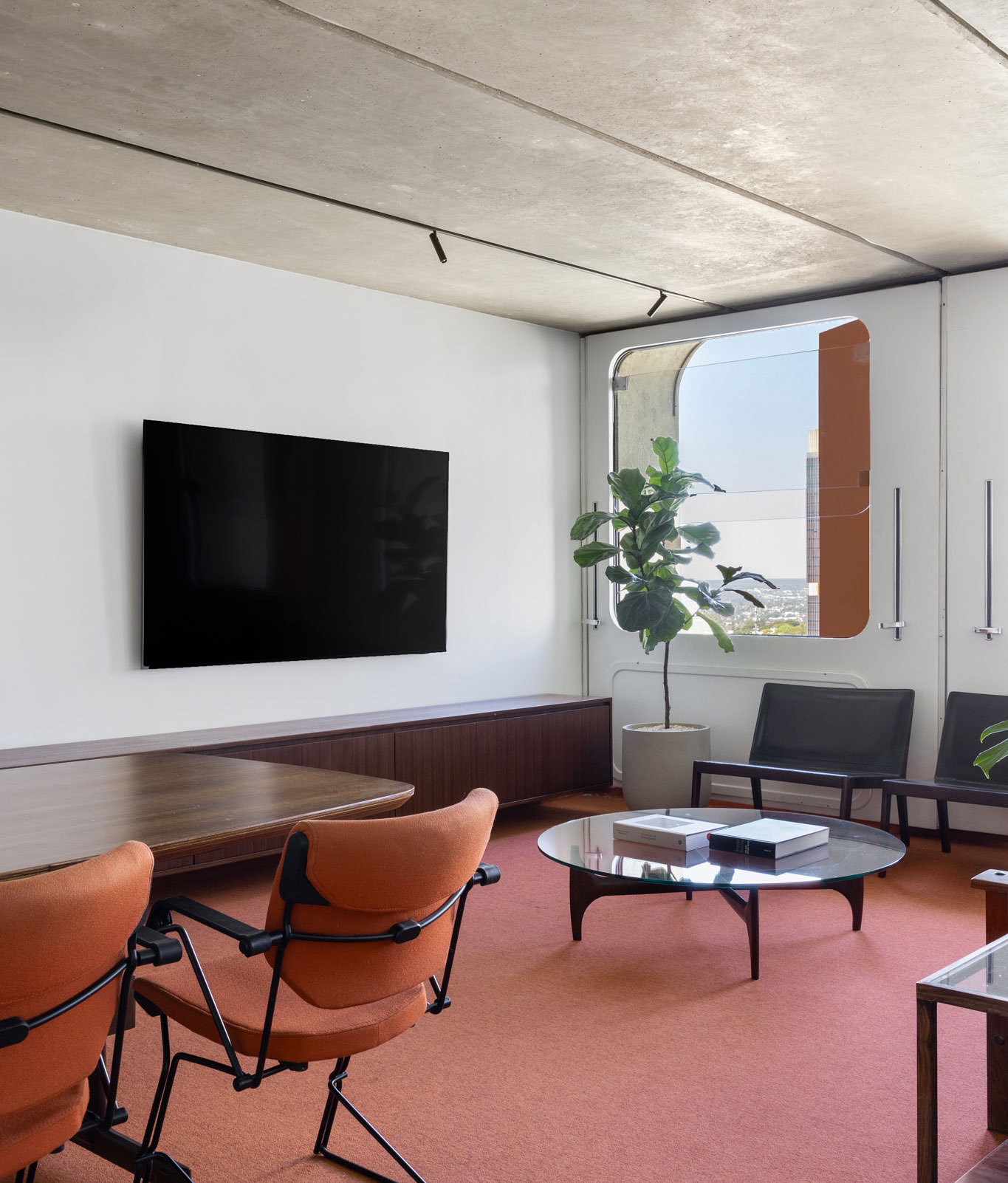
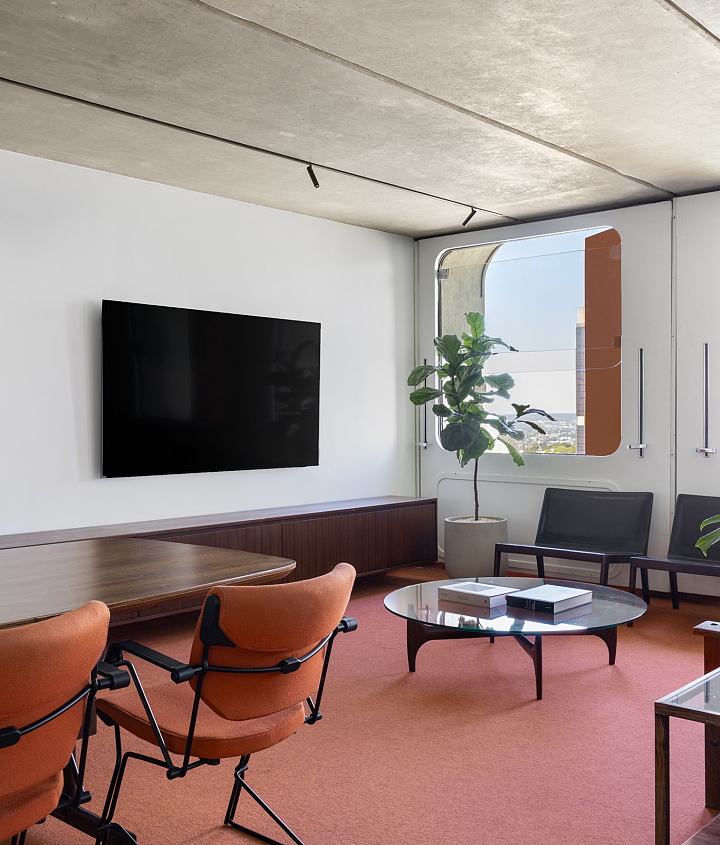
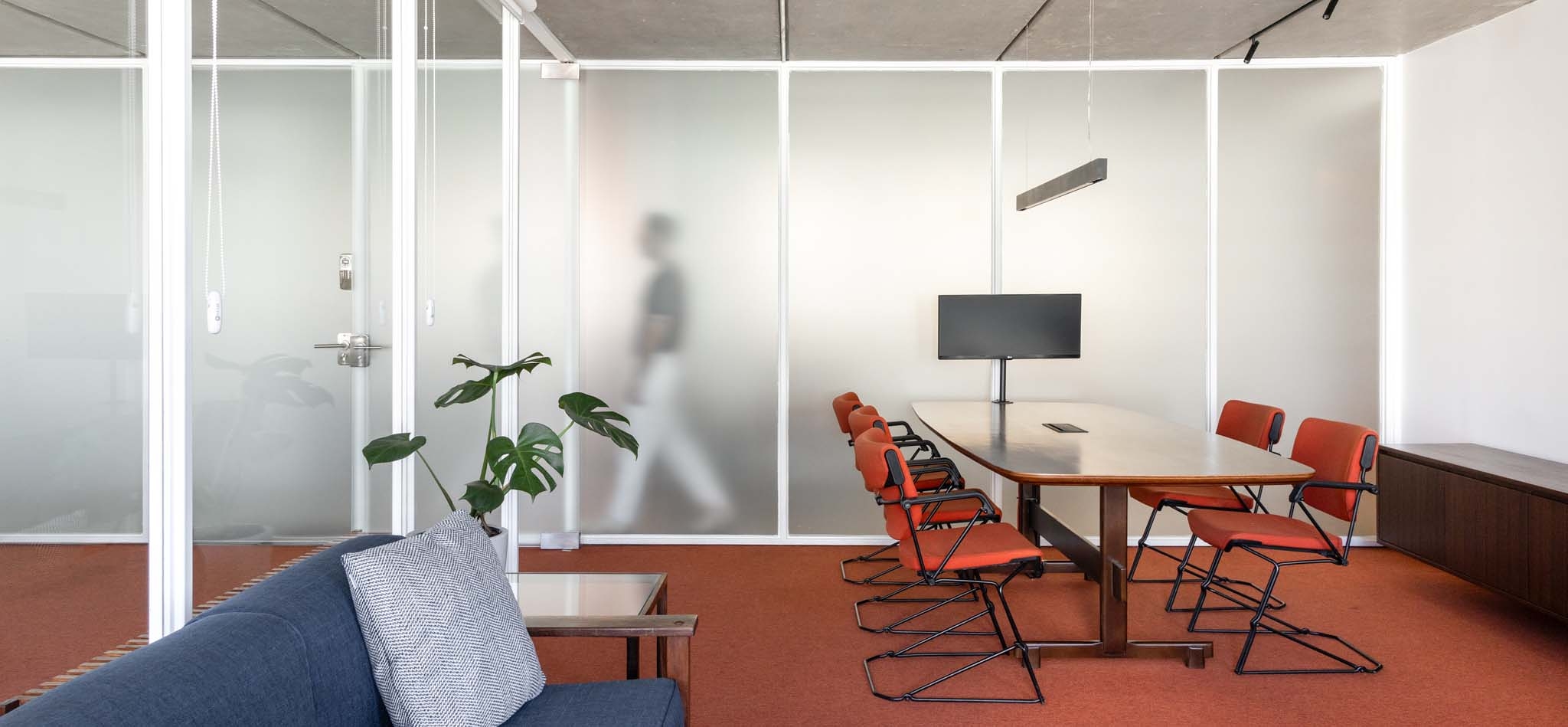
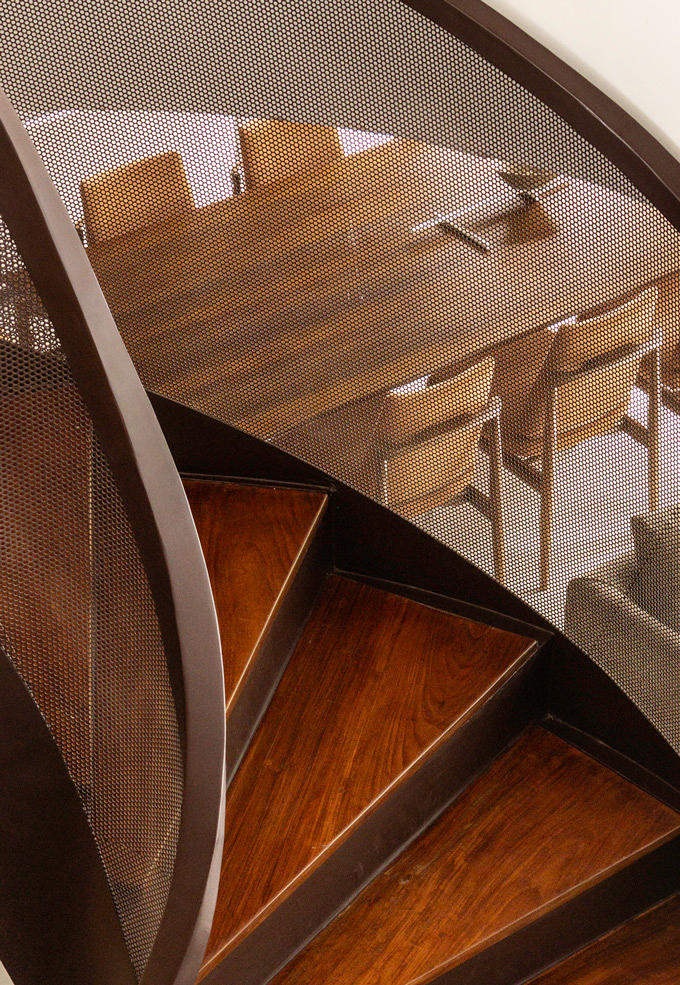
At the other end of the space is the conference room, enclosed by a glass façade with curtains that allow it to visually “open up” or “close off” from the office. The space features carefully curated pieces of modernist furniture, complemented by a 5-meter-long wooden shelf unit.
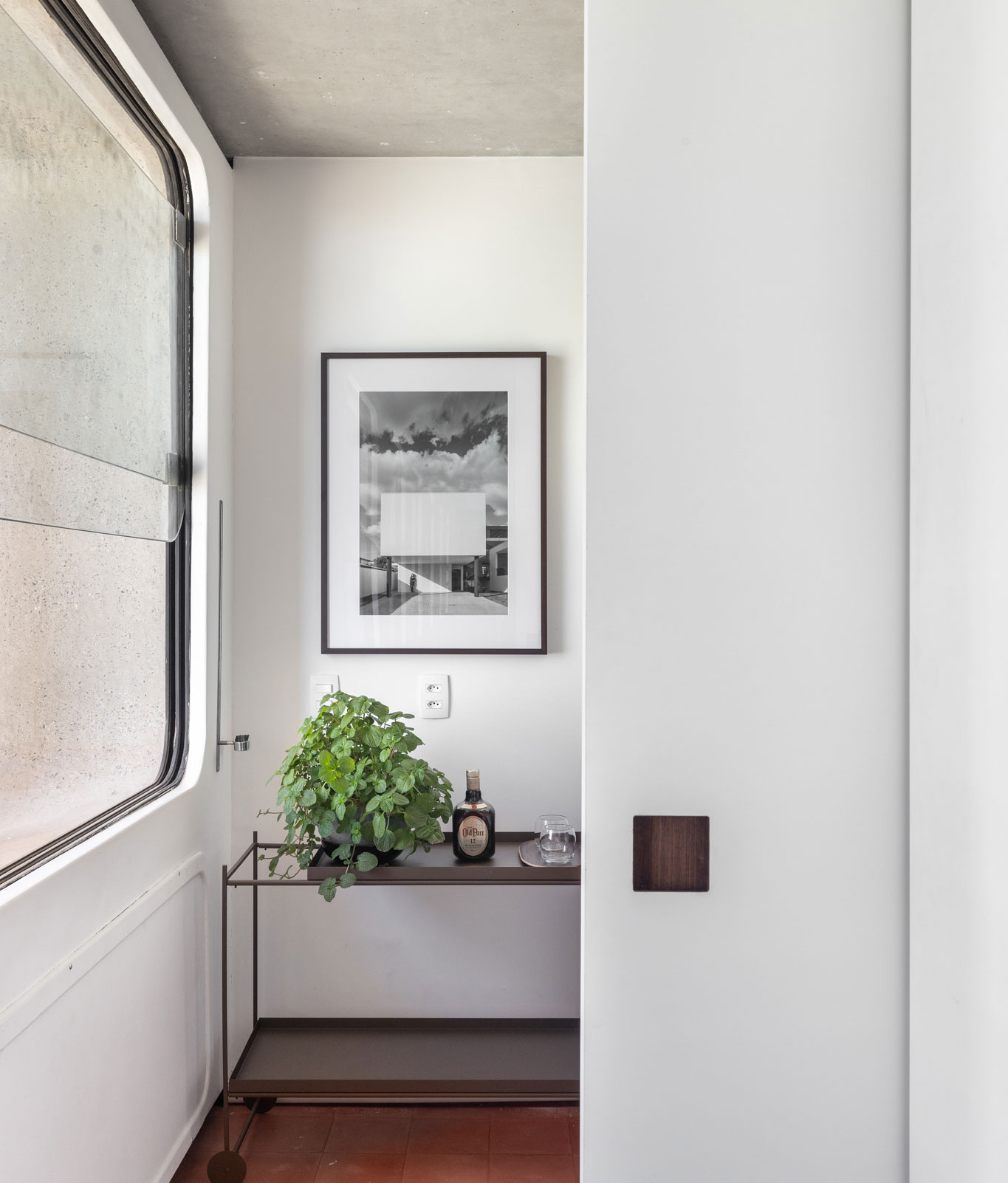
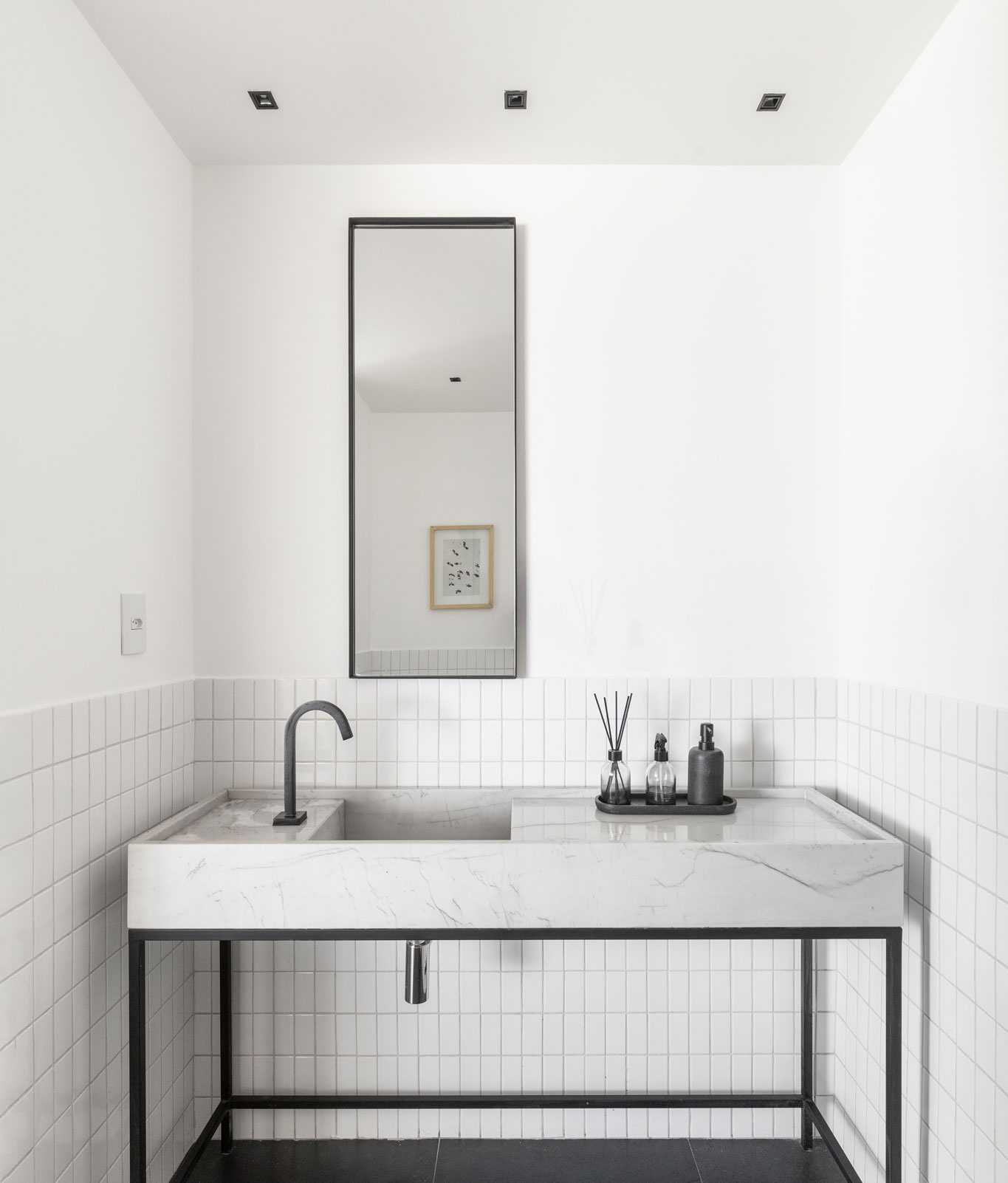
The project’s materiality is based on the building’s existing elements—the interior of the white fiberglass facade and the exposed concrete. Therefore, white was a predominant color in the project, as was dark wood, a tone chosen as a contrast. The windows and their iconic orange brises inspired the colors of the orange carpet on the office floor and the hydraulic tiles used in the kitchenette, as well as the office’s new visual identity.