OTCA Headquarters
— Amazon Cooperation Treaty Organization


Memória do projeto
The Amazon Cooperation Treaty Organization (ACTO) is an intergovernmental organization composed of eight Member Countries: Bolivia, Brazil, Colombia, Ecuador, Guyana, Peru, Suriname, and Venezuela. Its activities span diplomatic, strategic, and technical dimensions aimed at promoting sustainable development and social inclusion throughout the Amazon region. ACTO is also responsible for fostering cooperation in scientific research and facilitating the exchange of information about the Amazon, helping to disseminate knowledge of the region's flora, fauna, and natural resources.
The Brazilian Amazon has become the center of public debate in Brazil in recent years. In mid-2019, Brazil's National Institute for Space Research (INPE) reported an 82% increase in wildfires compared to the previous year. In early August, the institute's president, Ricardo Galvão, resigned after the federal government questioned the accuracy of the data. Later that month, smoke from the Amazon fires, carried by a cold front, darkened the skies over São Paulo, turning day into night. The widespread lack of control over deforestation drew international attention from organizations such as the United Nations and French President Emmanuel Macron.
Within this context, ACTO recognized the need to renew not only its institutional structure but also its physical headquarters. A new building, provided by the Brazilian Federal Heritage Service (SPU), had previously housed the Federal District's Department of Health but had been abandoned for years. In addition to its deteriorated condition, the project faced a significant budget constraint, with limited resources available for the renovation of approximately 700 square meters.
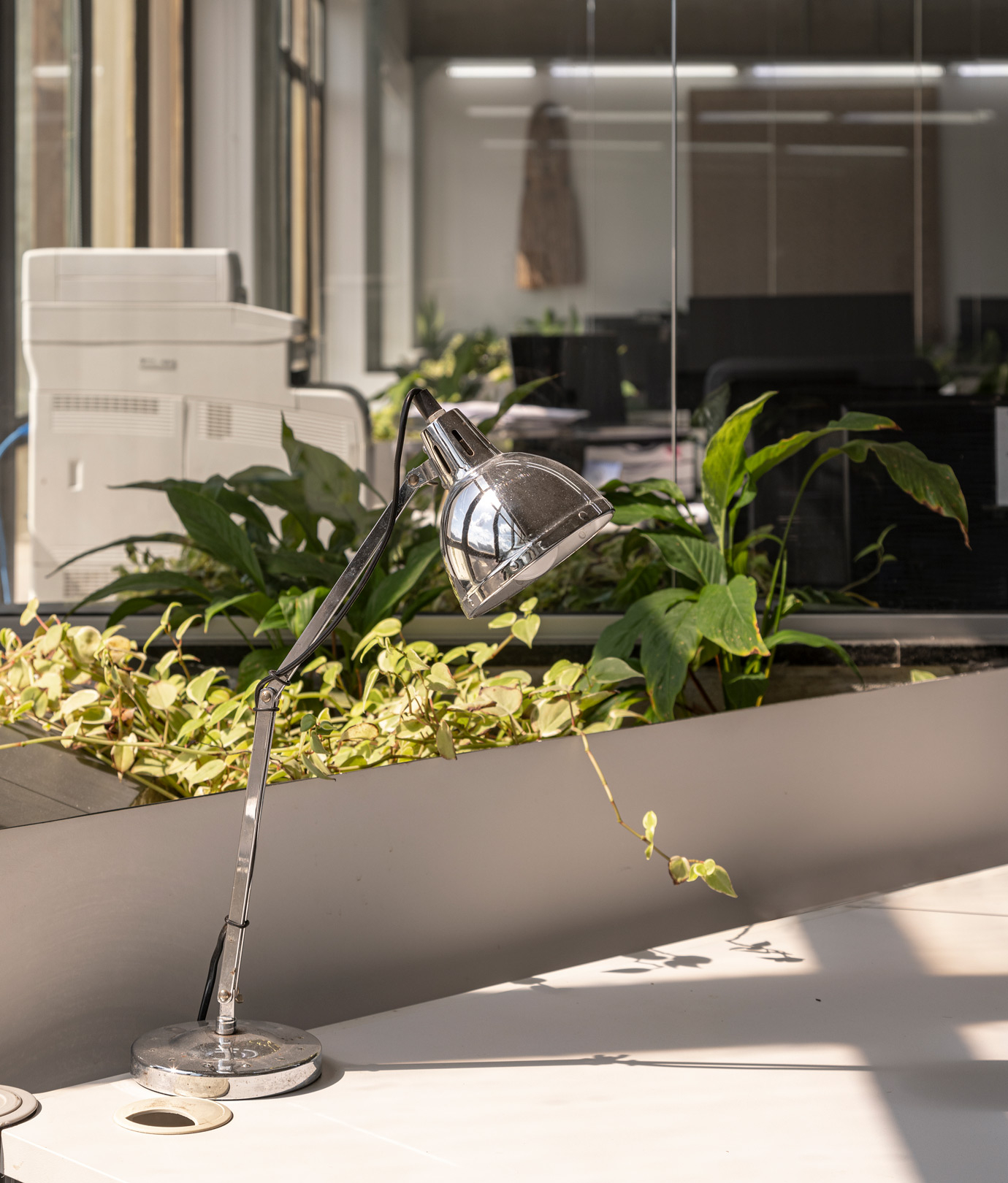
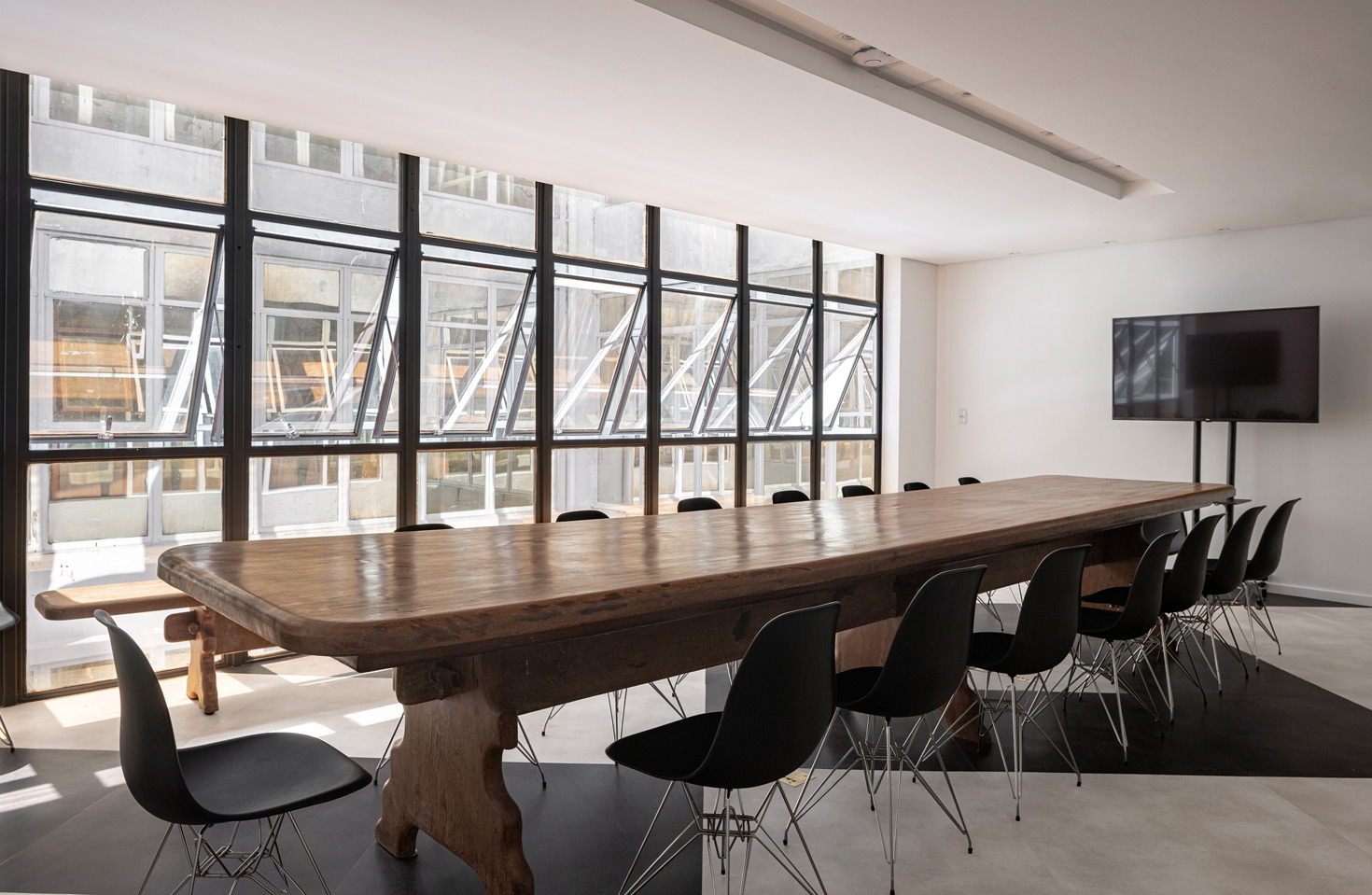
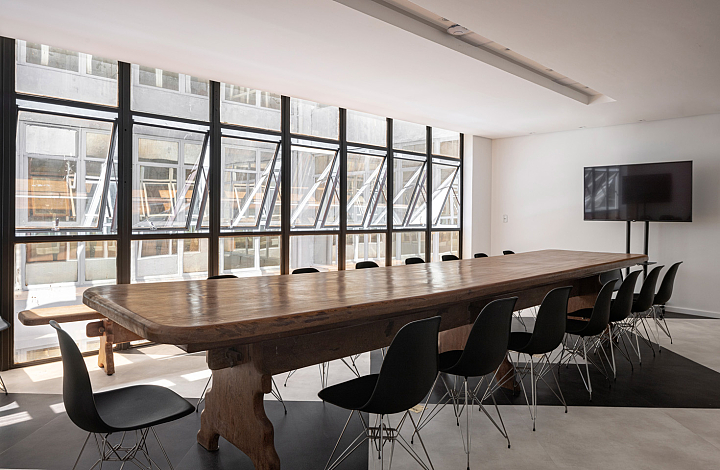
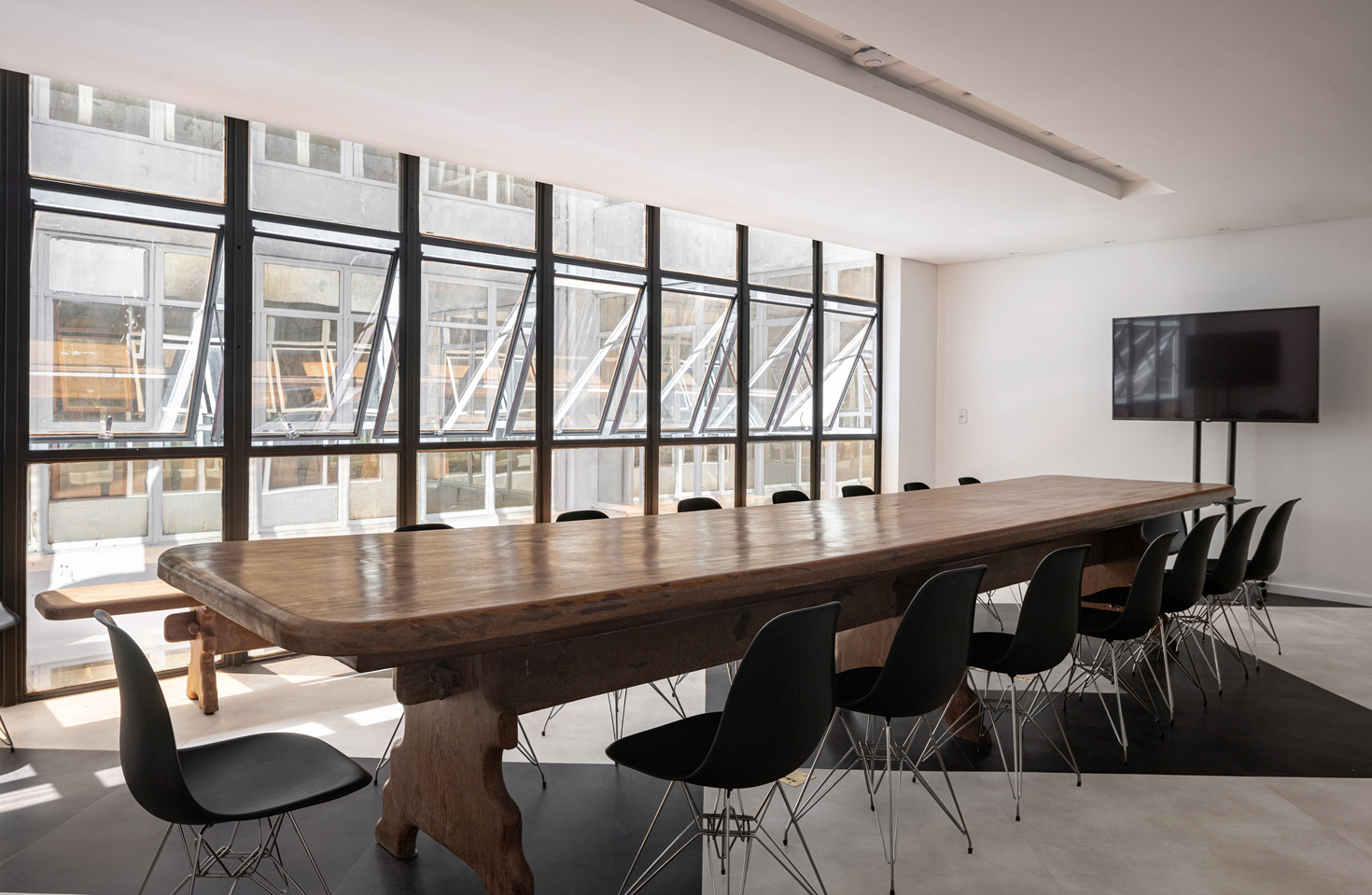
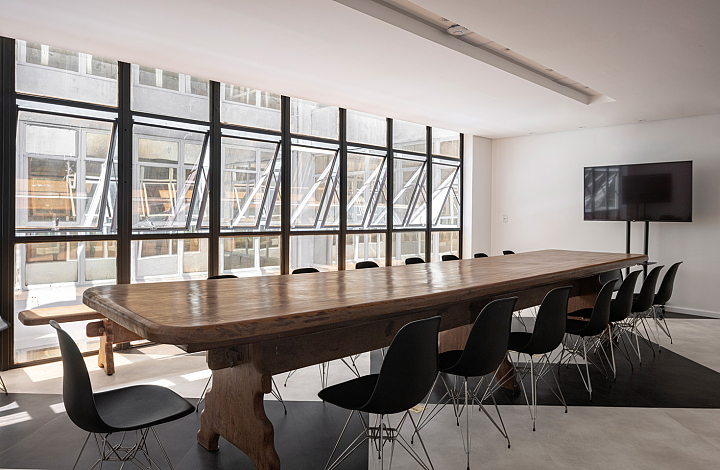
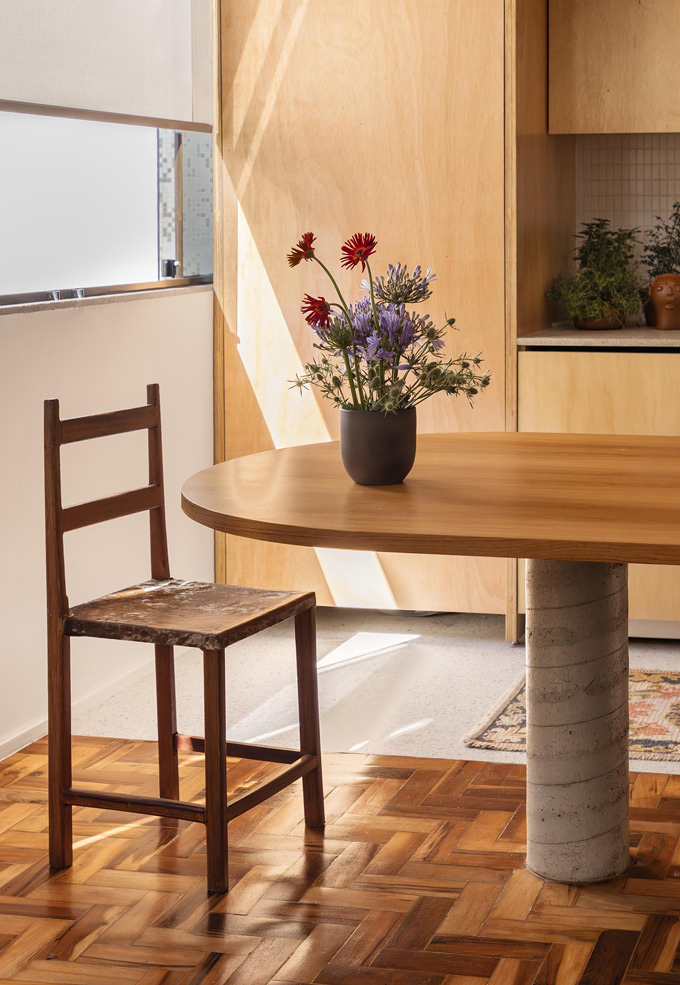
The architectural proposal sought to address these challenges through efficient and creative solutions. The first strategy focused on restoring and reusing as many existing elements as possible, including doors, partitions, tables, chairs, and other furniture left in the building, as well as pieces from ACTO's own collection. These elements became fundamental to the design of the new interior layout.
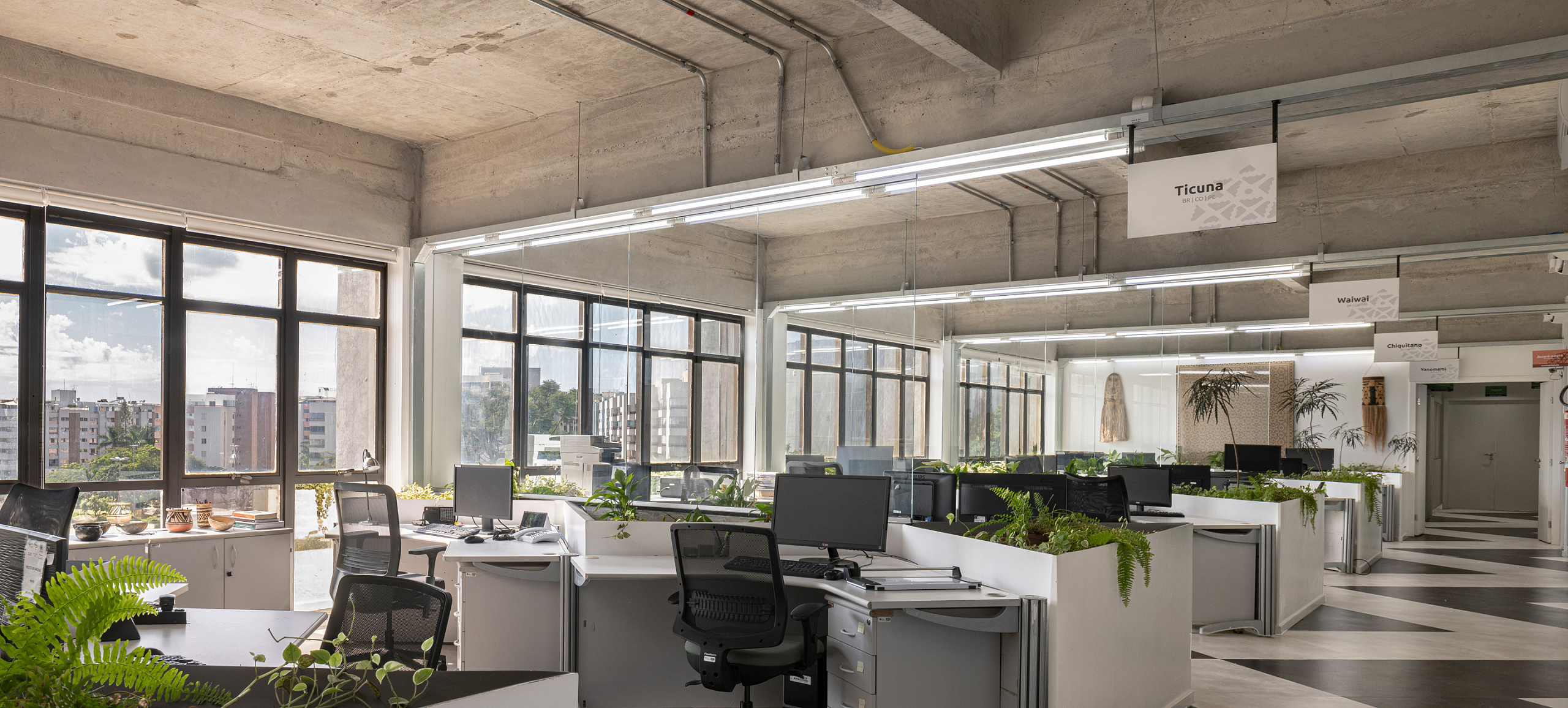
The second strategy involved removing all the internal partition walls and leveling the floor. This created a more flexible workspace while allowing the new restrooms to be concentrated in strategic locations, improving circulation and functionality throughout the office.
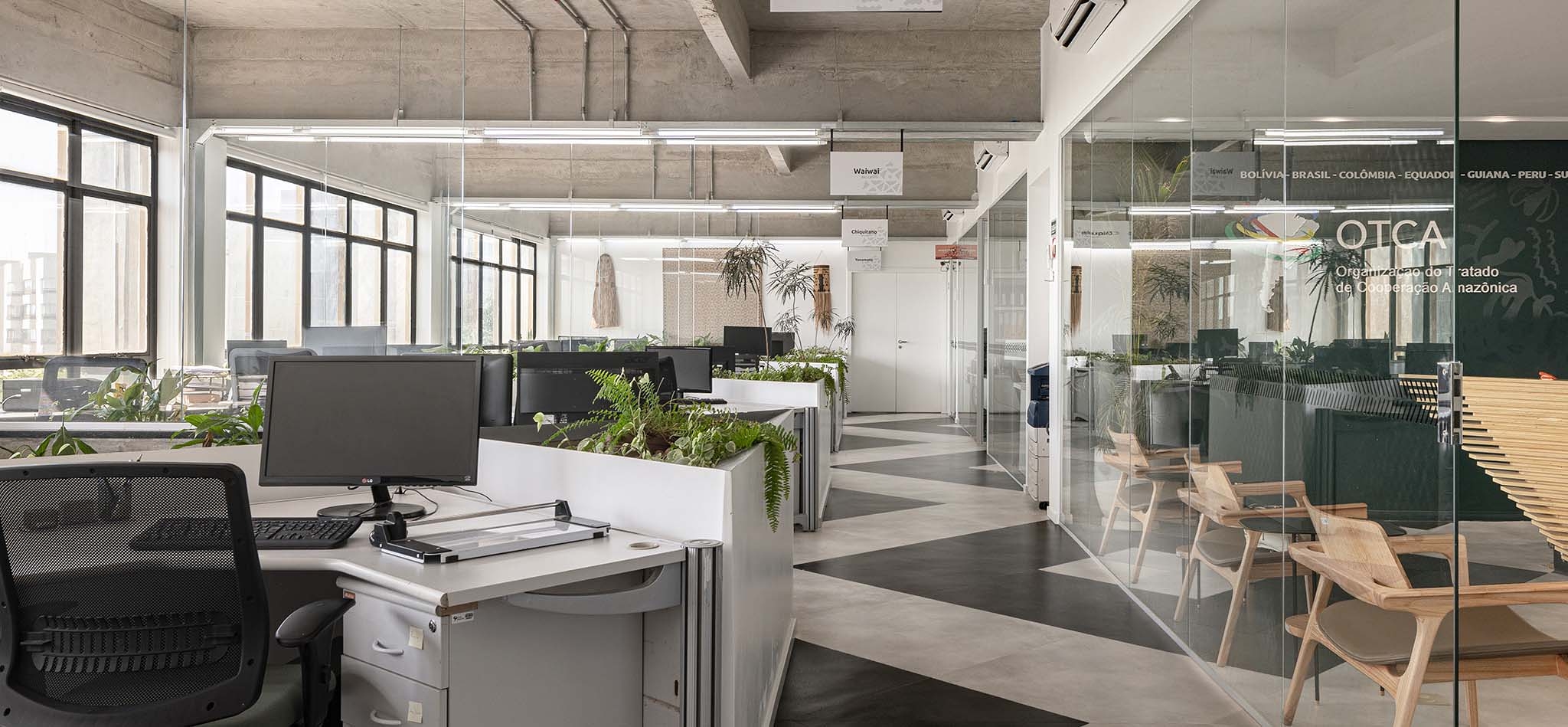
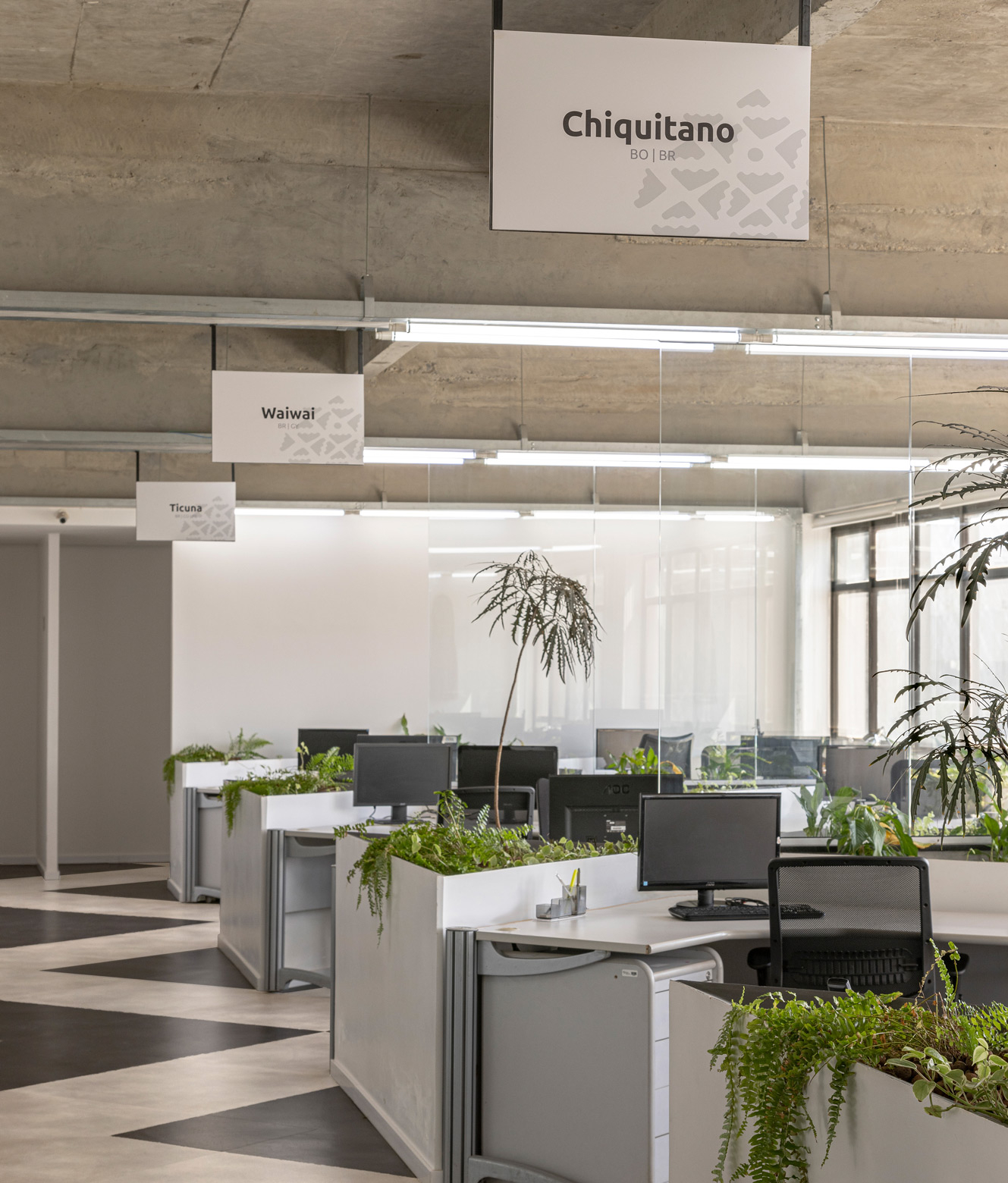
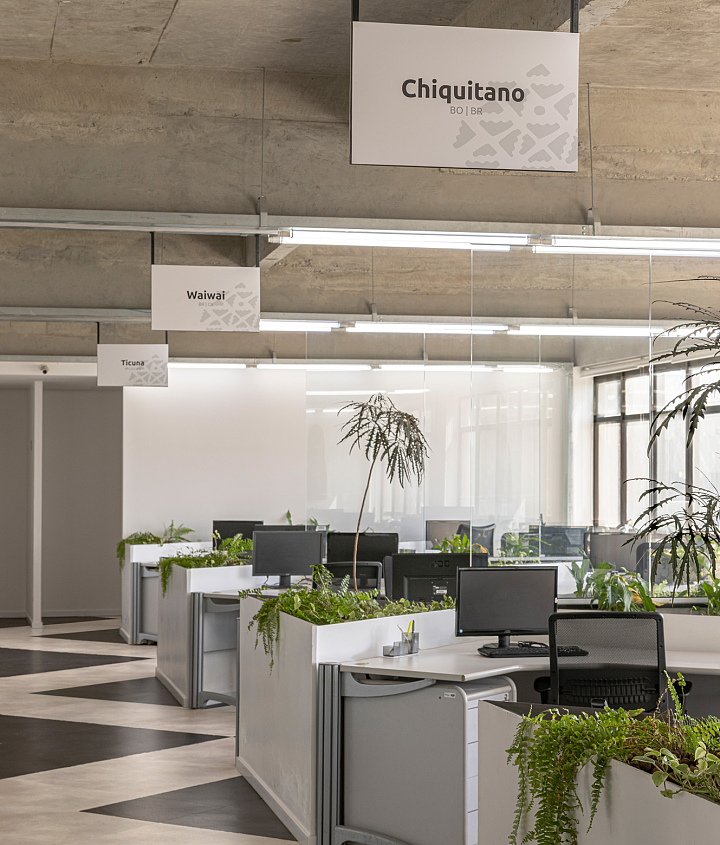
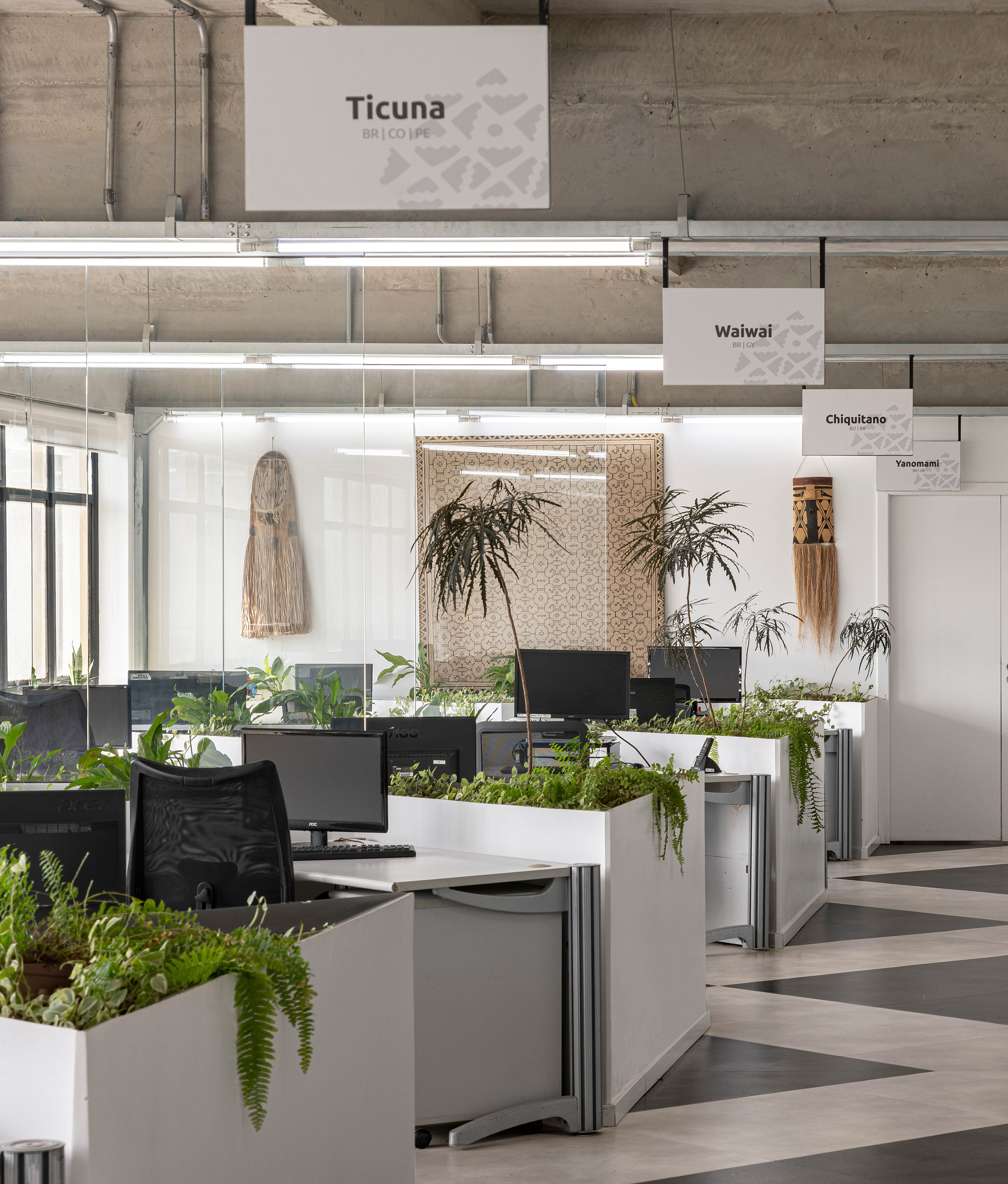
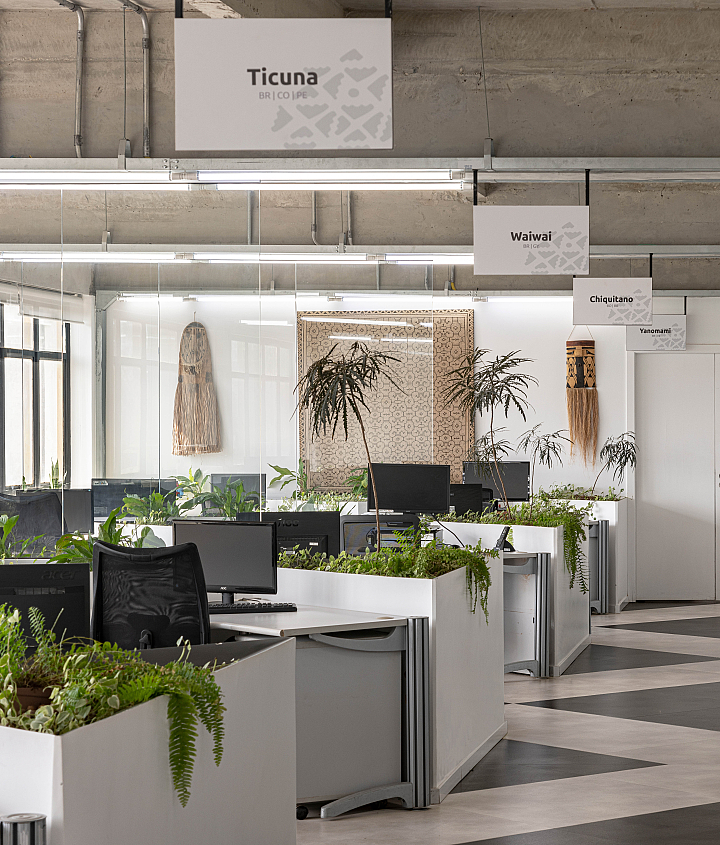
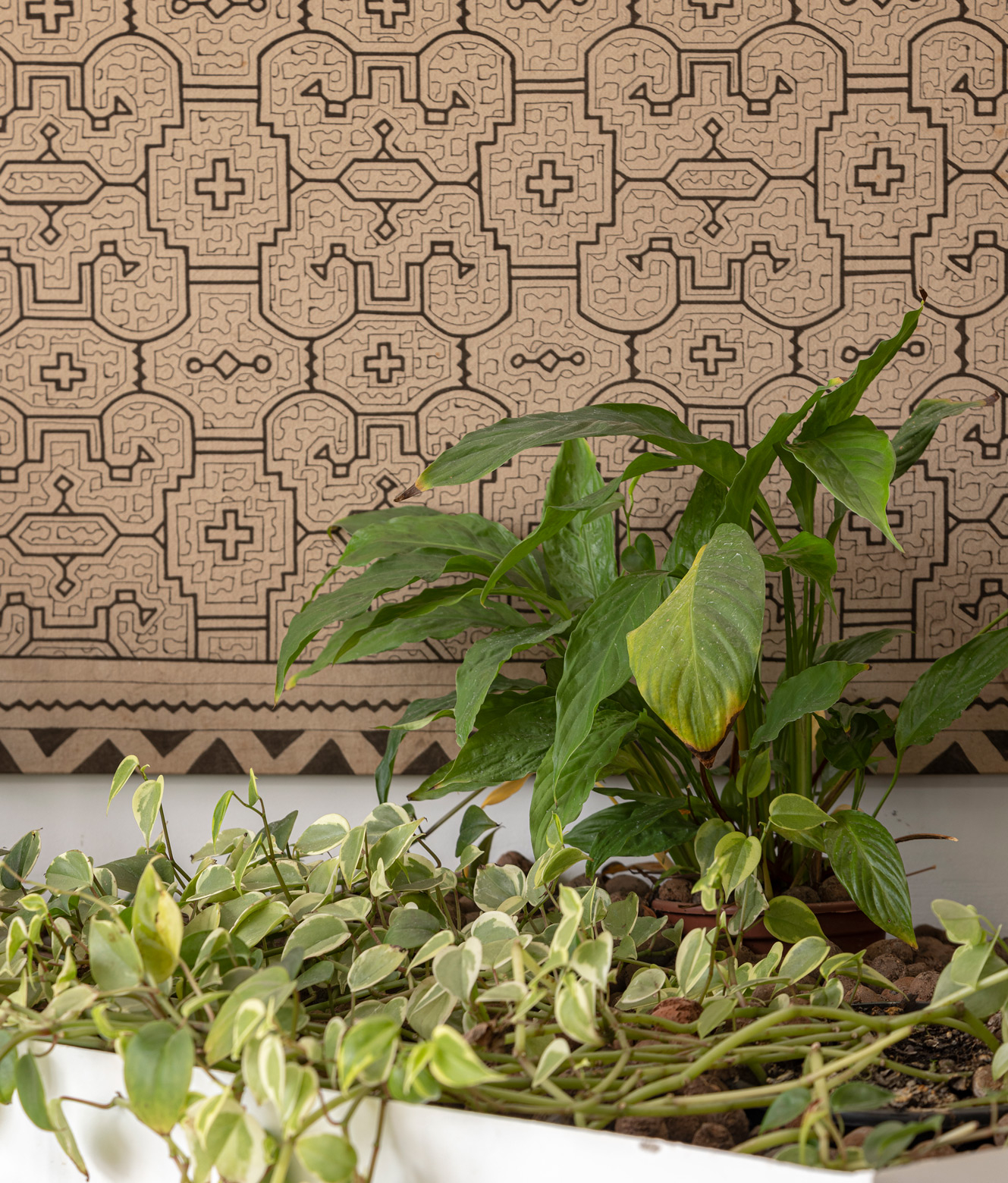
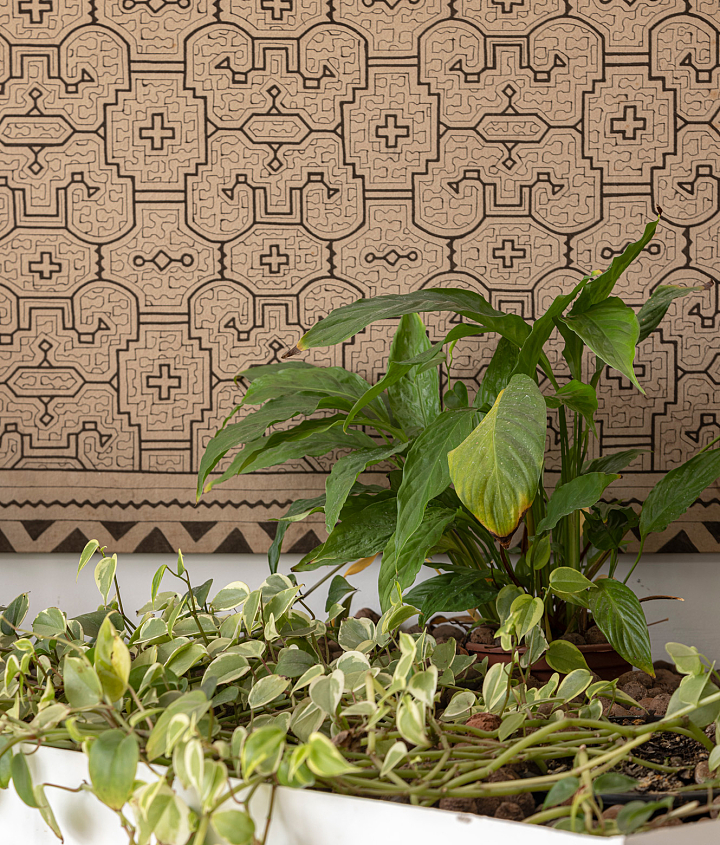
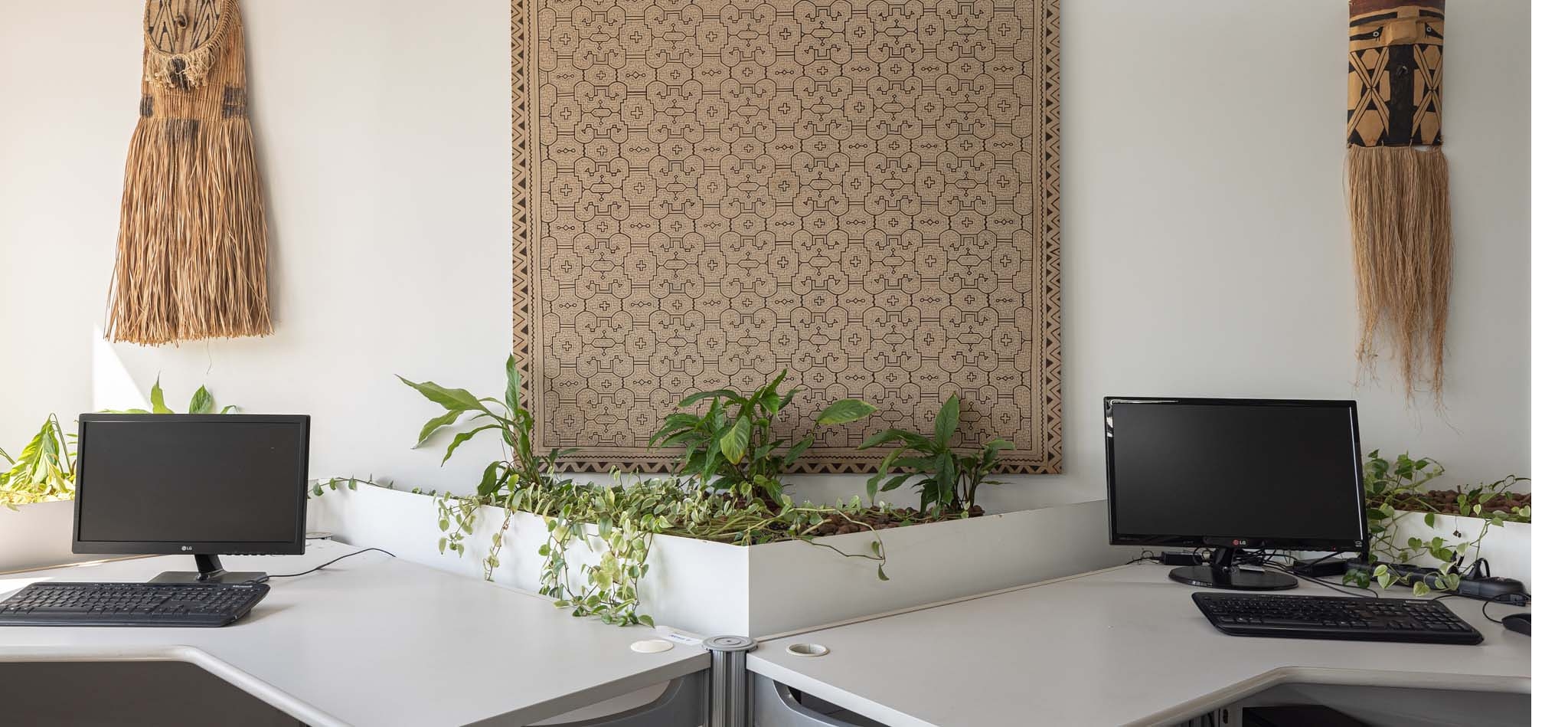
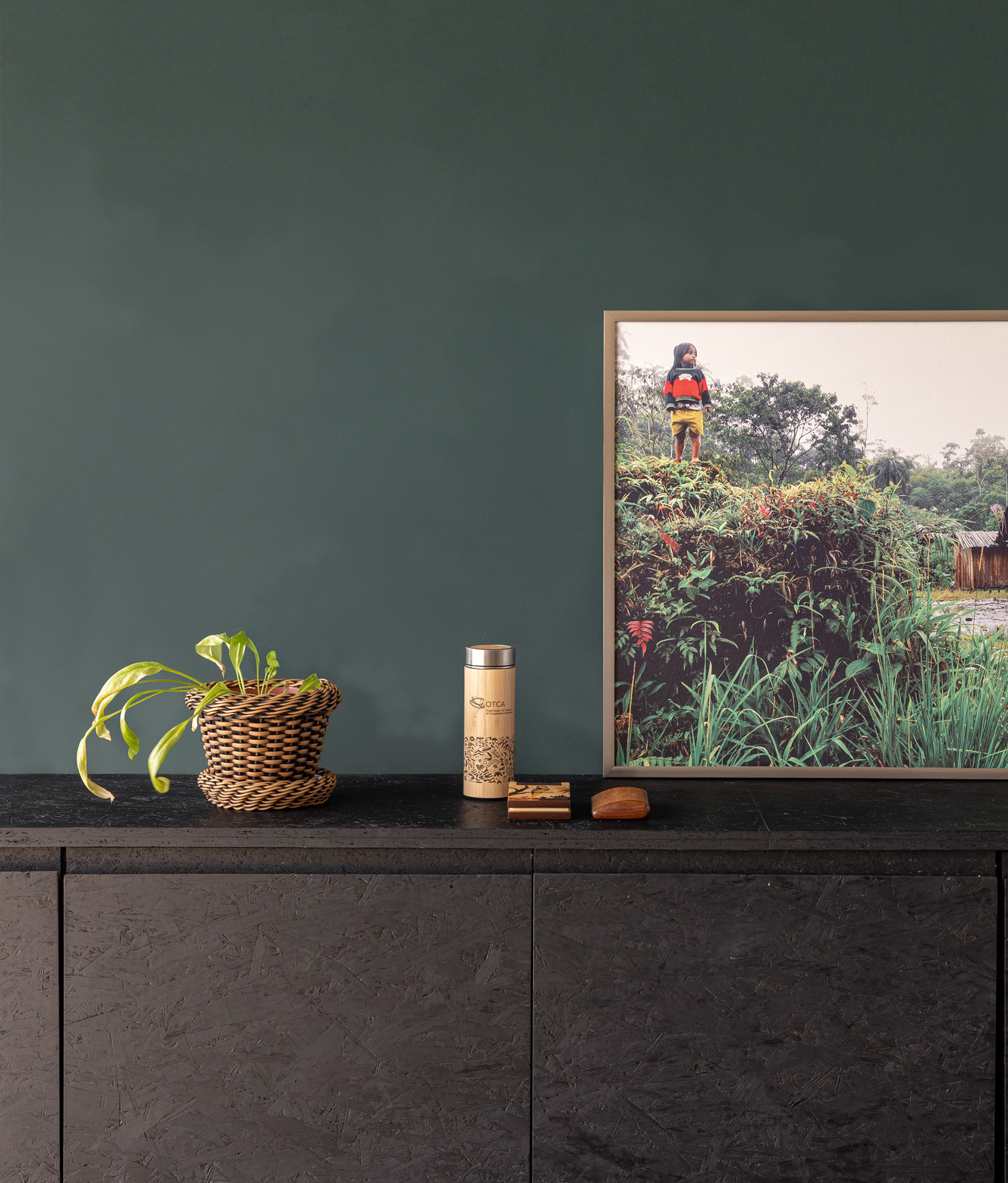
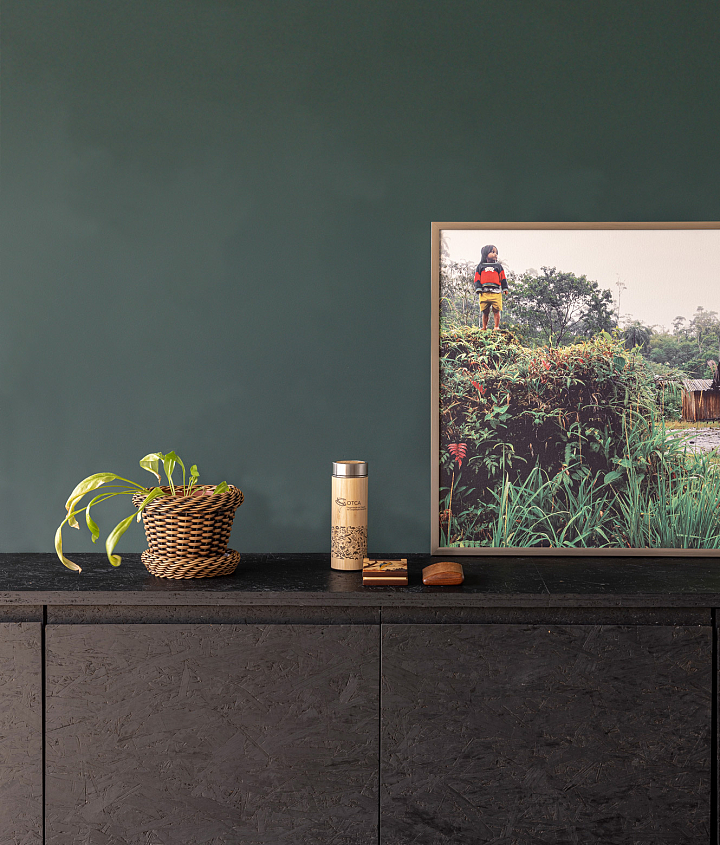
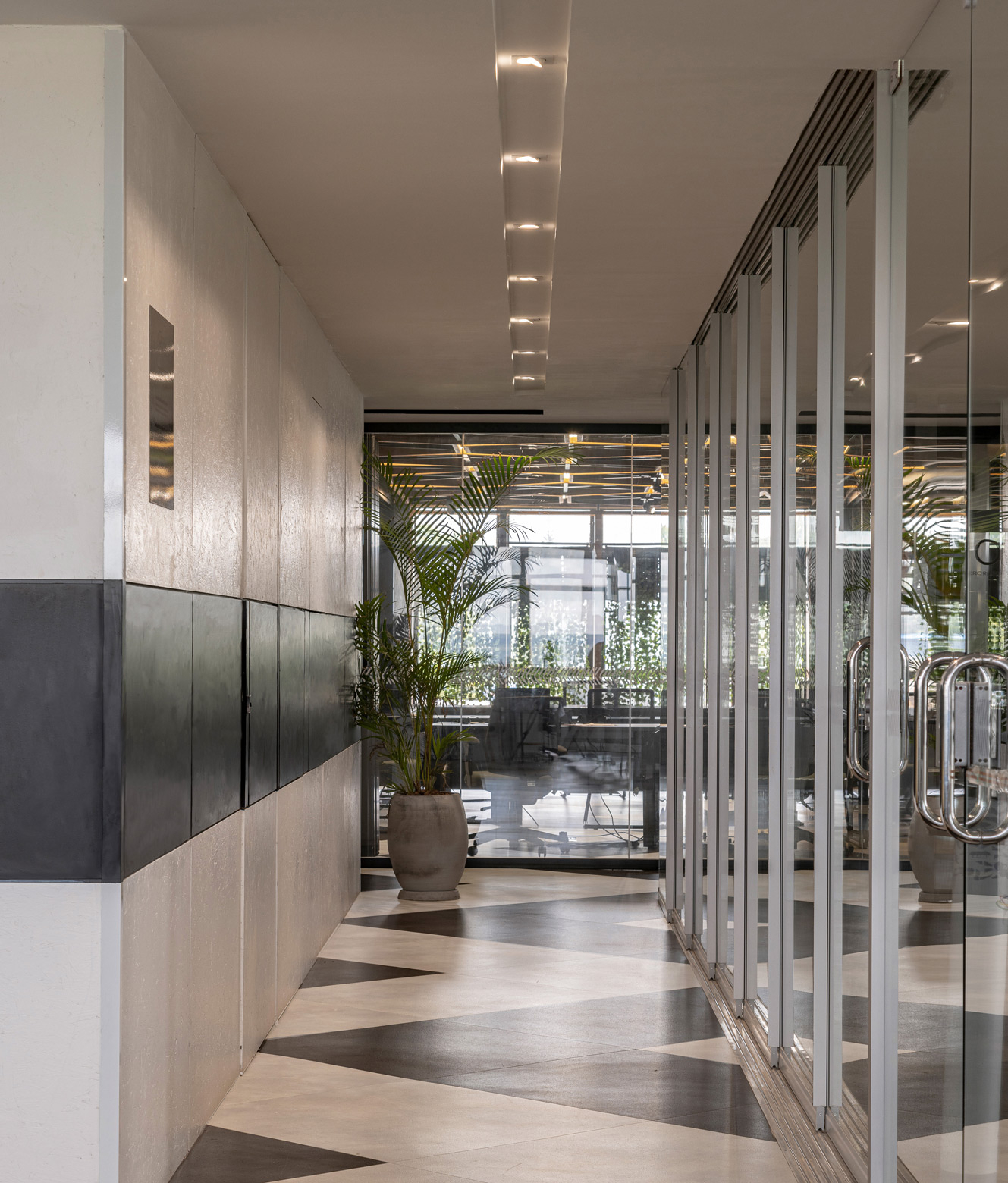
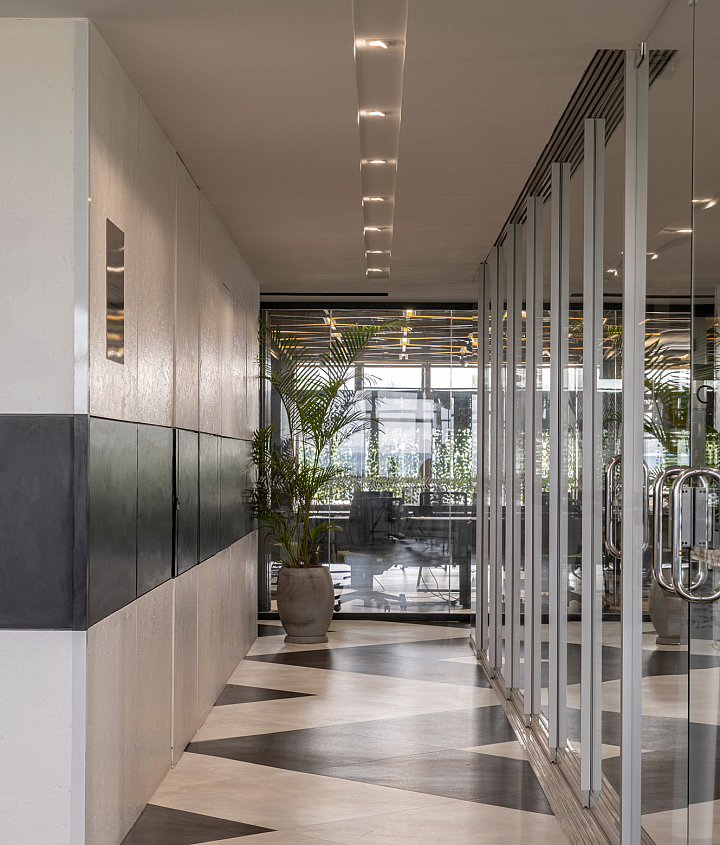
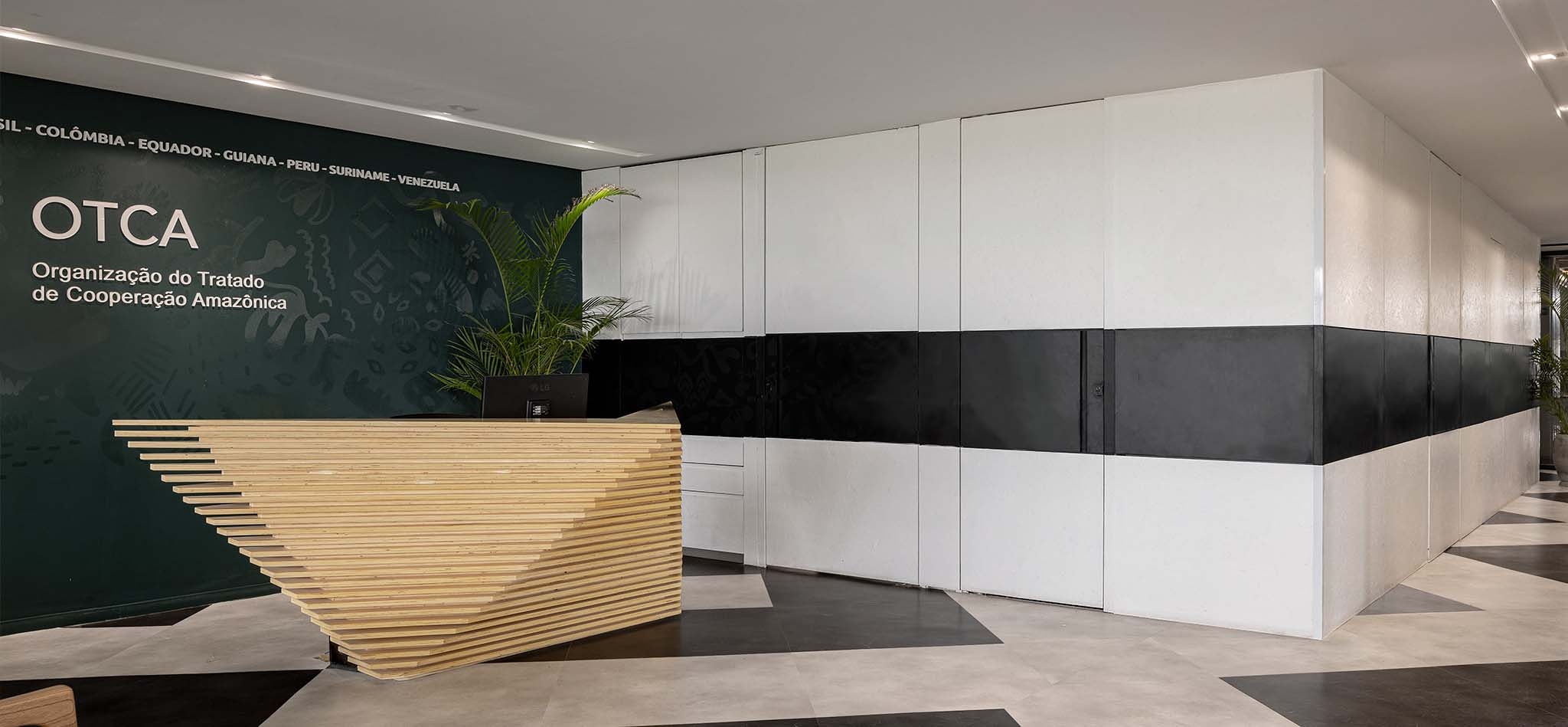
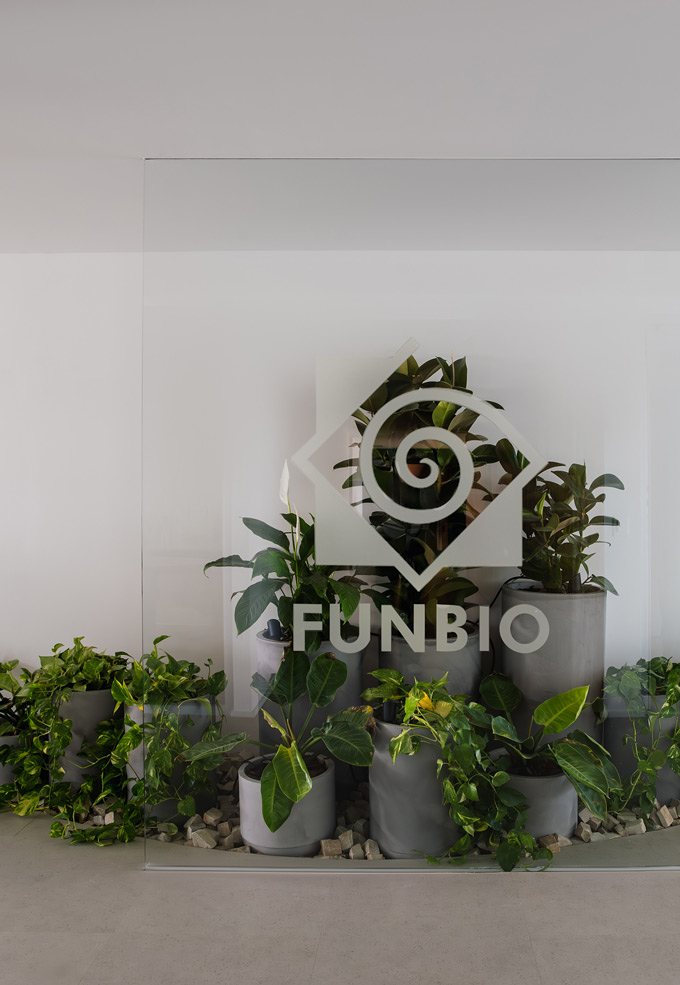
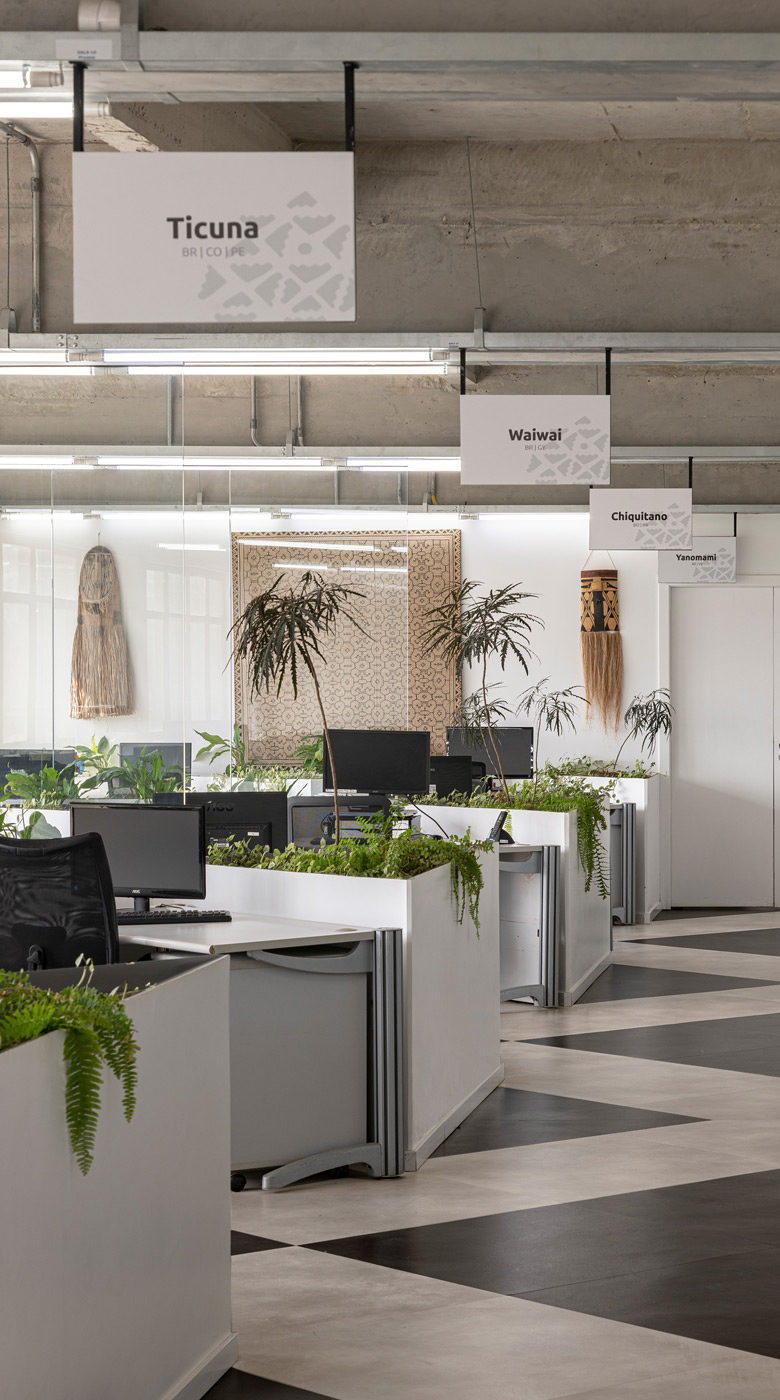
The third strategy focused on establishing the identity of the space. Abundant indoor vegetation was introduced as an affordable solution that enhances the working environment while visually referencing ACTO's mission in the Amazon. The exposed concrete structure recalls Brasília's modernist architectural heritage, while OSB panels—made from engineered wood using fast-growing plantation timber—were incorporated into selected walls and furniture, reinforcing both the project's environmental concerns and its cost-conscious approach.
Vinyl flooring proved to be the most suitable option for the new floors due to its affordability and ease of installation. Its versatility also allowed for custom laying patterns inspired by Indigenous graphic traditions. The selected motif references the traditional pattern known as "Peixe Grande" (Big Fish).
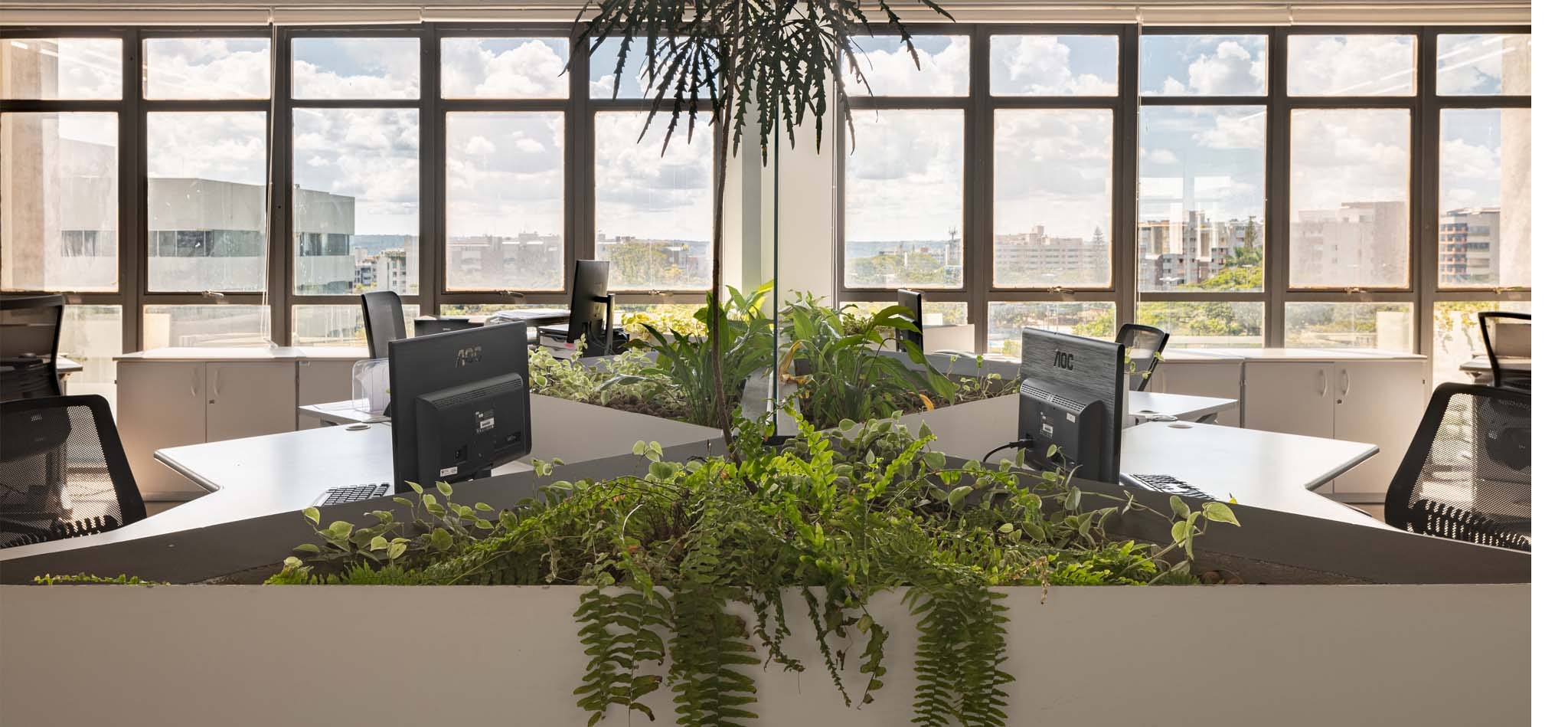
This concept was extended into the design of the main workspace. Existing desks were arranged in a zigzag layout, creating pockets for indoor gardens between the workstations. In this way, the architecture expresses the delicate relationship between culture and nature through the spatial organization itself.
The project remained within the planned budget while creating a healthy, naturally lit workplace that reflects the identity, values, and mission of the organization.